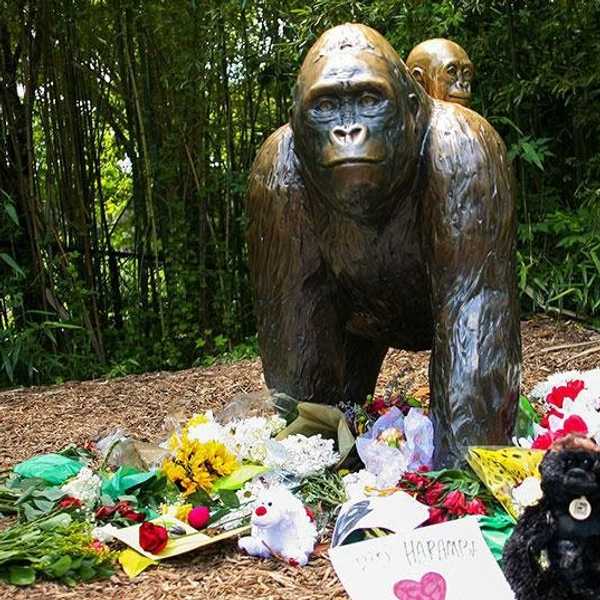
We are a people of justice. When something wrong or unjust happens, we seek fervently for the culprit. Sometimes, though, there really isn't just one "criminal" or the "criminal" cannot be jailed. We are unacquainted with the world of absurd tragedy.
So, when a 400-pound silverback gorilla is shot during a "life-threatening" situation involving a young 4-year-old boy, we never consider the idea that perhaps no one in particular could be to blame. Is it the zoo's fault? Perhaps; they could have used strong barriers. Is it the parent's fault? Perhaps; she could have been watching her child during the few seconds it took for him to sneak away while she took a picture. Is it the gorilla's fault? How about the boy's fault?
That's the game here, though, no matter what conclusion we reach: Whose fault is this?
What Happened?
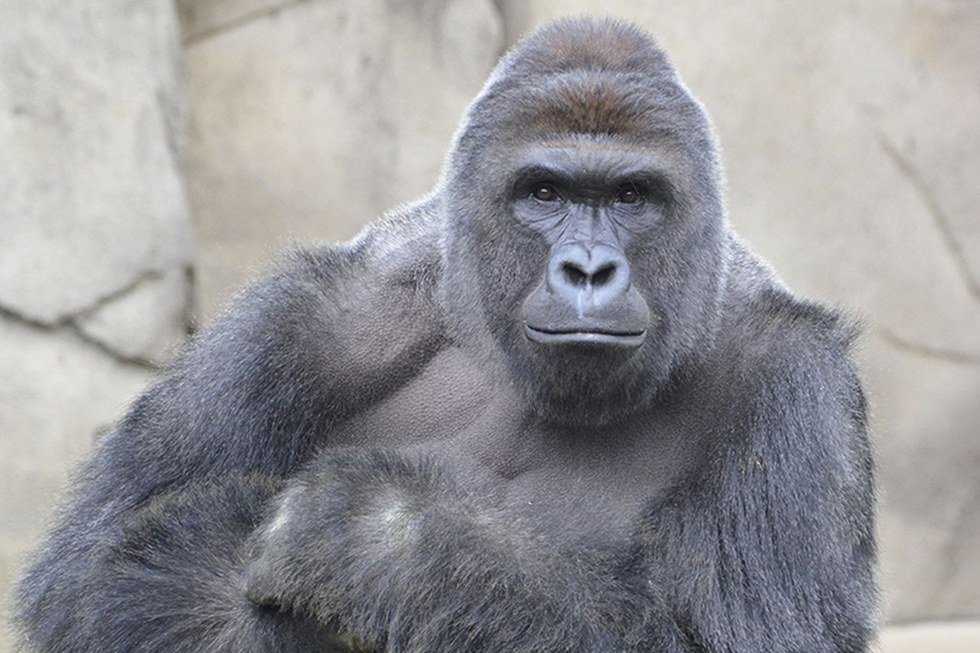
On Saturday,May 31st at the Cincinnati Zoo, a 4-year-old boy snuck into the gorilla enclosure fell 15 feet down into a moat and was soon face-to-face with an extremely endangered and confused male Western lowland gorilla named Harambe.
Everyone in the zoo was in a panic, especially the boy's mother, who didn't fully realize it was her child that had gotten away. She was sure that he had been right by her side. This kind of stuff couldn't happen to her; surely it was someone else's child.
But her baby was nowhere to be found. His hand was no longer in her pocket.
"Sir," the mother asked the man next to her, "is [the boy] wearing green shorts?"
The man reluctantly told her he was.
The mother was distraught and raced to the railing, trying to see her son and tell him she was right there. The world was growing fuzzy; her hands and voice were shaking.
"Mommy's right here!" she yelled, praying that God would protect her son and wondering how she could have prevented this.
But the gorilla didn't know what the commotion was about. In fact, the yelling and screaming was agitating him more and more.
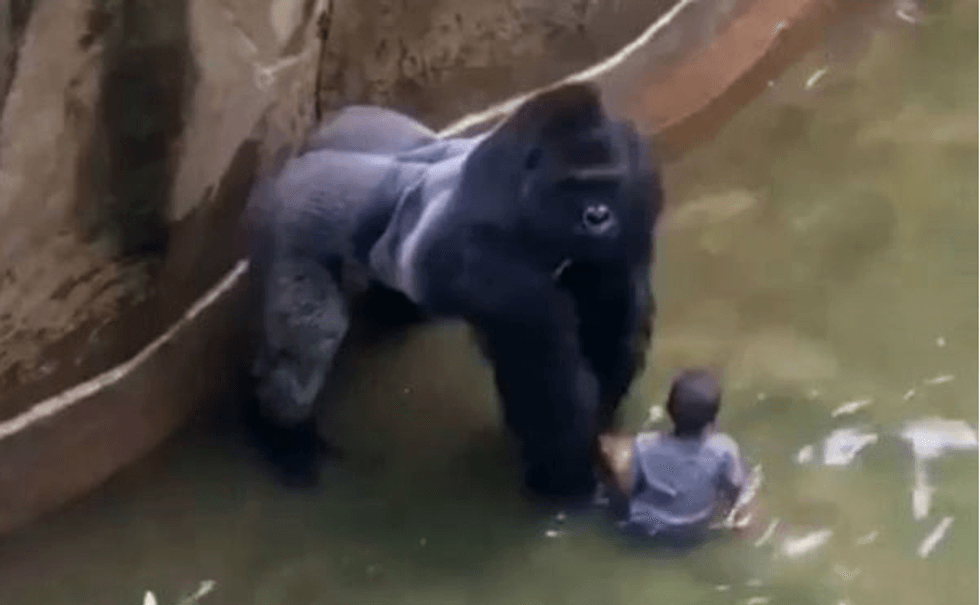
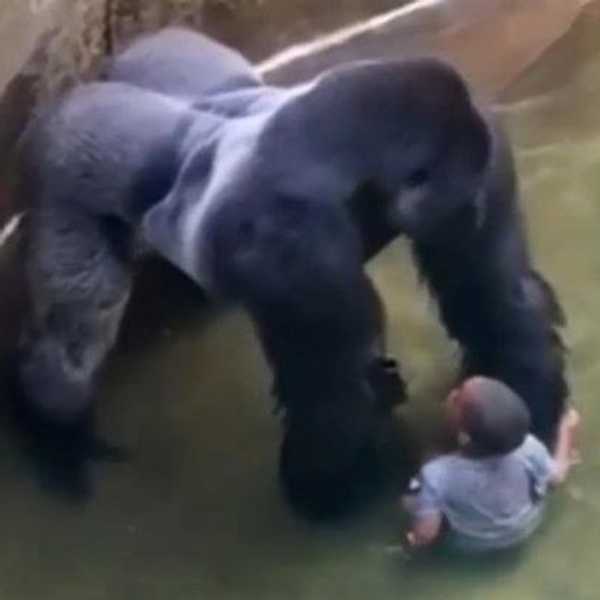
In this video, the gorilla seems to be guarding the boy in a corner from the loud, distressed onlookers. However, a moment later, he grabs the boy's foot and drags him a few feet violently through the water. He stops in front of the crying boy, knuckles clenched and lips tight. The gorilla assesses the situation, holds the boy's hand and stands him up. Perhaps he is trying to comfort the boy.
However, the gorilla shoves him over again and drags him upstream in the same gruff fashion. Reports say that he did so for 10 minutes, even hauling him up a ladder, to onlookers' horror.
The zookeepers reported a thought to use tranquilizers, but they would not work in the "move magic" manner we are accustomed. This was not a viable choice then, since the boy's life was in imminent danger.
So Harambe was shot on Saturday, May 28th at the Cincinnati Zoo and the boy was soon safe from harm. One life lost and another saved.
And thus, the controversy was born.
The Uproar
Twitter users, Facebook ranters, and angry bloggers galore took to the internet's black hole in an all out war over what exactly happened and why it happened that Saturday afternoon. Philosophical debates, parenting critiques, lawsuits, and petitions were thrown about in fervid attempts to lay blame in a suitable manner.
There were two different camps for Harambe's actions, two for the zoo's, and two for the mother's parenting.
Harambe's Nature
Protective Harambe
Some believe that Harambe was being protective and defending the boy. These people aren't without their evidence, either. Highly accredited individuals like Jane Goodall are backing up this claim, although tentatively. Many of these experienced individuals are piggybacking their opinions with sentiments of "I wasn't there, though," or "I only know what I see."
From this idea of a protective Harambe, videos of other protective gorillas have resurfaced (aside from the Disney cartoon, "Tarzan"). A 1996 video of a female gorilla protecting and even rescuing a young child from an enclosure came across the internet news stream recently. What we have to take into consideration, however, between that video and this recent incident are the natures of each situation.
1996 featured a female gorilla and an unconscious child. The females are in no way alphas and the child was not a threat since he was knocked out. She "turned her back on the other [gorillas]" and rescued the boy, returning him to zookeepers fairly unharmed.
This recent incident featured a dominant male gorilla without the nurturing instincts. He was protective all right, but not of this boy and rather of his own band or troop. And so we're brought to the second train of thought.
Animalistic Harambe
Many came to the conclusion that Harambe was doing what any male gorilla would do in such a situation. The boy was a foreign entity and Harambe was showing his dominance. Propping the boy up was an act of display and he was behaving the way any agitated gorilla would have. The zoo was right to shoot him, then. It was sad, but it was necessary.
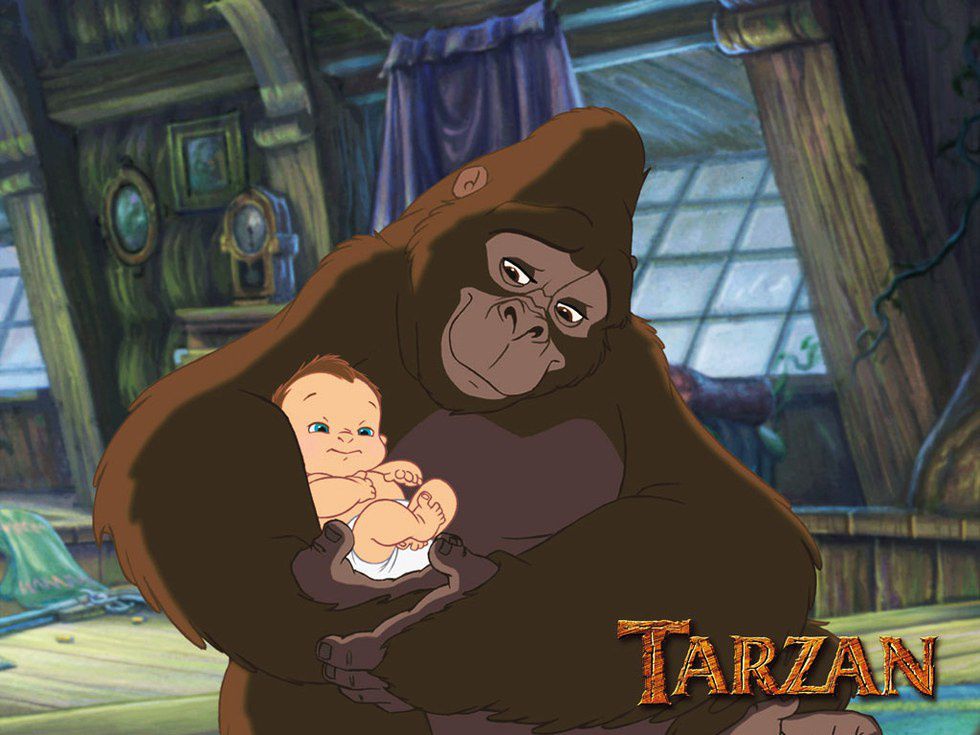
There comes an issue in this area which writer, Joe Carter lays out very thoughtfully: the anthropomorphizing of wild animals. This simply means we give human qualities and characteristics to creatures who are not human. Many times this is done to better understand an animal, and take it from a pet owner, animals do have personalities.
However, when media such as Disney movies where animals are the saviors and cuddly best friends to humans (such as "The Jungle Book" and "Tarzan"), it's difficult for people (especially children) to separate what makes an animal wild from what makes them docile and domestic. This gorilla was extremely dangerous. We suggest that gorillas protect human children out of kindness and that they are innocent of crimes and these claims seem unwarranted outside of our animated animal world.
Carter states his case clearly in the following thought-provoking questions: "Have we reached the point where our culture is confusing fantasy with reality? Is our anthropomorphizing of animals leading us to make dangerous assumption about wild creatures?"
A Zoo and Its Choices
A Gorilla Unjustly Shot
Many were relenting the loss of such a beautiful and critically endangered animal. There were many females in the zoo but not as many "studs" or males to safely breed with them. The Cincinnati Zoo was one of the many zoos who were helping build the population of silverbacks back up to its original number. (Slowly, but surely.) None of the zookeepers were happy or even neutral about the killing of Harambe. They all mourned his death, but almost all stood by the reactions of the zoo.
They say that Harambe was simply protecting the boy and it's a shame that such a beautiful and sweet creature was killed.
The Right Thing To Do
There are still many famous and common zookeepers and animal experts who say that the zoo did the only plausible action: shooting an animal to save a person's life. This is how our species has survived for millennia. In the process, humans have wiped out many great species of animals for the sake of keeping our own alive and/or thriving.
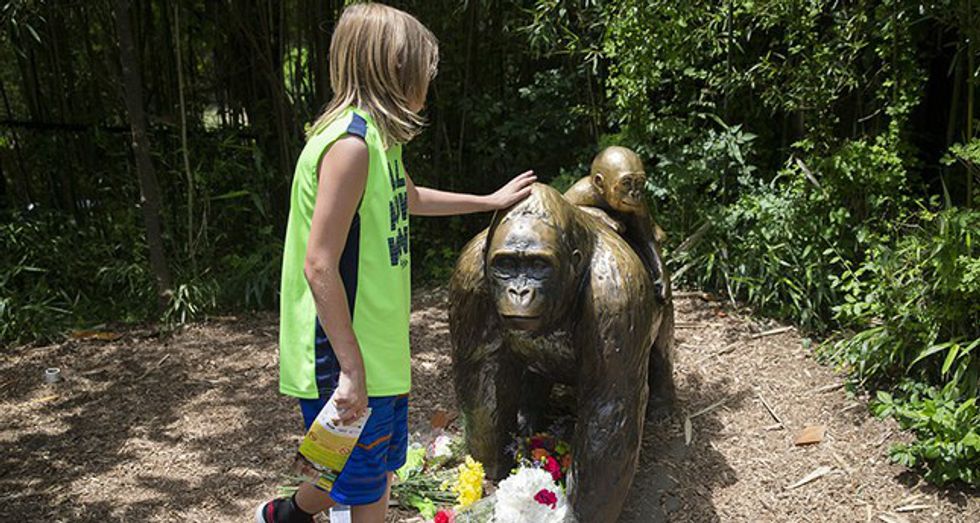 When situations like this occur, we ask ourselves: how do we have the right? Many people wonder how humans have the right to wipe out many endangered animals across the globe, but that is a question for a different article.
Mother Knows Best?
Neglectful Parent
Many are saying that the mother not only should have been watching her child (an argument from which the phrase "Zoos are not your babysitter" arose), but that she and the father are neglectful and the children should be separated.
This issue was brought up in a petition on Change.org, where almost 500 thousand supporters signed in the name of "Justice for Harambe." This petition suggested that the child fell into the enclosure due to negligence from his parents in his home.
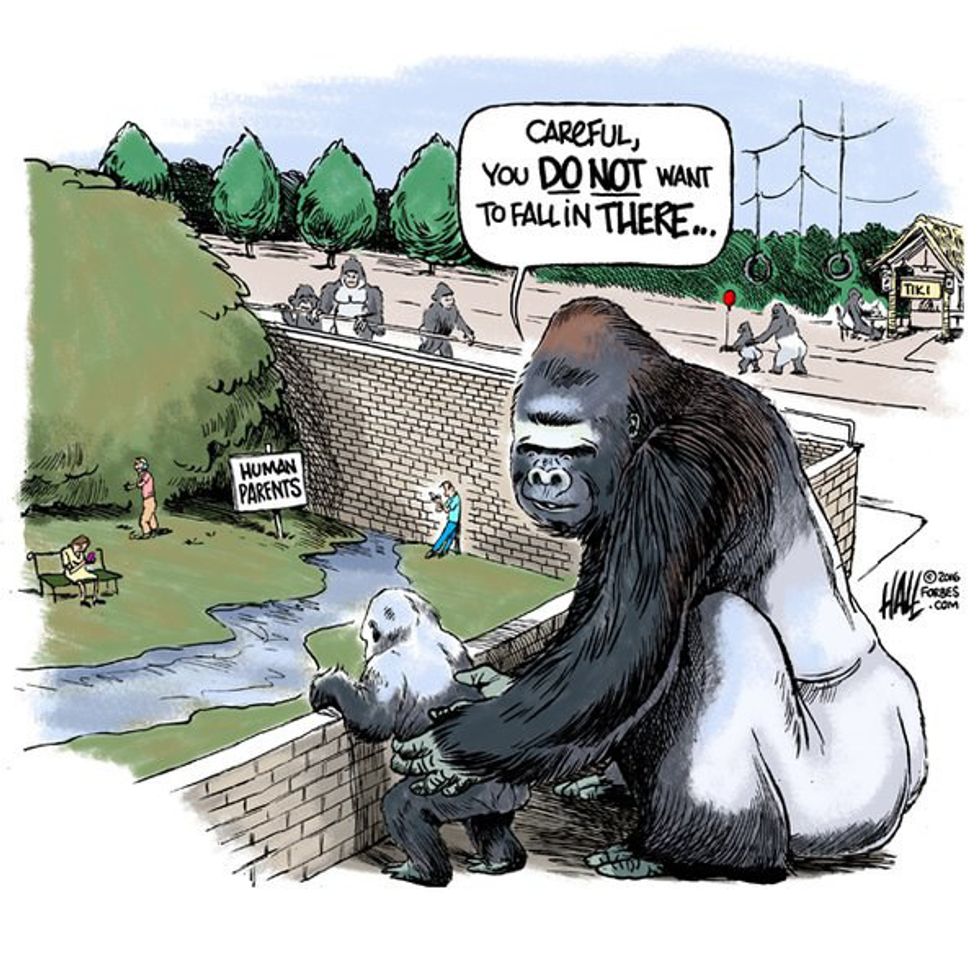
Twitter followers took to their 140-character rants, claiming it wasn't difficult to watch a child for a few seconds and that it was negligence alone that caused that child to fall into the pit. People turn to anything they can blame the parents for in order to give fault to this tragedy. They turn to criminal records, the number of children in the house, home environment, and some have suggested even racial biases (although the writer of the petition on Change.org refutes these accusations fervently).
Normal Parent
"It's easy to lose track of your child," is the argument that the mother of the boy along with hundreds of other parents are giving. They have been saying how many of the critics of the mother's actions are not parents themselves and don't understand.
On Twitter, a user said, "Give me 10 children and I can guarantee none of them will end up in a gorilla enclosure... A zoo is not a child's play area." This sparked outrage (naturally) by parents and defenders alike across the internet.
In a "Time" article on this topic, writer, Jeffery Kluger says, "Keeping children safe is a lifelong exercise in not being able to take a bow when bad stuff doesn't happen — and paying dearly when it does."
I talked to my own mother about this topic and she told me that it's incredibly easy to lose track of a child. "No one can keep track of a child 24/7. You can try, but no one can maintain constant vigilance every second of the day," she said, "It's impossible."
"If a child has come to the conclusion that they're going to do something, you basically have to tie them down to keep them from doing it."
She shared with me a story of when I was younger and so bent on getting away from my sister that I twisted my arm out of the socket by accident and my sister briefly wondered if it had been her fault.
So Who Can I Blame?
It's not so much a blame game as it is "how can we prevent this from happening again?" From there we probably do need to place some kind of blame and fix whatever issue is present.
Here the problem that can easily be solved resides with the zoo. In the video previously seen, there was reportedly only a railing and some bushes between onlookers and a 15-foot drop-off into the gorilla enclosure. PETA even claimed that the Cincinnati Zoo needed to have a second barrier between viewers and the enclosure.
Therefore, the zoo was right to shoot the animal, but it could have all been prevented if they had had stronger barriers so a young child couldn't find him- or herself into an enclosure so quickly.
The pertinent issue here is this: how do humans have the right to dignify a human life more important than a rare silverback gorilla?
Well, there is a grave (and I mean grave as in deadly) manner of thinking when we start to consider animals more important than our own children or brothers and sisters. Of course, we should treat these animals with respect and care, and of course we shouldn't abuse or neglect them.
However, when it's down to the choice between an injured and frightened child and a wild animal, it's dangerous to say we should have chosen the latter. It's detrimental to our species, in fact, and to our hearts to say such things.