


How many of us have grown up hearing the slogan “Got milk?” How many have seen celebrity after celebrity lending their mugs complete with a milk mustache to the dairy cause?
I’d venture to say you didn’t grow up in the United States if you’ve never seen some sort of commercial pushing the necessity of dairy in a healthy diet. I mean, what’s the first thing that pops up in people minds when they think of calcium? Milk. That’s no coincidence. It’s the result of a very polished and sophisticated marketing machine driven by the dairy industry, and to the people behind such an ingenious branding campaign, I applaud you. Even the government recommends three glasses of milk per day. However, the tides are turning, and people are realizing that dairy isn’t necessary for calcium intake. And even further, it’s not even the best way to get your recommended dosage of those bone building blocks.
So why is calcium so important in the first place? Everyone knows calcium is a critical mineral for bone health, but it plays more than one vital role in a healthy body. Calcium is essential in muscle contraction, and without the right amount available at all times, muscles will cramp. That may not sound too bad at first… until you remember that your heart is a muscle too, and heart failure is more than just a Charlie horse. Calcium is also involved in cell signaling, blood clotting, and nerve function. I mean, imagine if a paper cut was as deadly as it was painful…
So at least the commercials got one thing right: You need calcium to live a healthy life… or just to live in general. But do you need dairy to get it? Further, even if you might not NEED dairy, why get your calcium from milk, considering how readily available it is everywhere?
Well, there are many reasons people are going dairy free. First of all, that government recommendation of three glasses of milk per day is based on shaky science backed by several experts being funded by the dairy industry. Additionally, most of us lose our ability to process lactose as we age past our nursing stage. In fact, 70 percent of the world’s population has some degree of lactose intolerance (symptoms include bloating, diarrhea, nausea, and gas).
There are also studies showing a strong correlation between milk consumption and both ovarian and prostate cancers (but keep in mind, correlation does not equal causation). Ironically, in a study of 7800 nurses done by Harvard, those who got their calcium from milk had a significant increase risk of suffering a hip fracture, so it seems stronger bones might be found in the garden as opposed to the carton.
Avoiding milk also means avoiding exposure to the added hormones and antibiotics that most dairy cattle are bombarded with. Many chronic health problems are being linking to dairy consumption, including ear infections, skin problems such as eczema, and sinus problems. Dairy products are also a high source of saturated fat and/or sugar. Additionally, many people are shunning the dairy industry due to the living conditions of dairy cattle. There are almost as many reasons to cut dairy as there are people that are living dairy free.
Reported benefits from cutting calcium are aplenty. Due to the fact that most people are somewhat lactose intolerant, improvements in digestion and a decrease in bloating, diarrhea, and gas are commonly detailed. Risk from chronic diseases such as diabetes is lowered, and you’ll probably experience some healthy weight loss. Other people with chronic ailments such as migraines, rashes, stuffiness, arthritis pain, and chronic infections from no known cause have reported relief after going dairy free. Leaving dairy behind also leads most people to consume more vegetables that also contain other healthy vitamins and minerals, leading to an overall improved health. It’s really a “nothing to lose, all to gain” lifestyle opportunity.
Our bodies need about 300 to 400 milligrams of calcium per day. For people who want to take the supplement route, you will probably notice that the daily recommended dosage via supplement is between 1000 and 1200 milligrams. The reason for this is that just because calcium enters the body doesn’t mean it’s completely absorbed. The same goes for the calcium in food. In addition, the presence of vitamin D and magnesium is also necessary to properly absorb and correctly use calcium in our bodies, and vitamin K is important in calcium synthesis and bone health.
As you can see, getting calcium in your bones is more complicated than just a glass of milk. As supplements would be the obvious and easy way to get the recommended dosage, synthetic calcium comes with its own set of risks. Luckily for the dairy-free people of the world, there are many food options that provide their bodies with the calcium they need:
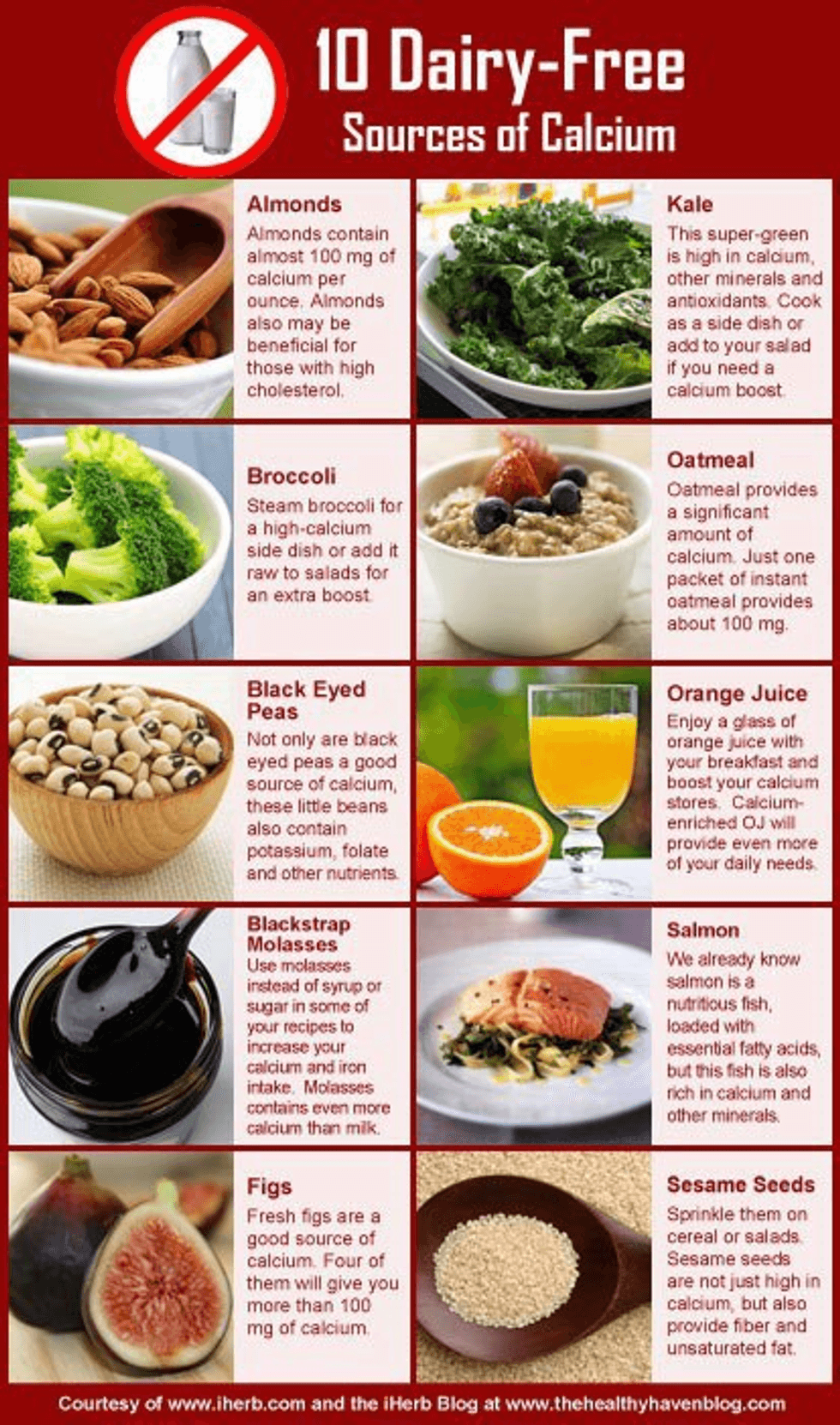
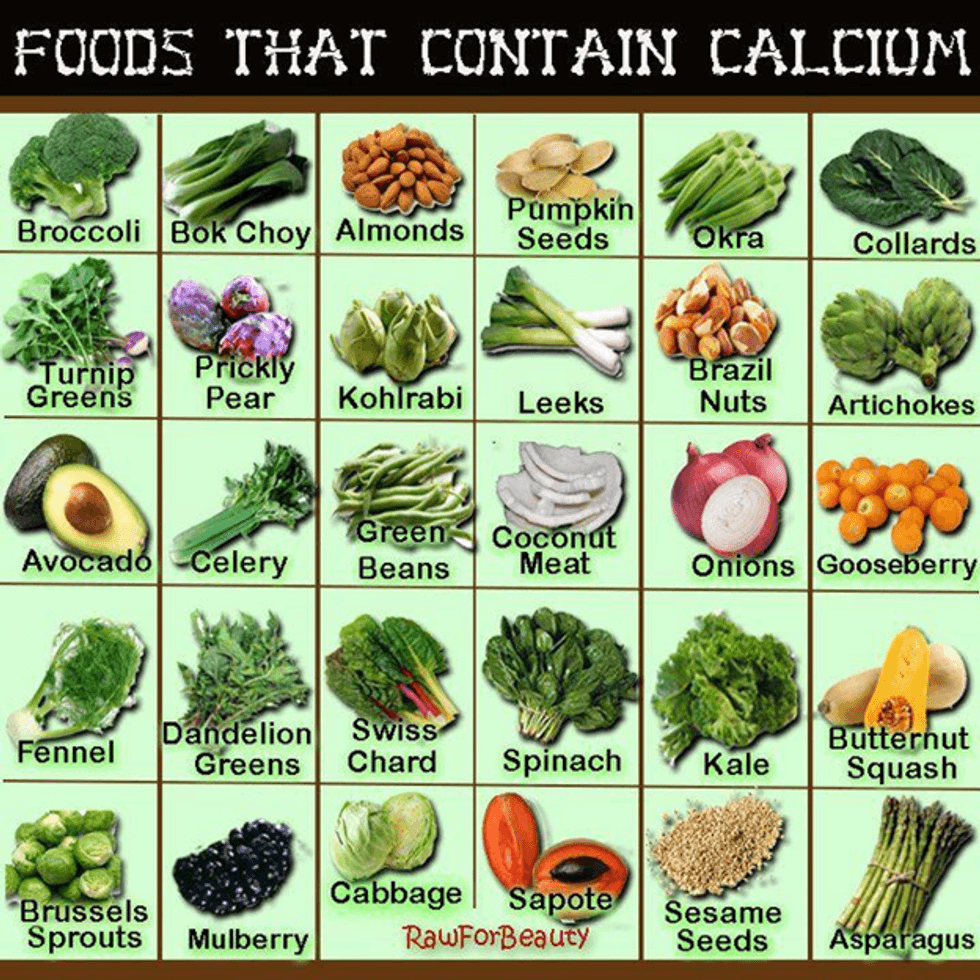
As you can see, going dairy free in no way limits your calcium rich options. Additionally, most plant sources of calcium are also rich in the supportive vitamins and minerals needed to properly absorb and use calcium. There are also many processed foods enriched with calcium (although if you are looking to improve your diet, that may not be the way to go either).
Almond or coconut milk are great options to use in place of regular milk for when you want to do some baking or just need to get that Cinnamon Toast Crunch craving out of your brain (me). I am no way saying that in order to be healthy, you need to drop dairy. However, it’s never a waste of time to research ways to improve your health, because without your health, you truly have nothing.