

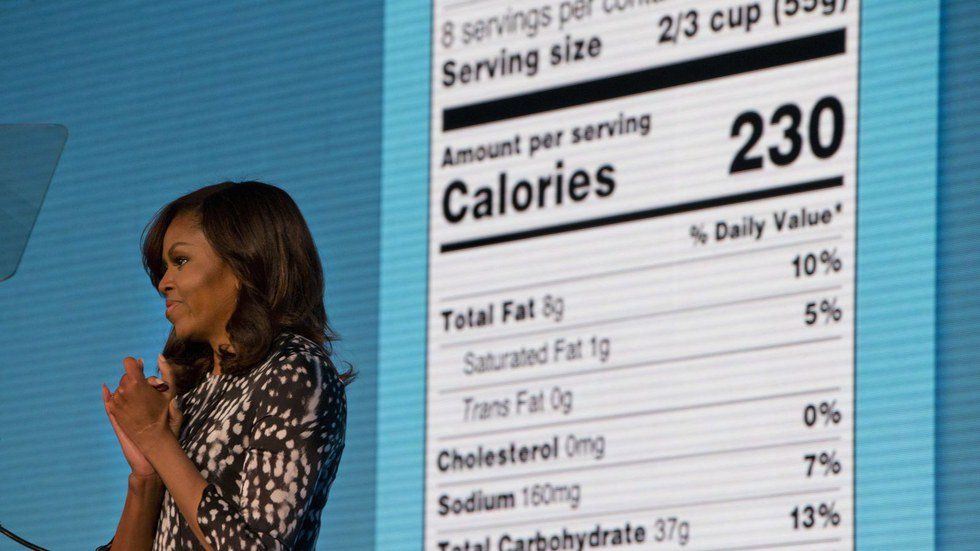
When you go to the grocery store, you have thousands of food options. What each of these options have in common is their nutrition labels. The black and white label entitled “Nutrition Facts” is often what helps to educate about a food product and guide food choices. When looking at a product’s label, you can determine the total calories in a food, the correct serving size of a food, the total amount of fat a food has, as well as the amount of carbohydrates and sugar that are contained within a food. However, since Michele Obama began her national campaign for nutrition in 2008, she has helped to change the way food labels are organized, changing the way that you choose food.
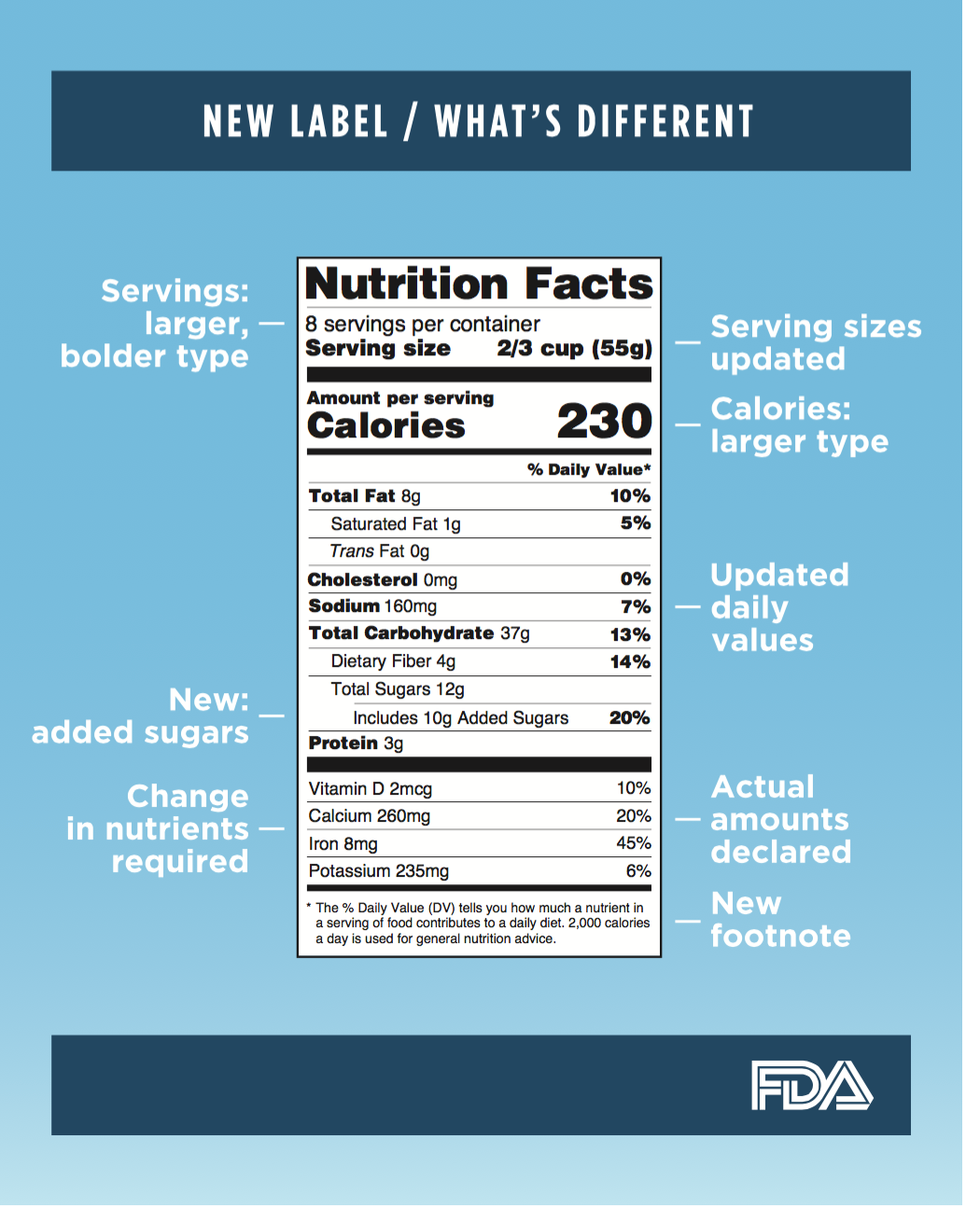
Food labels were established in 1990 by the National Labeling and Education Act. They were originally used to ensure that nutrition labeling was consistent among all foods. These labels also required all ingredients to be disclosed in the food, and helped to standardize health claims such as “low fat” or “heart healthy.” Food labels have now been updated to reflect recent nutrition studies which have proven to be effective in allowing you to make the right food choices. The changes in food labels include a change in the required nutrients that are displayed on the label, as well as in the daily values of these nutrients. The serving size of a food product has also changed to reflect modern portion sizes as well as how many people will be eating a product at once. Another change includes the omission of the section “Calories from Fat” to increase the focus on the types of fats a food has. The most notable change to the food label is the addition of the category “Added Sugars.” According to the Food and Drug Administration (FDA), Americans get thirteen percent of their total calories each day from added sugars. By adding a separate category dedicated to sugar, it allows you to see if the sugar contained in a product was added by the manufacturer, or if it is naturally occurring within the ingredients of the product.
Sugar can influence your health, which is why it has become the main focus of the new food labels. Added sugars are found in food such as sodas, sports drinks, cereals, candy, cookies, ice cream, and pastries. When consuming too much sugar, it can affect your health because of the impact it can have on your body. In an article outlining the effects sugar can have on your body, it is stated that sugar can have the same effect on your body as cocaine. When eating sugar, the chemicals dopamine and serotonin are released, which not only makes you feel good, but it makes you crave more sugar each time you eat it. Other effects include making you feel tired all the time and hungry often. When your diet is mostly sugar, you will never feel full since you are not eating enough nutrients at every meal. This can cause your energy levels to decrease and contributes to feeling tired. In addition, when your diet consists of sugary foods you will gain weight, which can lead to obesity. Obesity can lead to other health problems such as diabetes, and can cause damage throughout the body. When your blood contains extra sugar, it can also damage other organs such as the kidneys or the heart. According to Harvard Medical School, too many added sugars in your diet can also lead to an increased risk of dying of heart disease because of the damage sugar can have on your veins and arteries that carry blood to and from the heart. Sugar can also cause inflammation in the body, which can cause acne, headaches, and can cause heart disease.
By limiting added sugars from your diet and using the new food labels to your advantage, you can recognize which foods are healthy and contain natural sugars and which foods are processed with added sugars. The change in the food labels can also help you to make more educated decisions when choosing food, which can prevent other problems that can have a more serious impact on your health, helping you to improve your overall health.