

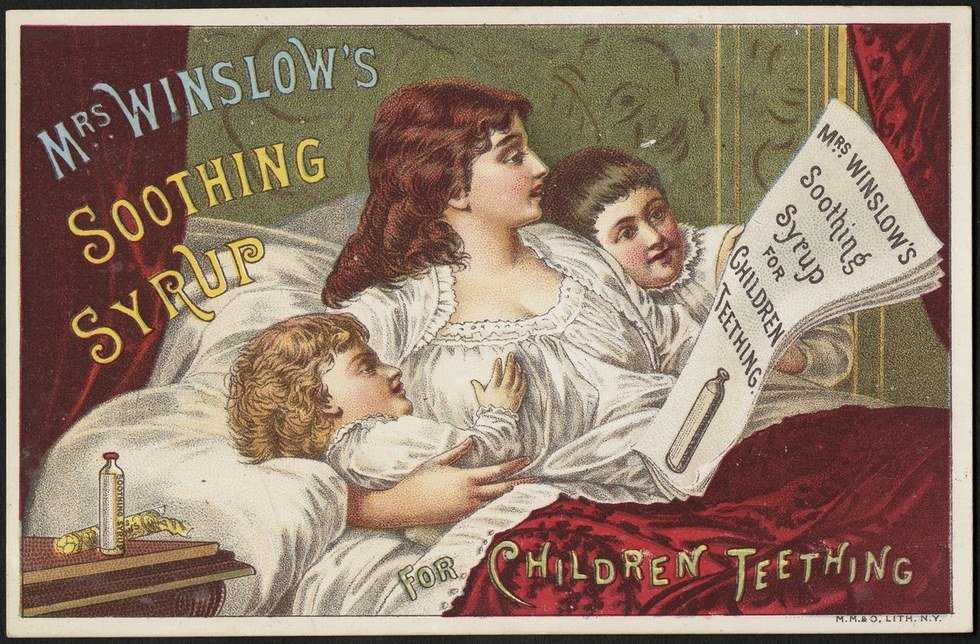
Mrs. Winslow’s Soothing Syrup was formulated in the 1840s by a midwife named Charlotte N. Winslow. The ailment was given to infants and toddlers of ages 0-3 in order to sooth teething pain that prevented the children from falling asleep, and sold on the streets of New York. The treatment was extremely popular from the time of 1849 until 1906 when the medication became illegal due to the potentially toxic ingredients that it contained. The medicine contained chemicals such as sodium carbonate, morphine, ammonium, powdered opium and heroin. Despite the danger of consuming these chemicals, there is evidence that the syrup had a high success rate and approximately 1.5 million bottles were sold. In December of 1860, an article was published in the New York Times that featured glowing reviews of the treatment. One reviewer spoke of the difference it had made in his young son’s sleeping habits; “its effect upon him was like magic; he soon went to sleep, and all pain and nervousness disappeared” he raved. Another happy parent spoke of the behavioural changes that his child experienced just after consuming the syrup; “the little fellow awoke in the morning, bright and happy”. These are excerpts of the multiple detailed success stories that were referenced in the article.
While the medication had many successes, several children experienced negative effects, including comas, long term addictions and death. After many of these negative results were reported, it was discovered that the medication contained several dangerous chemicals and was categorized by one of the American Medical Association’s publications as a “baby killer” in 1911. Following this, the medication became the subject of negative publicity and stopped being sold in the United States, although the United Kingdom marketed the syrup until 1930. Although this particular product is no longer in use, many of the ingredients that it consisted of are still administered today by licensed doctors. Ingredients such as heroin and morphine are now used as a pain medication for patients that have experienced extreme traumas. Both chemicals have been successful in relieving pain, yet there have been cases in which the patients become highly addicted to the medications and reliant on their mood-altering effects.
Mrs. Winslow’s Soothing Syrup breeched several of the values that were put in place by the National Health and Medical Research Council (NHMRC) . According to the NHMRC’s National Statement on Ethical Conduct in Human Research, researchers are responsible for alerting patients of any negative effects that may occur. Those who advertised Mrs. Winslow’s Soothing Syrup did not make any effort to make consumers aware of its numerous negative effects. In fact, a popular advertisement stated that the medicine was “absolutely harmless”.













