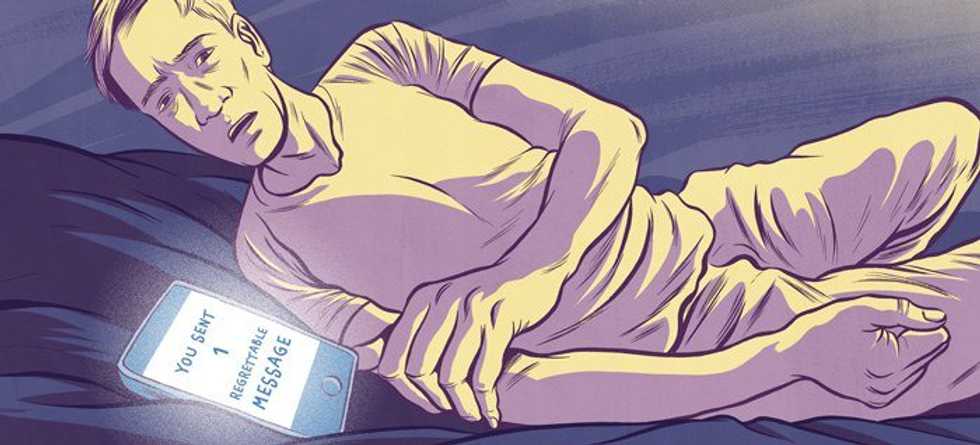
I was blown away when I first met someone who had 500 friends on Facebook. I was 14, the age where my most primal concern was finding a way to sneak glimpses of South Park on Tuesday nights and when I saw a miasma of faces next to my Facebook friend that seemed to stretch for as long as War and Peace. Different pictures of people jumping off of cliffs in the Caribbean, holding gold-plated plaques with the words “All A’s” posted on them and school dances where a succession of blazer and pink-bow tie wearing boys with crew cuts held the waists of grinning girls with sparkling gowns. Surely this person was a famous volleyball player with Jamie Foxx as a skiing buddy. I compared that to my own Facebook profile, a ghost town of a feed where the most prominent picture was me leaning on my middle-school locker while wearing a blue-sweat jacket over a Donkey Kong Shirt, long brown hair covering my eyes and forehead with grease. Last time I checked there were about 5 likes on that picture. A picture of the aforementioned friend cuddling a Chihuahua with a Frankenstein-esque brow? 256.
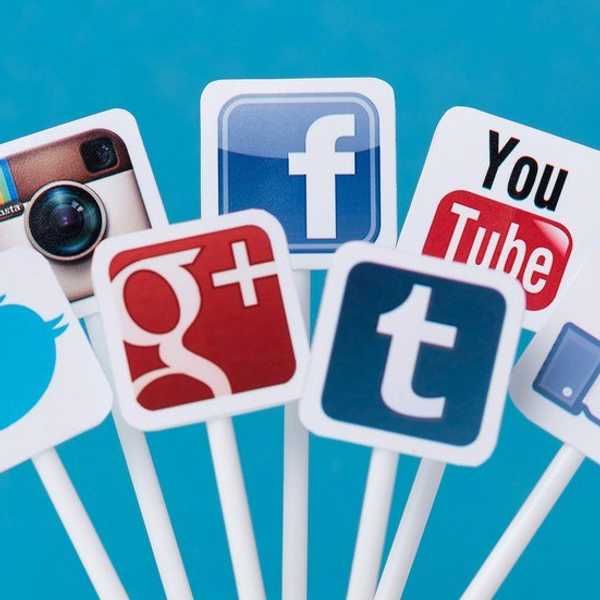
Social media websites like Twitter, Instagram and Facebook were practically designed to get people depressed by looking at each other. Seeing someone post how they were accepted into Yale Law School with a full scholarship while you struggle to pass Intro to Applied Chemistry with a C- can be enough to stop Reese's Cups from tasting delicious. With individual excellence being plastered onto digital notebooks and then having that very same excellence complimented with an outpouring of “likes," “retweets” and comments of “I love you,” social media becomes a competition over who can feel the most loved and validated. Admit it, you despise the posts where people extol their virtuoso collegiate grades and national debate championships and instead flock to posts detailing a person's struggle with post-graduate literary employment. When we post something, we may find ourselves compulsively returning to it in the hopes of seeing red-numbers next to the notification bar increase. The habit of distracting ourselves with a simultaneous juggling of Beyonce videos and articles on “17 Ways College Water Polo is Like the Bolshevik Revolution” with returns to our posts on Bernie Sanders’ flow cut have been crafted to a meticulous art by many a millennial.
LinkedIn is perhaps the most blatant tear-extractor of all the so-called “social media.” While LinkedIn describes itself externally as a means to better connect 6-figure employers with wrinkle free and apple cheeked job-seekers, it is really just a more devastating look into other people’s achievements. Jacob Yanaghita exercised an Internship at Goldman-Sachs for over a year when he was 14, holds a PhD in Applied Economics from Cambridge and is now a full-time employee of the Swiss Department of Treasury. You take solace in the fact however, that his glasses look absolutely John Hinkley-esque and his face is covered with pores so clogged they could be mined for diamonds. The summers between college years are especially apt times for LinkedIn to cause you cold-sweats at 2am, considering your classmate from Contemporary Political Theory has had three DC-based internships since his junior-year of high school and you are just trying to hold down a job at Best Buy.
Much of these digital feelings of inadequacy and addiction to red-tinted badges of appreciation can be traced to what psychologist Alvyn M. Freed calls “strokes.” These are gestures of communion and validation from others, such as a dap in the middle of a school’s hallway, or a “hi” followed by a wave or a smile. “Strokes” send a warm and pleasant feeling to your stomach that gives you a jolt of energy, your body perking up at the fact that other bodies acknowledge its existence. Social media has in a way, quantified these “strokes” where they are represented by the amount of likes, subscriptions and comments we get to the work we post online. Yet, as with any euphoric substance, addiction can follow suit, and many of us have become prone to sitting hunched over illuminating laptops or smartphones tweeting, posting and checking our social media in the hopes of getting those ever so sweet notification pings.
Our addiction to our digital-validation comes in conjunction with jealously as a withdrawal symptom. Should our half-naked pictures of us covered with yellow and blue paint whilst holding Jack Daniels bottles not get the sufficient amount of likes (for paint-parties, the acceptable minimum is 47), we may spiral into an inner cyclone of self-doubt and lowliness in which our innards feel as though they are perpetually floating above our skin. Suddenly we begin to resent the pretty tanned boy with the '90s Eminem haircut whose profile picture is him standing next to his slightly shorter yet no-less sunshine exuding girlfriend. How dare he get first-chair trumpet and get 289 likes for it. How dare he make Presidents List for the third semester in a row and get 5 comments of “you…are…amazing” from three different people. How dare his stomach look 80 percent more flat and chiseled than mine in his beach pics. 440 likes that got. 440 people took the physical effort to click on that.
In the era of almost a billion people having their “selves” represented on the computer for all to see and extol, it is easier now more than ever to remind ourselves of how “behind” we all are. Every college and job acceptance, every bodily transformation, every attempt and failure at love now has almost a billion different thresholds to be compared and most of them seem better than our own. I wish not to evoke the time-honored cliché of advising us to step away from the screens and occupy our time with more fulfilling activities. Though, considering that we will almost certainly post pictures of those fulfilling activities on Instagram, I consider this particular anecdote futile. The best we can do? Only use LinkedIn when we absolutely have to. Only then will we lessen the amount of times we shake back and forth in fetal positions because we did not apply for summer internships before February.