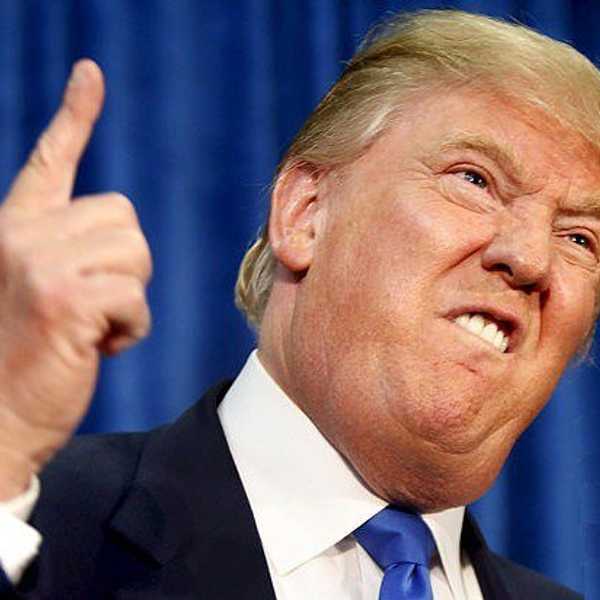
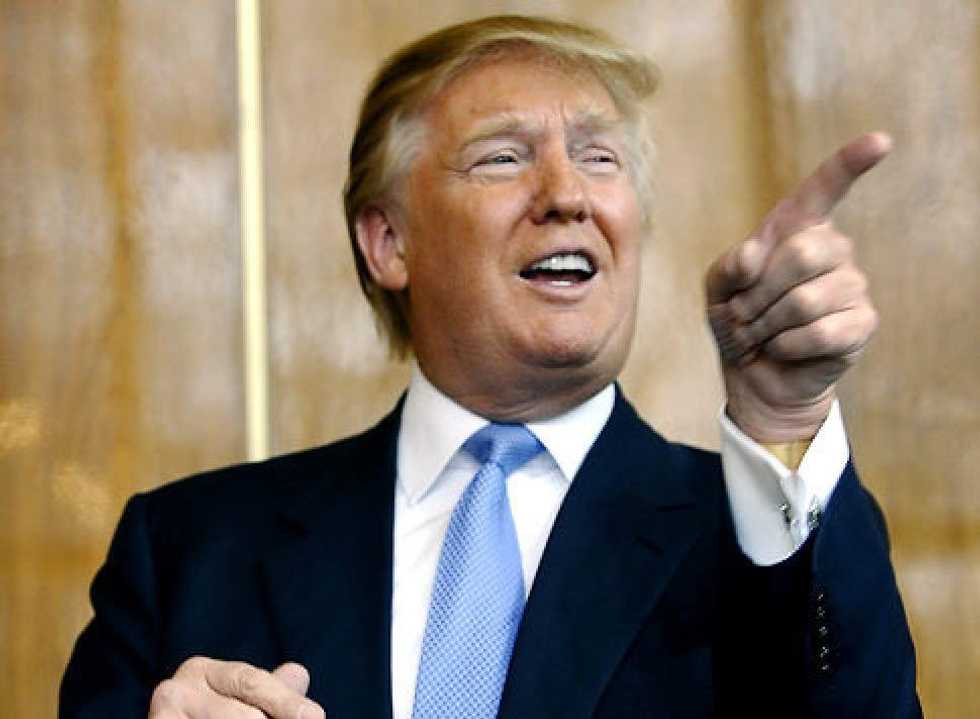
Every pundit tells us he won’t last, that his policies are absurd. He’s also the closest thing news agencies have found to a literal headline machine. CNN even delayed a special about the 10th anniversary of Hurricane Katrina just to cover another one of his speeches. Despite controversy after controversy, he continues to lead the polls; Reuters recently reported he’s opened up a 20-point gap. He’s the man, the myth, the legend. He’s the Donald.
It’s incredibly odd that no one wants to give credit where credit is due. In a country where politicians are doing more and more “politicking” and distancing themselves further and further from the people, Trump is a breath of fresh air. "Glengarry Glen Ross" tells us it takes brass balls to sell real estate, but Trump shows us that brass balls can also take you pretty damn far in politics: Trump’s rise reveals more about democracy and the American psyche than any Republican or Democrat would want to admit.
Acts of bravado are looked upon favorably -- if they go well, they’re cherished for decades, or even centuries: think Washington, Lincoln, Roosevelt. Even George W. Bush had around a 90 percent approval rating in late 2001. But, somewhat surprisingly, even in the scenarios when impulsive and bold actions don’t pay off, long run public opinion almost always gets better. Americans are sweetening up on W despite the mess he left - as Gallup reveals, his approval ratings are now positive. American history has rewarded bold leaders and proved its social memory is short when they fail -- and that’s reflective of America’s development.
America has a history of combat, and countries with that kind of past view commanders like heroes. Lincoln taking a political stand against the Confederacy, Ulysses S. Grant taking a physical stand, Kennedy not backing down to the Soviets -- gung-ho behaviour has been a defining characteristic of America’s past because the country is never supposed to back down. America didn’t capitulate in its proxy wars against communism, it didn’t let the enemy dominate it in its wars against terror -- for better or for worse, America is a country that is self-assured, and as such, values leaders who share those characteristics. That’s why, even when the aforementioned type of action is unsuccessful, there’s a strong push to get over it quickly to ensure future leaders aren’t risk averse. Strong leadership is what America needs, and the perception of Trump as a man who fears no one makes people listen when he says he’s going to make America great again.
This all seems contrary to the common perception of the democratic system -- a forum through which decisions are made via compromise. Democracy in and of itself ought not reward the trailblazers and nonconformists. Its very purpose is to undermine people who fall into these categories -- in its essence, democracy is supposed to silence the loud and vocal minorities and create a system of governance based on majority rule. That’s why the media often lambasts Trump-like figures -- and on a purely principled basis, they’re probably right. Yet time and time again, the politicians who, in theory, shouldn’t be remotely successful in elections, are the ones who go on and win. It seems incredibly odd that despite not really catering to special interest groups and taking a my way or the highway approach, decisive and strong leaders are almost exclusively winners. Maybe this reveals something more about human nature; even though we elect our leaders, sometimes we want them to seize control, we want them to lead us and not just listen to us. Trump’s aura of leadership has helped propel him to the top of the polls.
The current political climate, riddled with what a large group of people deem to be historically atypical behavior for an American government, makes Trump even more welcome to many. Lines drawn in the sand and then crossed coupled with minimal adherence to Teddy Roosevelt’s old adage of “speak softly, and carry a big stick” has left America very different from how it has been in the past. The America that Trump’s support base believes the current administration has created reminds me of a line from Tennyson’s Ulysses: “We are not now that strength which in old days moved earth and heaven.”
Trump’s plan to restore America to its superpower status strikes at the core of the American identity for many: being great. The idea of Trump going out and "bringing back the jobs" not only appeals to those in blue collar work to whom an increase in domestic manufacturing would directly benefit. It appeals just as much to white collar suits because the narrative that you live in the greatest country in the world is an incredibly strong one. No matter how hard your life may get, or how many tribulations you must endure, knowing that you live in what you perceive to be the greatest country on earth makes all of that easier. Those individuals take solace in everything America provides for them. Moreover, they become more grateful, and less desolate about their troubles, when they imagine what their life in a different and "less great" country would be like. To many Americans, the way Trump speaks and the ideas he puts forth all remind them of the great America of yesteryear.
All of this isn’t to say that Trump would be a good president; that’s something which is definitely up for debate. But what Trump is, and what he always will be, is a strong leader -- and he’s succeeding because a strong leader is just what America needs.