

As the days get much darker and shorter, you probably find yourself feeling more bored, cranky, and tired than usual.
And when that happens, you might joke with your friends about having Seasonal Depression, and how you feel so much more sad in the winter than you do in the summer. The thing is that you're not the only person feeling like that.
1. First things first: Seasonal depression is a real thing.
It's not just the "winter blues" but Seasonal Affective Disorder is a real thing, also known as Seasonal Depression around the world.
In fact, it’s a subset of major depressive disorder in the Diagnostic and Statistical Manual of Mental Disorders (DSM). The difference between it and other types of depression is that it follows a seasonal pattern, meaning that the symptoms are present in certain months but completely absent in others.
2. It actually has to do with darker months and shorter days — not the weather.

Even though it’s associated with winter, SAD isn’t really related to colder temperatures. It’s actually tied to the light-dark cycle — like when it starts getting dark super early.SAD averages about five months out of the year but obviously everyone is a little bit different. The exact duration and time of year differs depending on where you live.
3. The symptoms are similar to those of other types of depression.

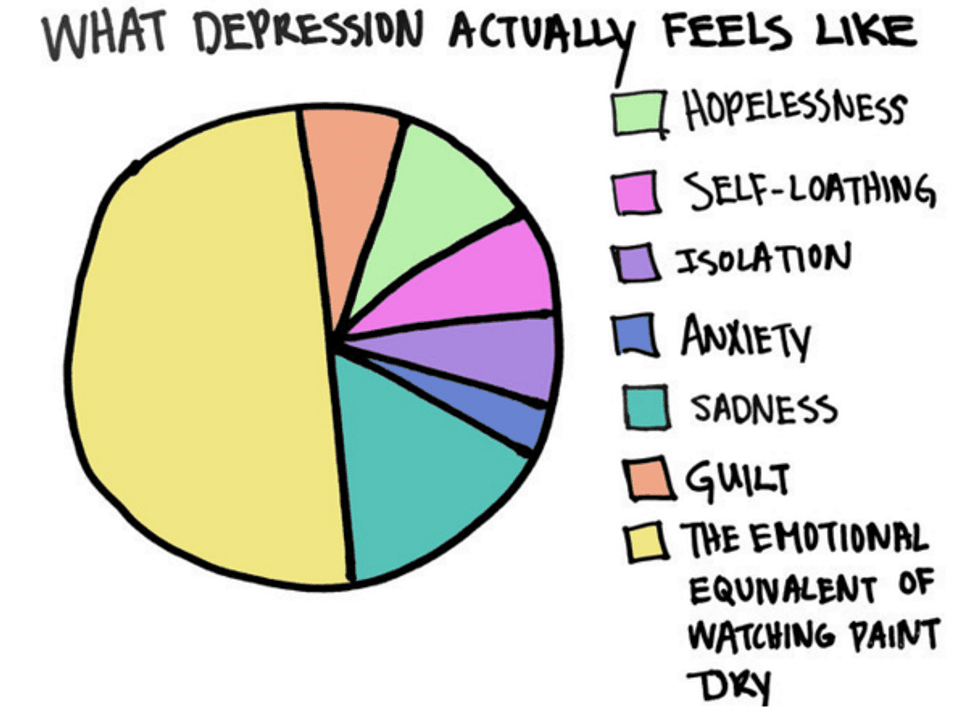
These can include sadness, disinterest in things you used to find enjoyable, significant change in sleep patterns or appetite and difficulty concentrating.
If you're not sure if you are experiencing SAD or just "winter blues" ask yourself this: “How much are the symptoms I’m experiencing affecting my everyday life, my ability to perform at school or at work, or my important relationships?”
If the symptoms are getting in the way of those things, it very well could be SAD and it is worth addressing.
4. If SAD sounds like something you might have, you're going to want to talk with a professional.


It's true that a lot of people feel lonely or sad around the holidays for circumstantial reasons without necessarily having SAD. Not to mention, it’s possible that you suffer from depression year-round and are mistaking it for seasonal depression only, so you want to make sure you’re treating the right thing. Next time you find yourself at the doctors office, bring up your concern just to be safe.
5. If you suffer from depression year-round, it’s possible for your symptoms to get worse in the fall and winter 
But it IS definitely something you should talk to your doctor about. Even if it is not SAD, it is still depression. If it get's worse in the winter months, it is something you should address. You may benefit from being proactive.
6. Therapy is also an excellent option and may help prevent seasonal depression the following year.
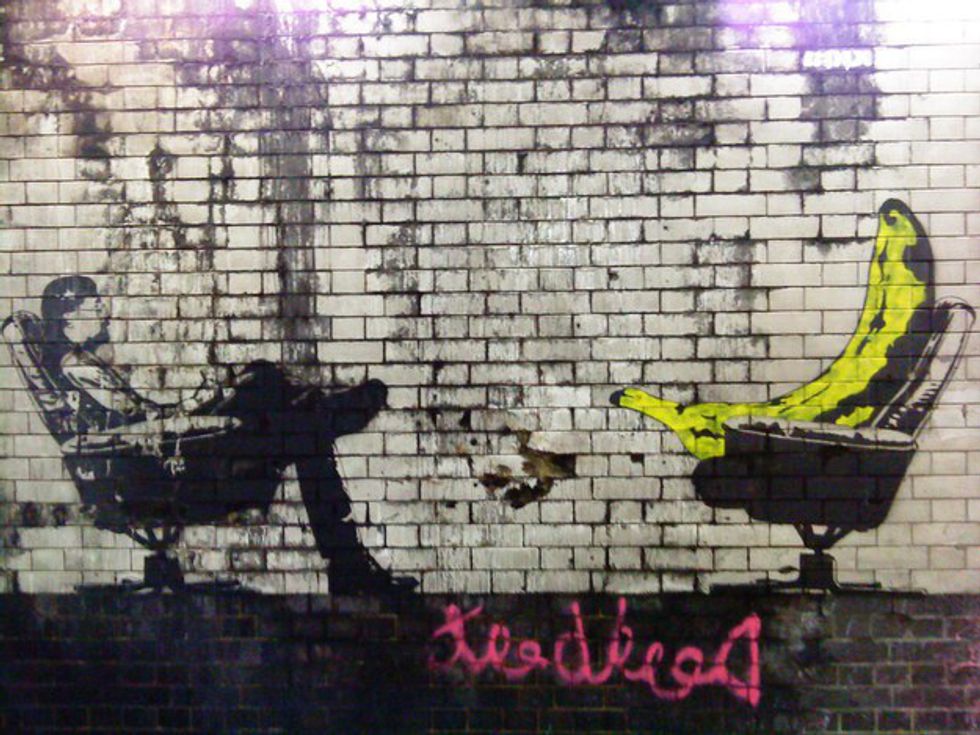
Cognitive behavioral therapy, a type of therapy that focuses on problem solving and treating the challenges of daily life, has been associated with big improvements in seasonal depression. Not only that, but CBT patients have fewer relapses and less severe symptoms in the following years.
If CBT doesn't sound up your alley, you can also try light therapy. Light boxes stimulate sunlight and are safe and easy to use. When buying a light therapy lamp, make sure it’s one specifically for SAD because there are some for skin conditions too. Each light box will come with its own set of instructions, but typically you use it for 15–20 minutes in the morning, a foot or two away from you, and aimed toward your face. Seeing a professional first to figure out the right dose and avoid any side effects.is probably your best bet.
7. Make sure to get outside when some rare sun appears. 
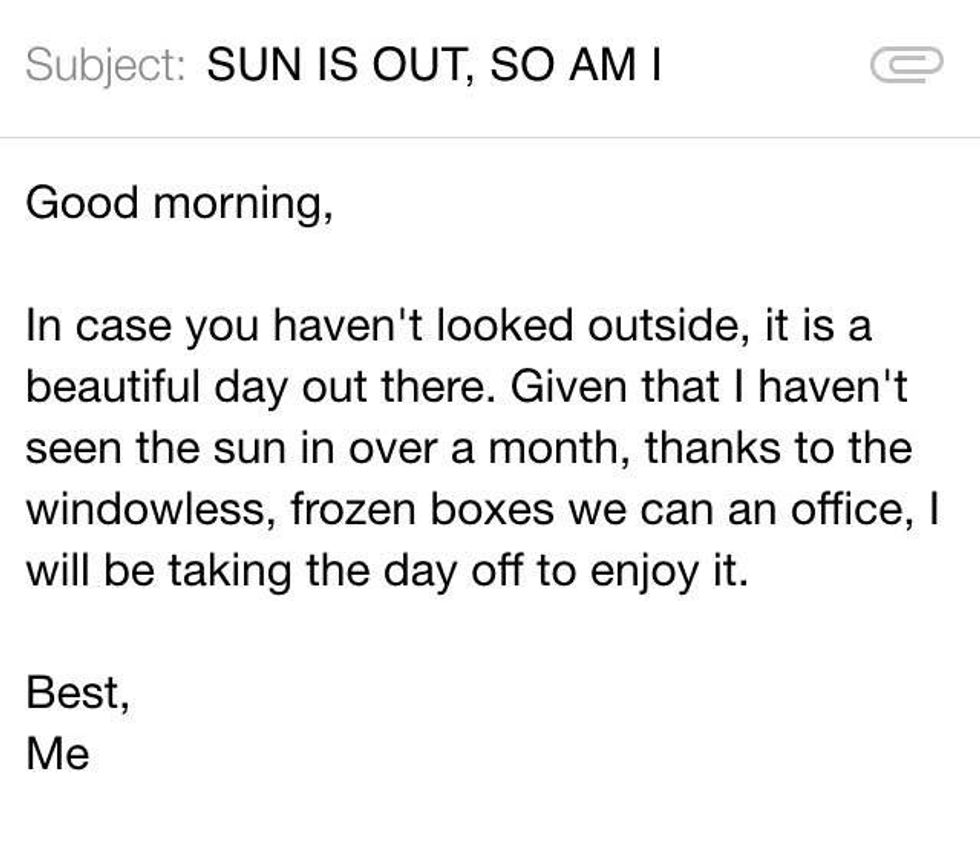
This is important if you work a job inside, spend hours studying at a desk, or go from class to class each day. Carve out a part of your day to go grab lunch or a coffee or just take a short walk, because nothing is more effective than natural light. Even if it’s overcast outside, a little is better than nothing at all.
8. Resist the urge to hibernate for the winter.
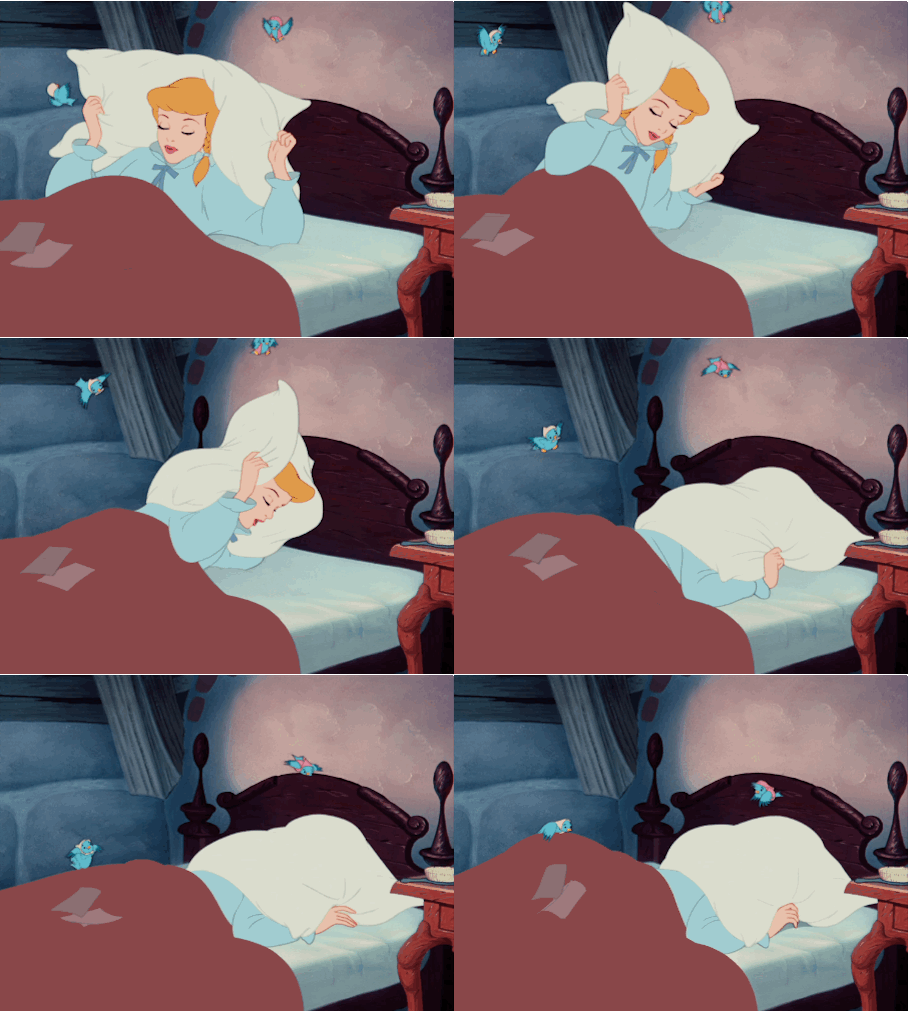
Yes, it's tempting, I know. Waking up to those dark mornings just to come home to those dark nights, you want nothing more than to get into bed and sleep all day. But hibernating all winter can make your depression worse in the long run. If you don't go out at nights, and stay busy during the day, you're signaling to your body that that is okay and it actually shuts you down mentally as well. So keep up a social life, go to work and classes, and stay busy no matter how hard it is.
9. It’s also now more important than ever to make sure you’re getting exercise.

Exercise, specifically cardio, have been proven to be effective in treating depressive symptoms, not to mention anxiety and stress.It’s no replacement for professional treatment, but it can make a difference for sure. Yes, it takes effort, but it’s something you can do for both your physical and mental health. Try a short jog, a walk, riding your bike on a nice day, or cycling in the gym.
10. Maintain a regular sleep schedule.

Just like other types of depression, seasonal depression comes with disturbances in sleep, so go the extra mile to stick to a strict schedule to keep things from getting worse. You cannot sleep for 8 hours one night, 4 the next, and then 6. You will become exhausted and stressed and won't function as well as you can. A stricter sleep schedule will prevent depression from getting worse and snowballing into more issues.
11. Above all, remember to show yourself compassion and treat yourself well by seeking out the help you need.
Only 3 more months!