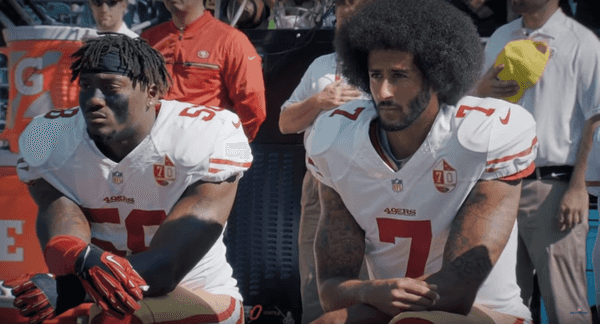
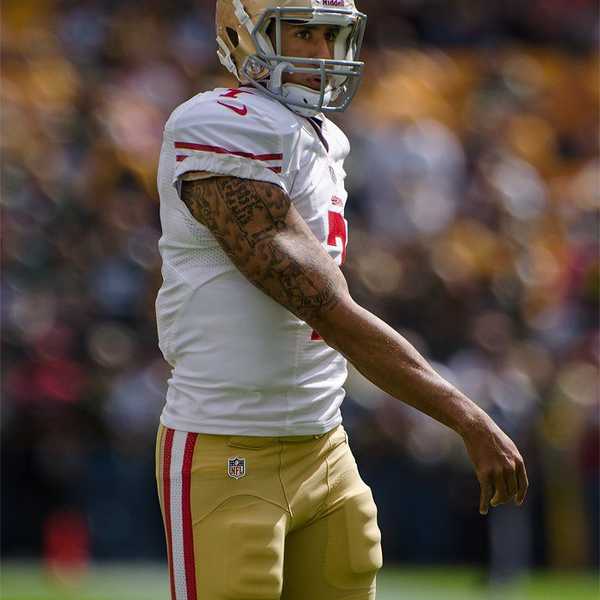
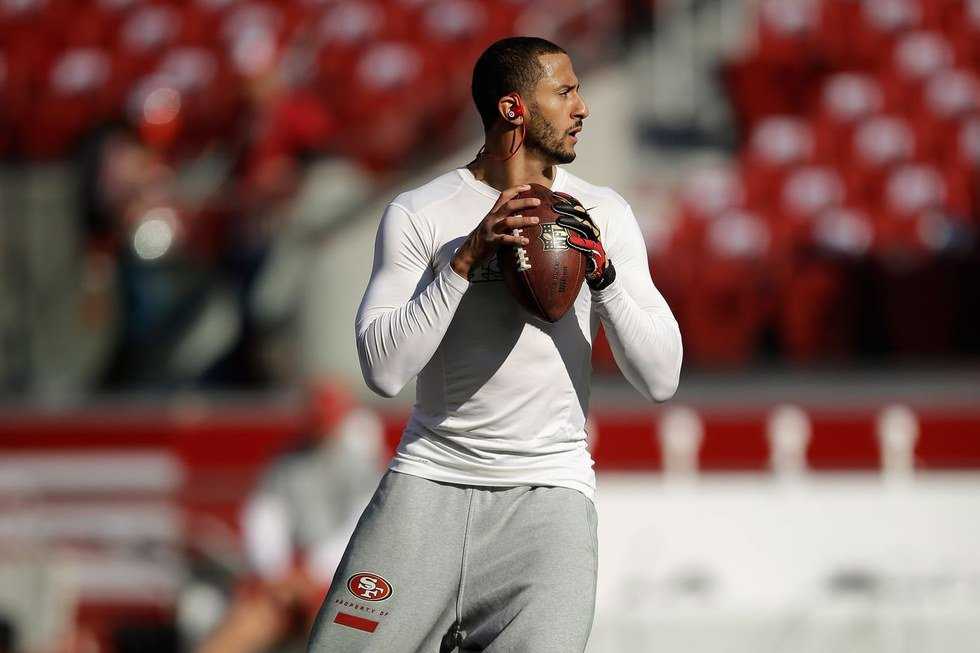
A preseason football game turned political when the San Francisco 49ers quarterback, Colin Kaepernick, remained seated during the playing of the National Anthem before kickoff. In an interview that shortly followed, Kaepernick explained his intentions: “I am not going to stand up to show pride in a flag for a country that oppresses black people and people of color. To me, this is bigger than football, and it would be selfish on my part to look the other way. There are bodies on the street and people getting paid leave and getting away with murder.” Kaepernick immediately faced harsh backlash in response to his protest. Former fans are burning his jersey, political loudmouth Tomi Lahren tells him he should “leave [America]” and Republican presidential candidate Donald Trump says “maybe he should find a country that works better for him.”
Kaepernick joins the ranks of other prominent athletic activists such as John Carlos, Tommie Smith, Muhammad Ali, Kareem Abdul-Jabbar and Ariyana Smith, to name but a few.
Perhaps the most iconic athletic protest was initiated by Tommie Smith and John Carlos during the 1968 Olympic awards ceremony. During the playing of the National Anthem, Carlos and Smith raised their gloved, balled fists high in the air in hopes to draw attention to the decrepit conditions, literally, figuratively and socially, blacks were facing in the turbulent 60s. Smith, in an interview, describes the symbolism rooted within his protest: “I wore black gloves to represent social power or black power…I wore a black scarf around my neck to symbolize the lynchings—the hangings—that black folks went through while building this country.”
Like Kaepernick, Smith and Carlos faced unfavorable repercussions. According to Jerry Bembry, writer for theundefeated.com, “Both [Smith and Carlos] were immediately kicked out of the Olympic Village and faced years of financial struggles. The ex-wife of Carlos committed suicide in 1977, which took the Olympian down the path of depression.” Upon their return, Smith and Carlos received countless threats.
The before prominent voices of athletes in protest faded with time following the 60s. Now, athletes are rejoining the conversation.
Many in opposition view Kaepernick’s reluctance to stand during the National Anthem as a direct attack on our troops, though in his reasoning there is no mention of our service men and women. Interestingly, military service members came together to show support for Kaepernick’s peaceful protest against the injustices facing minorities to this day.
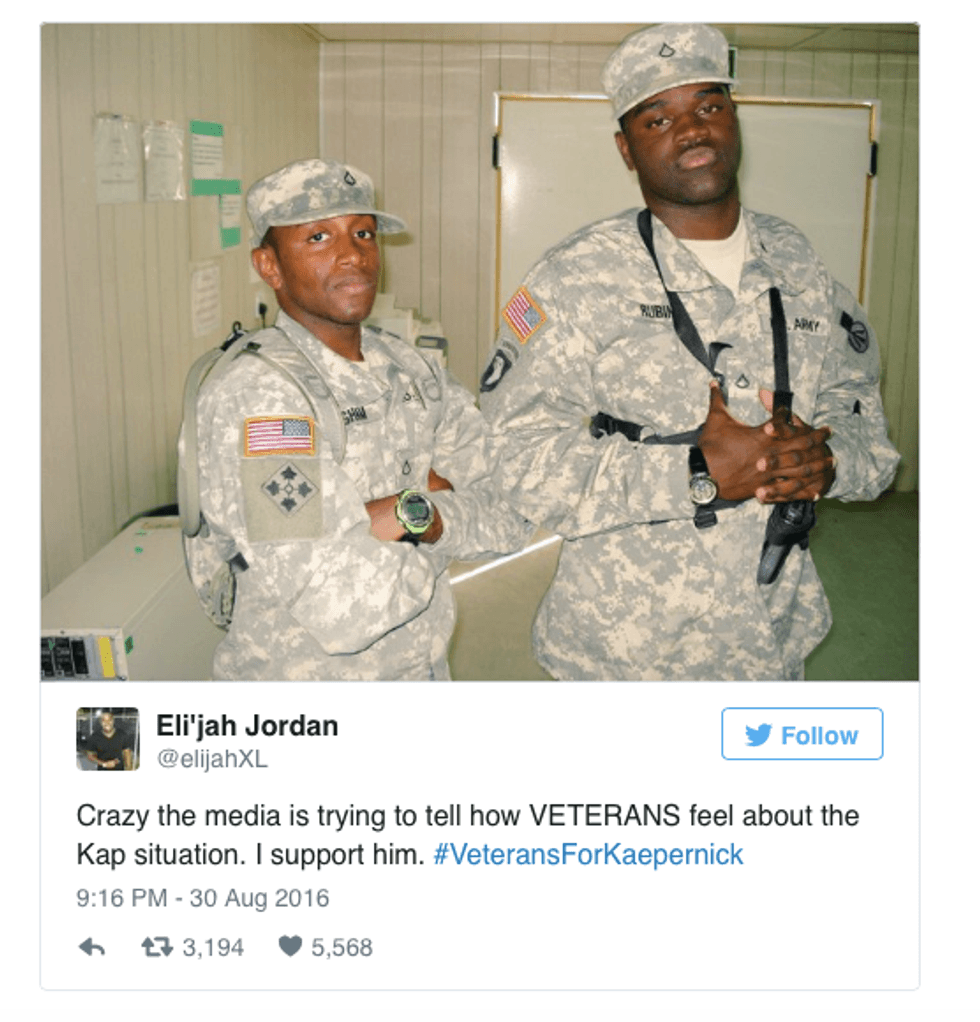

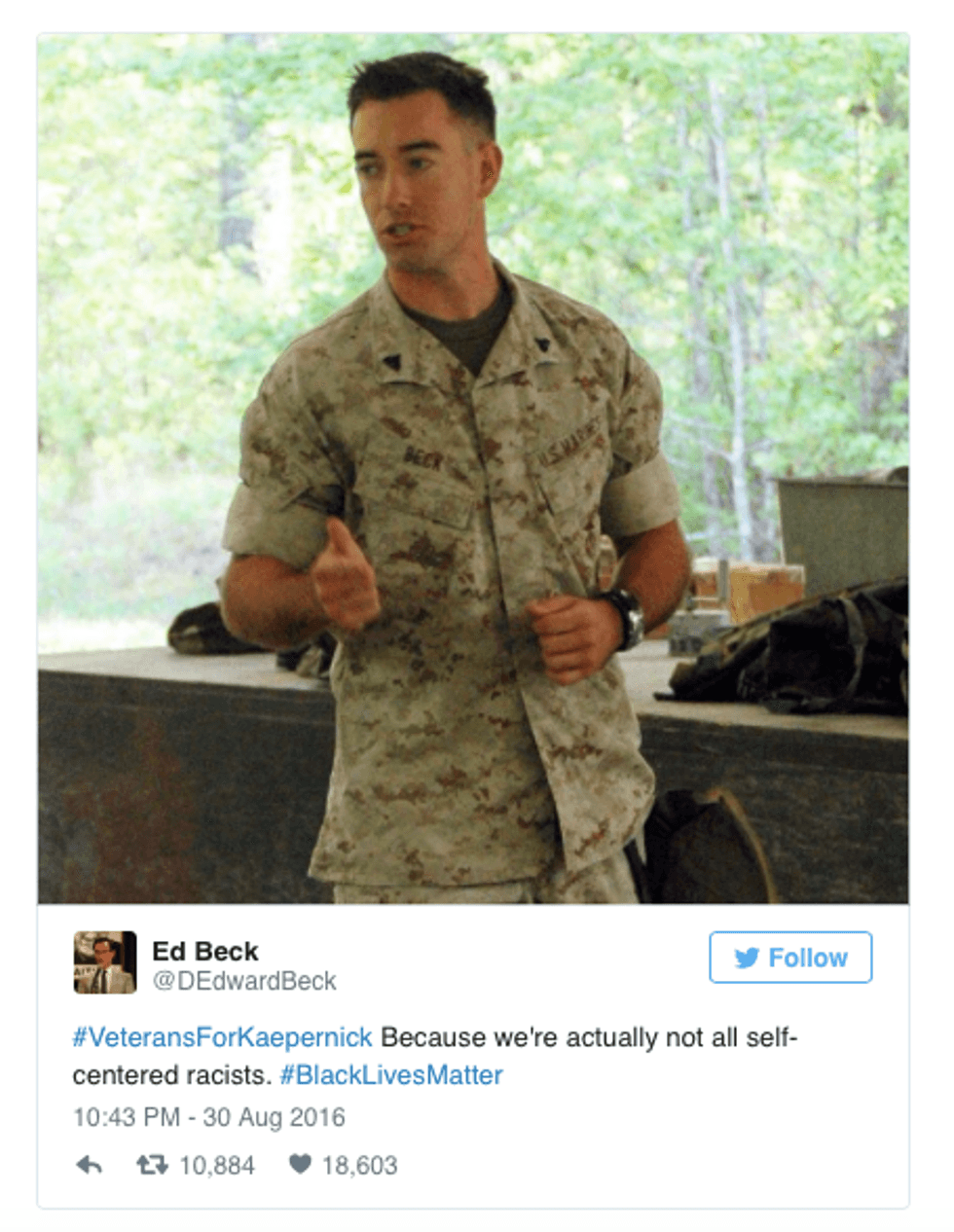
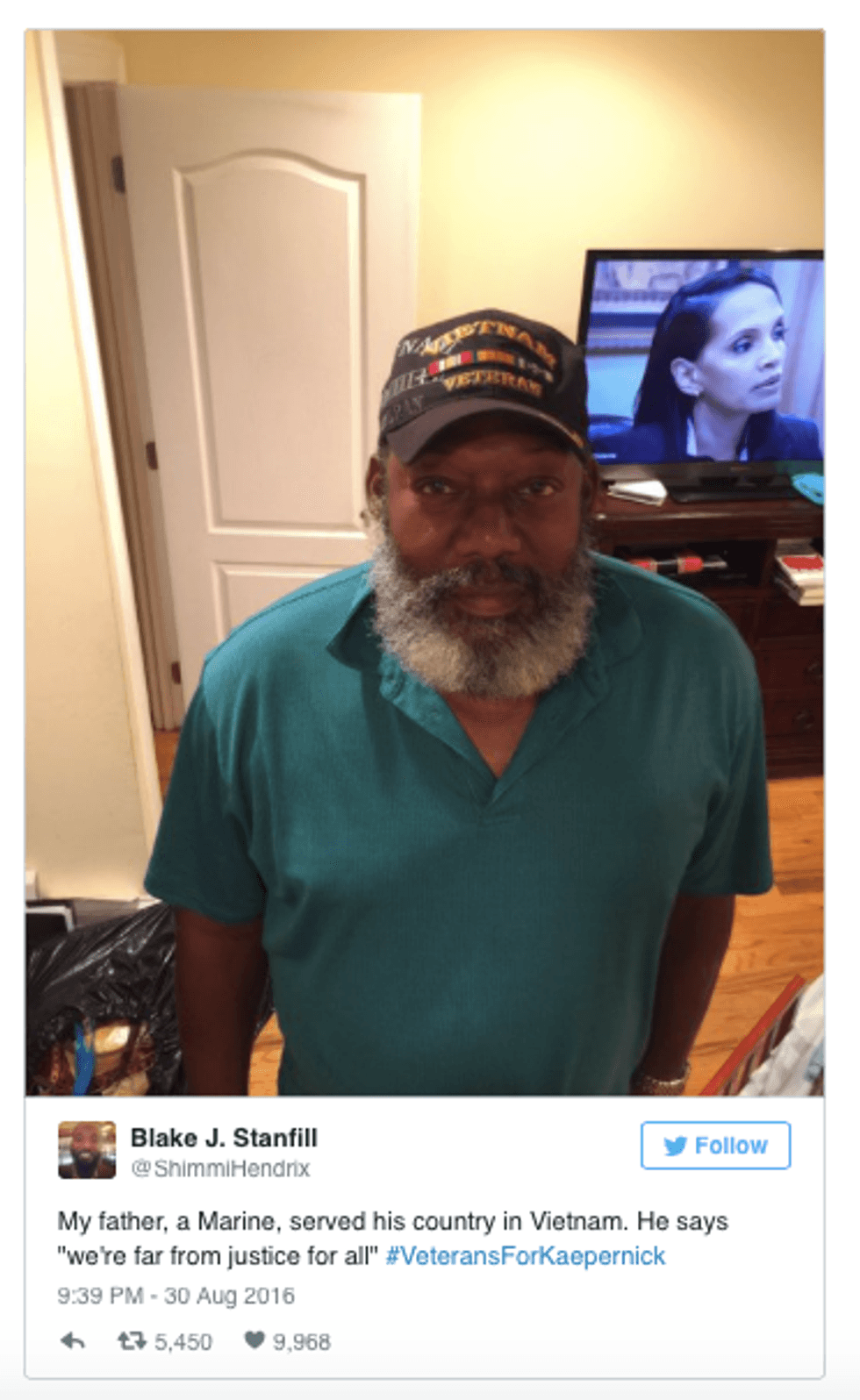
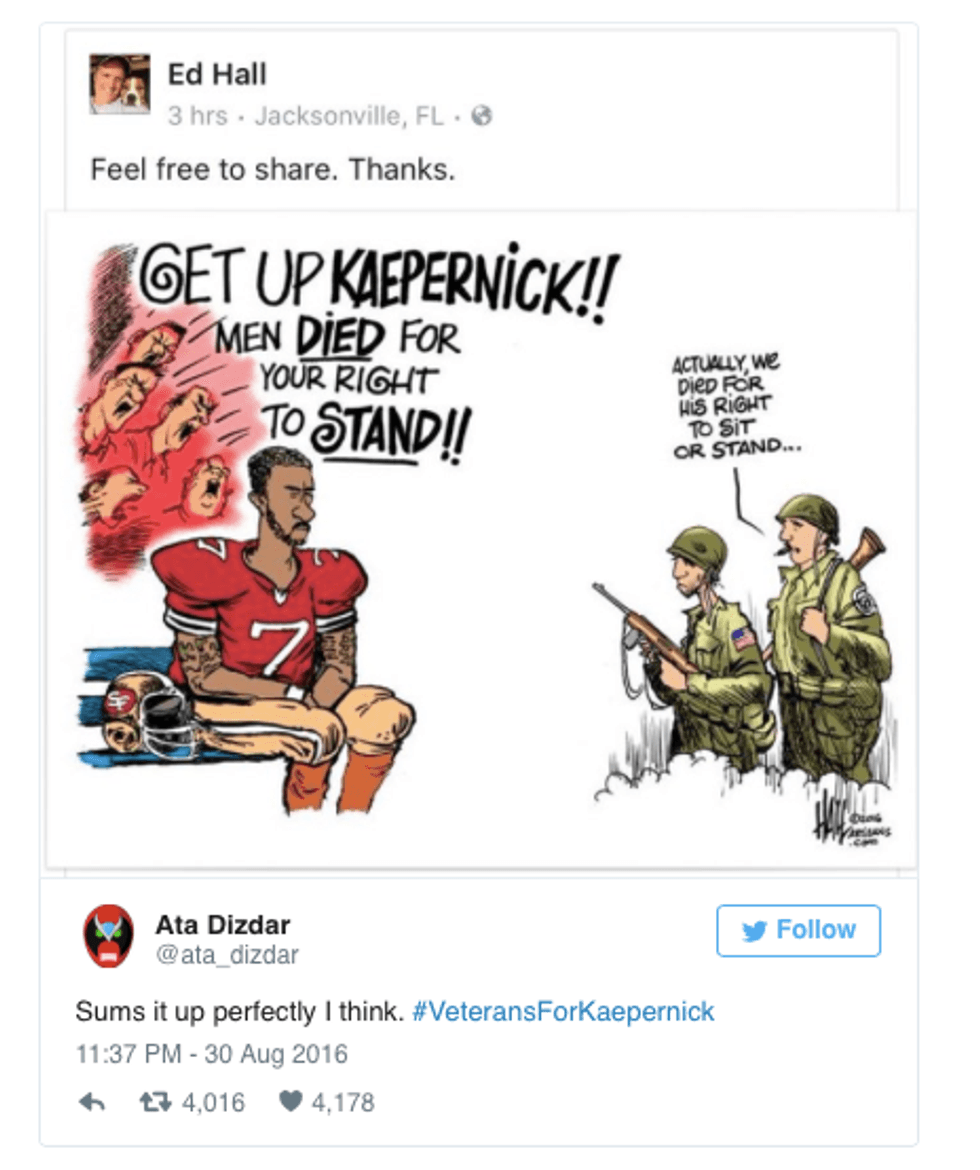
Some argue that Kaepernick’s actions were “un-American-like,” but peacefully protesting—enacting your First Amendment rights—is as “American-esque” as it gets. Kaepernick risked his entire career, fully aware he’d face severe opposition to raise awareness. That’s brave, and to be brave is what it truly means to be American.