
We are raised in a world where we are told not to judge others based on an ailment they may possess. Of course, some are raised to hold that idea more strongly than others, as we still hear stories of the developmentally disabled and other differently abled people being berated and bullied. There is a stigma held that once you have a disorder, no matter what it may be, you are automatically shunned from regular society in one way or another. With this being Mental Health Awareness Month, this conversation comes up a lot more than it usually does throughout the year.
Living in the 21st century, this is just as common with those with physical disabilities as it is with those with mental disabilities. When it is heard that someone has depression, anxiety, suicidal thoughts, or other mental illnesses, they are immediately viewed through a new lens, a stigma, and the conversation is shut out.
These stigmas do nothing to help the cause. When approximately 20 percent of adolescents have a diagnosable mental disorder, this is not something to take lightly (NCCP). With such stigmas attached to these disorders, it may cause fewer people to talk to someone, seek help, or help break the stigmas in general. These can cause a lack of confidence and an overwhelming sense of worry that someone's "secret" may get out.

Let's look at these numbers: If you are anywhere in the age range of 10 to 18, you could line up 10 of your friends, and chance are, two of them will have a mental illness. You just do not always know it. It is not obvious, it is not always visible, but that makes it in no way less real. That factor of hidden symptoms makes these illnesses realer than most others because it can be detrimental to these people in more ways than just surface effects.
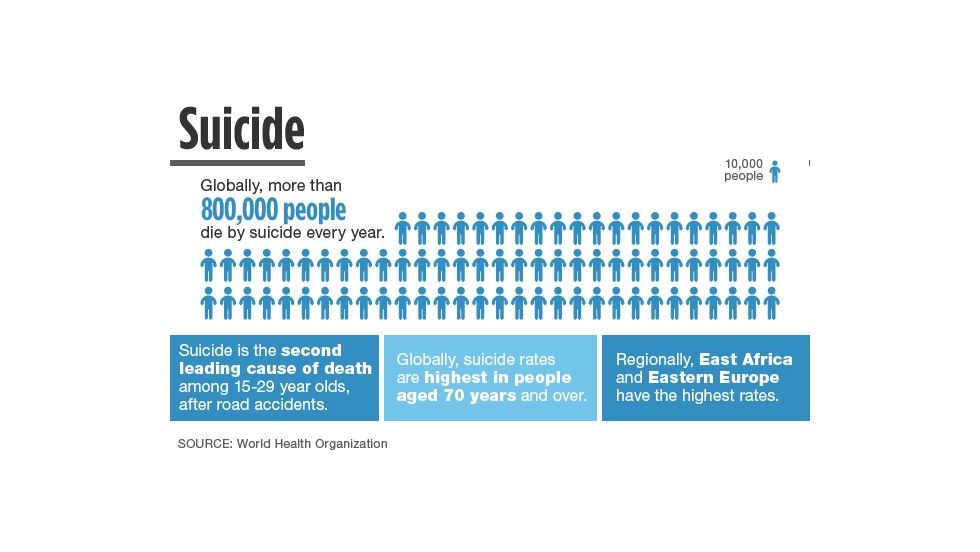
What people do not see is that mental illness, while it affects some parts of people's lives, does not always affect them as a person. I've suffered from clinical depression for a large portion of my life, and most all of my friends were extremely surprised when they found out. It was a large part of what shaped me into who I am now, but it does not define me. I am not afraid to tell people because I know the stigma is not me, and now, it is all about making people aware that yes, this can happen to your best friend and your roommate and anyone else you know. I did not choose to have depression, and I could not help it, but now that I do not struggle with it anymore, I can work towards a greater acceptance of those who do still have the daily struggle with it.
There is no clean cut image of a person that holds a mental illness. Just because someone has depression or is suicidal does not mean that they are "emo," just in the same way that just because someone wears all dark colors does not mean they suffer with depression or are suicidal. Just because someone is very bouncy, it does not mean they have anxiety. Just because someone is quiet and reclusive, does not mean they are a ticking time bomb. These stereotypes attached with the stigmas make it hard for anyone to believe that this is real for a large portion of people, and should not be taken lightly. On the other side of things, it makes it hard for people with these illnesses to come forth and admit to them out of fear of being judged and ostracized.
So what can we do about this? Break the stigma and start a conversation.
Breaking the stigma has turned into a movement. A conversation about mental illness is hard at first, but it gets easier, and it should not be a scary topic. Mental illness is just as real as cancer or any other disease. It is not scary to talk about because those who have been affected by it personally did not choose to be. It is just as much genetics as any other disease. You just have to have the confidence to step into that conversation and be an advocate against the stigma, as much as anyone else.
One great organization that is trying to spark a conversation that I had gotten involved with in middle school and have stayed involved with is To Write Love on Her Arms. Started in 2006 by founder Jamie Tworkowski, TWLOHA is a non-profit movement dedicated to presenting hope and finding help for people struggling with depression, addiction, self-injury, and suicide. TWLOHA exists to encourage, inform, inspire, and invest directly into treatment and recovery.
A band trying to start the conversation is Twenty One Pilots. These Columbus, Ohio natives, and lead singer Tyler Joseph specifically, are very open about the struggles faced with mental illness, and write about it even more openly in their music. Many of their songs openly address the mental process of someone with mental illnesses, and although they do not come outright and talk about it, it is still there. In an interview with IYP, drummer Josh Dun says this in response to the question "How do you impress your peers?": "So many people struggle with dark thoughts, depression, and internal pain. I’m not an expert on it, but I know that if I’m ever feeling down, if someone can make me laugh, it really is a cure to those thoughts " (IYP).
Breaking the stigmas of mental illness is just the first step. The next is a conversation. If someone tells you they suffered from mental illness, just try to remember, that does not define them, that just is a piece of what makes them the wonderful friend, family member, classmate, or floor mate you have always known. Having a mental illness is not something to hide or shy away from, it is something to make you stronger and to show others how tough you really can be.
You can never know what will happen if you just ask. Let's break the stigma, start the conversation, and remember that mental illness is, in fact, real.