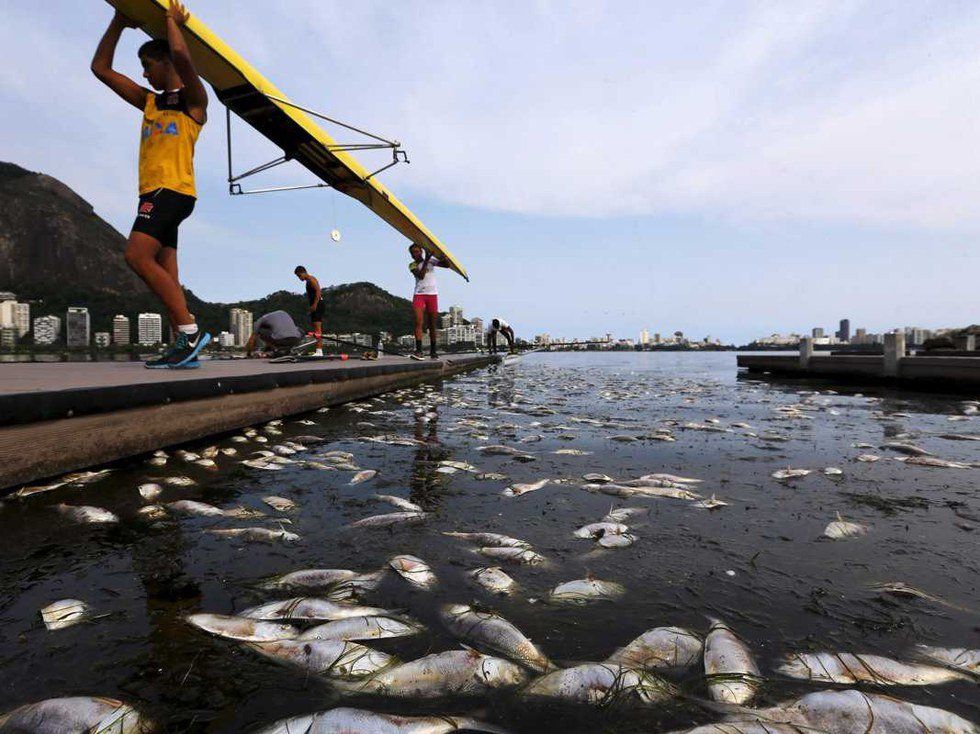
With all of the issues that we’ve seen in Rio this year—from flooded buildings to rampant diseases—it begs the question: why would any country choose to host the olympics? To an outsider, it seems like a huge amount of money to be spent for the benefit of everyone else. The cost of hosting the Olympics used to be fairly modest. In 1948, England spent £732,268 (approximately £20 million or $30 million in today’s money) on London’s Olympic games. Today, it’s quite a different story. The 2008 Beijing games are believed to have cost about $40 billion and the 2014 Sochi games may have cost as much as $50 billion. And after the Olympics, these cities are left with millions of dollars worth of structures that serve no purpose. Study after study has shown that hosting events like this have a negligible economic benefit or even a negative impact.
So why do countries agree to do this? Author Simon Kuper, who studied the 2014 World Cup, says that their reasoning is quite simple. These events are fun. They’re essentially a big party that the whole world gets to attend. There’s actually research saying that hosting big sporting events results in a measurable increase in happiness for local populations.
But is the increase in happiness worth the monetary loss for a country in such a state as Brazil? In 2011, Brazil was the world’s sixth largest economy and its large oil reserves attracted China as its top trade partner. Today, Brazil faces rising unemployment rates and its worst recession since the 1930s because of corruption in the oil industry. On top of all that, China is trading less and less with Brazil, the Zika virus is spreading, and government workers are going on strike. The recession is causing decreased tax revenues and the government has majorly decreased funding for healthcare, police, and education. And, because things can always get worse, the president has been impeached.
As much as Brazil probably needs the supposed increase in happiness that comes from hosting a large sporting event, they could be much more successful in improving the morale of the population by fixing the economic issues at hand rather than throwing a huge party. The $12 billion that went towards building arenas and swimming pools and putting on the opening ceremonies could have been better spent in the education system or police force or pulling the country out of its crippling recession.