


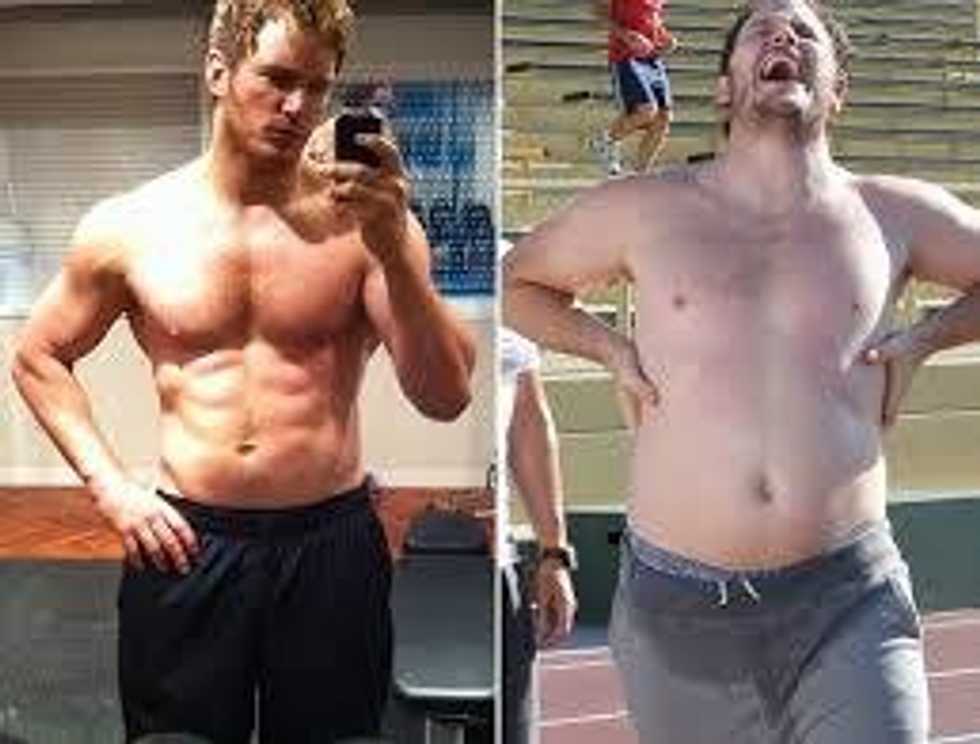
It's not hard to see how people struggle with how they relate to themselves and their bodies in 2016, nor is it difficult to discern the cause of these issues. We advertise cheeseburgers and other terrible, greasy, hydrogenated foods through hyper-sexualized ads depicting their consumption by unrealistically beautiful people who in reality have likely never consumed whatever double donut, deep-fried atrocity fast food nation has cooked up, and people eat it up.
Men don't necessarily face the same societal pressure to have a perfect body with rippling abs, which you can cite the "dad-bod" trend as evidence for, but they still face significant, unrealistic standards of what their bodies are supposed to look like. In no way am I trying to imply that the societal beauty standards put upon women and their bodies is unimportant, but I think it's important to acknowledge that men face serious scrutiny when it comes to their bodies as well. I don't intend to disregard the struggle of many women who do fight with how they relate to their bodies; I see our society's unrealistic, superficial standards of appearance for both men and women as two sides of the same coin. Nobody ever talks about men and how we relate to our bodies, despite the very real standards we see in movies, commercials, on television, and on the internet.
I know that I've always felt very self-conscious when it comes to my own body. As a boy I was seriously overweight, standing at 5'4 and weighing in at 200 pounds in the sixth grade; I currently weigh 210 pounds. I remember being bullied for my weight by other kids in my class, and while it taught me some personal lessons, it's something I'm probably not ever going to forget. I remember one of the only fights I was ever a part of in our neighborhood was started because one of the neighbor kids wouldn't quit habitually referring to me as "chunky" and "Cartman." I did eventually shape up when I started playing sports in middle school, but that was a burden I bore for many years. It was also a burden that, in many ways, I put on myself. I was unhealthy for a long time, and I wasn't really interested in taking care of myself, eating right, and playing sports until I reached a certain age. I'm thankful that my mother was so patient and never pressured me to change, allowing me to make that choice for myself. Still, my weight and the way I relate to my body will probably always be a tenuous situation for me, because those who suffer from childhood obesity are far more likely to face obesity in their adult years, and the question of how I relate to my own body and even myself at times will probably never leave the back of my mind.
Millennial men grew up in a generation when action and superhero movies became completely mainstream. It's not that it's merely common to see a movie with a male protagonist who takes his shirt off to reveal eight pack abs and arms that could rip a street sign in half; you would be hard-pressed to find a movie where the protagonist doesn't have a resting body fat percentage below 8 percent in any modern action film. While it is certainly true that it's not healthy to weight 200 pounds in sixth grade, it isn't realistic to assume that you will look anything like Zac Efron even if you do take care of yourself with proper diet, exercise, and rest. Transforming a body to look like Chris Hemsworth's Thor requires a diet, sleep, and exercise regimen that borders on neurotic.
Transforming your body requires sacrifices that most people would consider insane. I actually managed to uncover my abs right after high school, and it felt great. I felt healthy and strong, and people do treat you differently when you're in shape than when you're not. I loved the way I looked, but to say that I would even be capable of reaching and maintaining that point year-round is just not true. I had to maintain a diet of lean, grilled meats (mostly chicken with the occasional steak or fish), rice (no bread or pasta, period), vegetables (green ones), fruit (apples and bananas), and protein shakes with almost a religious fanaticism, and this meant sitting and watching while my friends went out to ice cream. I was doing CrossFit every day, and my abs didn't show up at all until a few weeks after I started running a 5k directly after completing the daily WOD. My legs, chest and back would hurt so badly from the grueling workouts the day before that I struggled to get out of bed sometimes, and my shin splints had to be taped up under my jeans and slacks at work just so I could get around to do my job waiting tables. I followed this regimen with a devotion that I would almost call religious, and it felt great being in that kind of shape. But I'd just be lying to you if I told you I thought I could maintain it through an otherwise average lifestyle. It's unreasonable to think that most people could get a body like that and keep it through the rigors of everyday life like work, family life, school, and a million other things.
Even if you were to fanatically follow a fashionable diet and exercise trend, it doesn't guarantee that you're going to look like Daniel Craig, and it certainly doesn't mean you're going to be completely healthy. Genetics don't work that way; your body is your body, and it's the only one you're going to get in this life. Take care of yourself, and try to reach your fitness goals while understanding that healthy doesn't necessarily mean He-Man. It means that you're trying to take care of yourself by going for a run, playing basketball, or doing yoga while remembering to eat your vegetables. I know a people who work out so often that I would literally call it their addiction, and though they're ripped out of their minds, I certainly wouldn't call them healthy. There is a point between fanatically following a diet and completely letting yourself go; I know this because I've been at both ends of the spectrum.
So eat your vegetables, run your miles, and make sure to get your proper rest, but don't think that you can't ever drink a beer, have some pizza, and take a rest day, because that unending control you're trying to exhibit in performing such a rigid lifestyle can't realistically last unless you're seriously committed to it.













