The Academy Award nominations for 2016 were just announced--which means that the Oscars are not far behind.
From Best Actor (we're all rooting for you, Leo!) to Best Director to Best Screenplay, it's thrilling to see who wins. But the best part about the Oscars, in my opinion, is getting inspired by the incredible creativity and story-telling that is celebrated every year. It's truly amazing that a small idea in one writer's mind can explode onto the paper, which then goes on to have its characters and thoughts and emotions personified on film for the entire world to see.
A single story, characters once in a writer's mind, born out of creativity, have now come to life.
Staggering, isn't it?
How one thought can be shared and seen by millions of people?
In honor of the Academy Award nominations having been just released, here's a look back--and a homage--to some of the most staggering, incredible films who have been recognized by the Academy of Motion Picture Arts and Sciences in recent years, and who's beautiful writing has created long-lasting inspiration in the cinematic and writing world.

"Pan's Labyrinth (El Laberinto del fauno)", (2006)
Storytelling mastermind Guillermo del Toro's foreign film spins the realistic fairytale of Ofelia, a young girl living in World War II-era, war-torn Spain. She is forced to move to the Spanish countryside with her very pregnant, very weak mother and her new cruel, brutish stepfather, Captain Vidal. Feeling depressed and hopeless in the world around her, she finds sanctuary and comfort in a magical world and its creatures she discovers in a stone, ancient labyrinth in the woods. A spark of hope is ignited within her when one of the creatures, a faun, reveals that she is actually a princess from the Underworld, and she is trapped in human form. She can return to her immortal life as a princess if she proves herself, which, like in many fairytales and folklore, involves her completing three tasks before the full moon. Intermingled with the scenes of fairytales is the more brutal, sinister realism of the horrific violence of war that is going on around Ofelia, but of which she chooses to shut out.
The film is an escapist's paradise; it's imaginative, heartbreaking story of a young girl, just trying to find comfort in a sad world where all too many responsibilities and tragic events have fallen into her lap all too early in her life. Del Toro's writing and ability to personify the gut-wrenching, bittersweet emotions involved in growing up will have any audience in tears.
The film won three Oscars: Best Achievement in Art Direction, Cinematography, and Makeup.
"Whiplash" (2014)
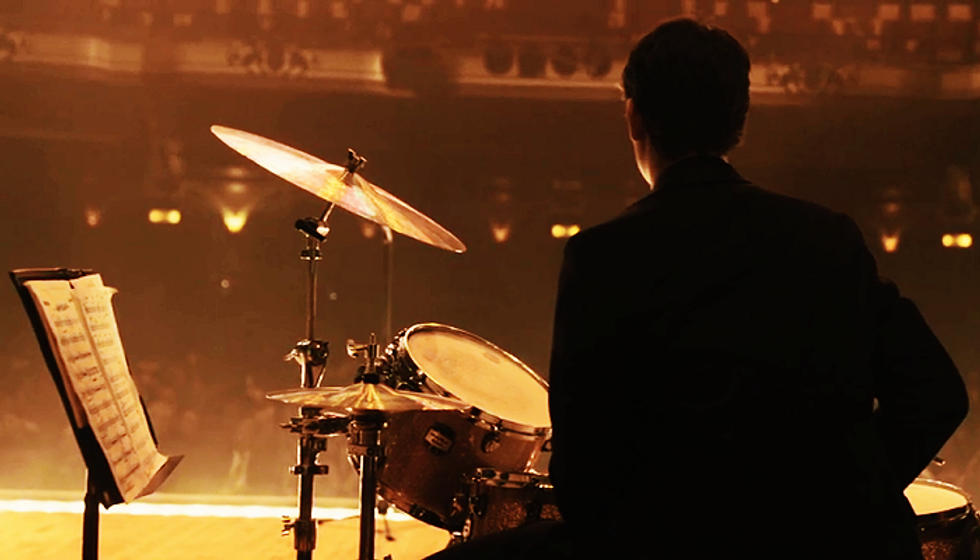
Unknown director Damien Chazelle stormed into the cinematic world in 2014 with his groundbreaking drama, "Whiplash." The story follows Andrew Neiman, a promising, ambitious drummer who becomes obsessive about his future as a musician when he is accepted to the cut-throat Schaffer Conservatory of Music. There, he is bullied by a patronizing, aggressive and abusive music teacher, Fletcher. He goes to extremes in order to please Fletcher, including crawling out of a near-fatal car accident in order to make a performance. The film will irritate, anger, and sadden you, but that's what makes Chazelle's writing so damn brilliant.
The character of Andrew could be anybody--that kid in your class that is dying to get that A (and if he gets an 89, he'll blow up about it). He's that kid on your sports team in high school that would beat himself up about losing one game. He's ambitious, he's intense--but he's also written as an everyday kid that just wants to prove himself. Something great about Chazelle's writing is that he pinpoints exactly how some kids feel--in Andrew's case, it's his father not paying attention to his blatant talent as a drummer, but rather paying attention to his cousins' football careers. How many kids' passions feel neglected by their parents, because they think their kid's passion is silly or unattainable? How many parents kill their children's dreams? It's a tender, uncomfortable but important subject that the film, and Chazelle's writing, brings to light. Somehow, his writing is able to embody what it is like to be a young, ambitious drummer, tortured by two different kinds of "bullies"--his teacher and his father.
The dialogue in this film is honest and brutal, ranging from Andrew's awkward but quirkily cute first date, to his bullying encounters by Fletcher. J.K. Simmons, who plays Fletcher, delivers these lines with incredible, scary accuracy, playing the psychotic, mean-to-the-bone teacher with bone-chilling expertise.
"Whiplash" won three Oscars: Best Performance by an Actor in A Supporting Role, Achievement in Film Editing, Achievement in Sound Mixing.
"One Flew Over The Cuckoo's Nest" (1975)
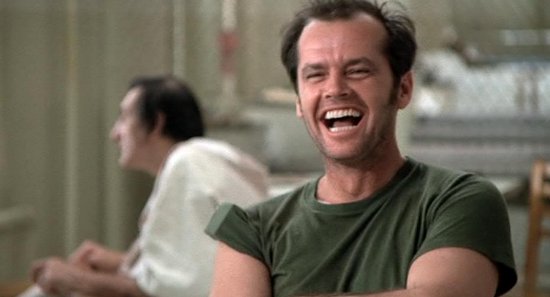
"One Flew Over The Cuckoo's Nest" is a breathtaking film based upon the novel of the same name by Ken Kesey. Randle McMurphy (played by the great Jack Nicholson) is accused of statutory rape, and is sent to a mental institution for evaluation. He hopes to stay in the hospital to avoid the brutality and hard labor of prison life, and believes that the hospital will be a more relaxed, easier environment.
McMurphy comes to realize, however, that the hospital life is not so "relaxed" as he once thought. The hospital is ruled by the tyrannical, mean-spirited Nurse Ratched, who implements cruel punishments and humiliation in her treatments of the men in McMurphy's ward. McMurphy comes to find that these "mental patients" aren't what he at first thought them to be. They're people, very good people, struggling to find their way in the world and feel comfortable in their own skin and in the world around them. McMurphy helps guide these men who he grows close to, and build up their confidence to show them that they are more than what disorder they are afflicted with.
The film stirs up many different emotions, thoughts and feelings, many of them sad, but above all the character development of Randle McMurphy is by far my favorite aspect of the film. His original characterization of a hardened, careless criminal into the caring, helpful friend to his fellow patients truly make him the perfect anti-hero.
The film won five Oscars, including Best Actor, Best Picture, Best Director, Best Actress, and Best Writing, Screenplay Adapted from Another Material.
"Django Unchained" (2012)
Quentin Tarantino is, in my opinion, the most talented storyteller in the recent years. Beginning his career with 1992's "Reservoir Dogs", up until his recent film, "The Hateful Eight," Tarantino's skills in screenwriting goes unmatched. His vivid characters, penchant for a violence and comedy concoctions, and thrilling dialogue, going to a Tarantino film is no regular trip to the movie theater--it's an experience. If I could, I would put every Tarantino film on this list.
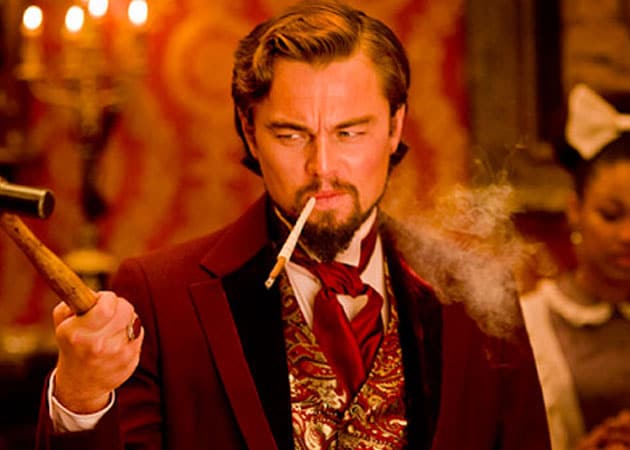
One of the most beautifully written screenplays by Tarantino is that of "Django Unchained", a story about a slave who is taken under the wing of a bounty hunter. The pair goes to rescue his wife from a ruthless plantation owner and slave master.
Like all of Tarantino's movies, the characters in his screenplays are larger than life--these are incredible characters that you hate, and characters that you love. Some, you love to hate. His intricate writing is what truly stands out in the film. Leonardo DiCaprio's character, the plantation owner and slave master, is written with such repulsive, horrific ferocity and arrogance. He's the embodiment of evil, a true snake. Tarantino wrote the character to truly embody the brutality and evil acts against African Americans in the pre-Civil War era South. The dialogue is crisp and fresh, comedic at times, and very honest. The film addresses the importance of history, and the way that African Americans were treated. Tarantino does not sugar coat the history of slavery; it is a brutal, intense film that is not for the faint of heart. But, in my opinion, this film should be watched by everyone. It's a story of love, revenge and desperation that should not be ignored.
The film won two Oscars: Best Performance By An Actor in a Supporting Role and Best Screenplay.
"Days of Heaven" (1978)
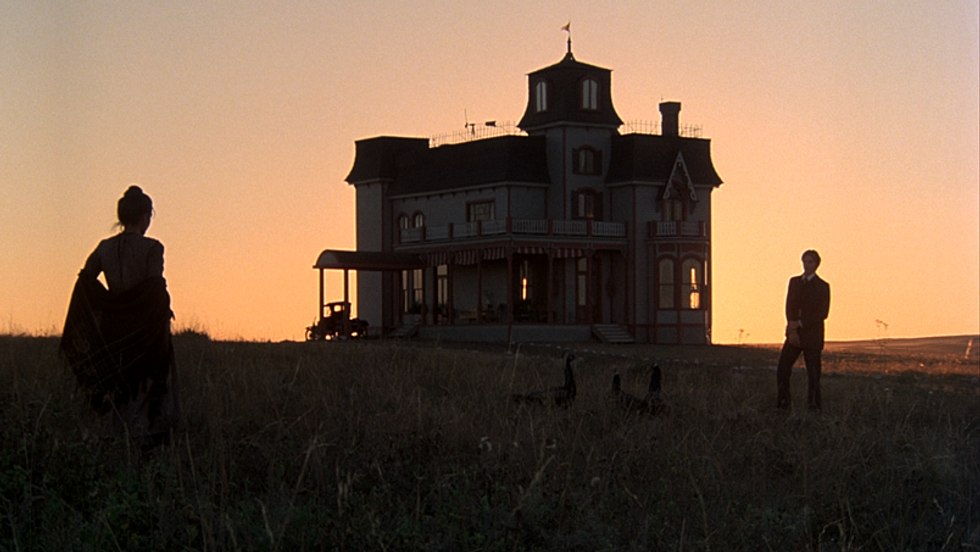
Terence Malick is a director most well known for his staggeringly beautiful films, with cinematography that takes the audience's breath away. While this is true, perhaps it is overlooked that Malick's brilliance not only lies in what it means to make a beautiful cinematic experience, but also in the stories he tells us as the audience.
"Days of Heaven" follows a man named Bill, who (after killing the foreman at the mill he works at) escapes to the Texas Panhandle in 1916 with his girlfriend, Abby, and his young sister, Linda. They find work on a farm, owned by a shy, kind and dying young farmer. Bill, knowing of the farmer's wealth, forces Abby into false marriage with the farmer so that when he dies, she will inherit all his wealth and Bill, Linda and Abby may become wealthy. Things turn out not to be so easy, however, when Abby begins to truly fall in love with the farmer. "Days of Heaven" is a heartbreaking film about love, deceit and salvation that will leave a gaping hole in your chest, solely because of how strikingly sad it is.

Malick's writing, like his films, is beautiful. He captures the time period with such ease that you almost lose yourself into that time; additionally, the way he sets up the betrayal and deceit between the farmer and Abby is absolutely gut-wrenching. Malick was able to leave this nostalgic, hollow, isolated feeling in the way his characters interacted, and made the audience feel it in a very raw way. Not many directors are capable of doing that, yet Malick perseveres.
The film won one Oscar: Best Achievement in Cinematography.

"Downfall (Der Untergang)" (2004)
"Downfall," being the second foreign language film on this list, is an important film that not many have seen. The film chronicles the true story of Austrian-German dictator, Adolf Hitler, in his final days in the Fuhrerbunker during the Battle of Berlin. The focus in this picture is on Traudl Junge, a young twenty-something who takes a job that every girl in Germany craves: the secretary for Adolf Hitler. While she very much admires him and he shows her nothing but kindness, as the years go on and the days in the Fuhrerbunker begins, Junge sees that being in the company of Hitler's inner circle and the Nazi party is not a good place to be. The film is gut-wrenchingly brutal and true to history, and shows a side of the war that us as Americans have not seen (or refuse to see).
The film's screenwriter, Bernd Eichinger, takes the German side into new perspective that we do not see, or perhaps never saw, as the Allied Power. Eichinger writes powerful scenes and dialogue between the ruthless men that we now know as bloodthirsty, savage monsters, and their families; these include Reich Minister of Propaganda, Joseph Goebbels and his many children, Adolf Hitler and his wife, Eva Braun, and many of Hitler's higher-ups and their families. Eichinger turns the tables on his audience in writing this film by asking them: have you ever thought about what it was like for German families, especially those who followed Hitler? What was it like for the small children who were influenced by their parents but didn't know any better of what Hitler's true message was? The film, additionally, explores Hitler Youth, and how many German parents did not approve of the program for young teens interested in the National Socialist Workers' Party.
This film offers to show us another side of Germany, a clearer history of the last days of the Third Reich, and perhaps a glimpse into the mind of a madman, to a side in which many Americans have never seen before.
The film was recognized by the Academy for Best Foreign Film.

"Lost In Translation" (2003)
Sofia Coppola brings to the screen the story of Bob, an aging, bitter actor, and Charlotte, a young neglected wife of a famous photographer. The two meet in Tokyo, where they find the balance and happiness that they were both looking for in each other. This is no typical romance film, however; Coppola's screenplay analyzes and tackles the terrifying aspect of finding out who we really are, what we want, and if we are really happy in the life we are living.
"Lost in Translation" is a deep, sleepy film that you won't be able to get out of your mind. It will be in there long after the film has ended. The cinematography, with its Tokyo lights and neon signs and metallic shots of the nightlife in the Japanese city, brings the more somber aspects of the film to lights and somehow brightens them.
Coppola's writing is intricate, careful and precise; she pinpoints the questionings and musings that we all think about: is this the right life for me? Am I happy? What am I doing in this life, and is it what I should be doing? Both characters Bob and Charlotte are written like a neighbor or a friend or an acquaintance; they are so simple, yet so complex, that they could be anybody. They are a typical human, trying to get through life with something to help them get by, something to show them that things are going to be okay. While searching for this very thing in the big city of Tokyo, Japan, they find each other.
The film won one Oscar for Best Original Screenplay.

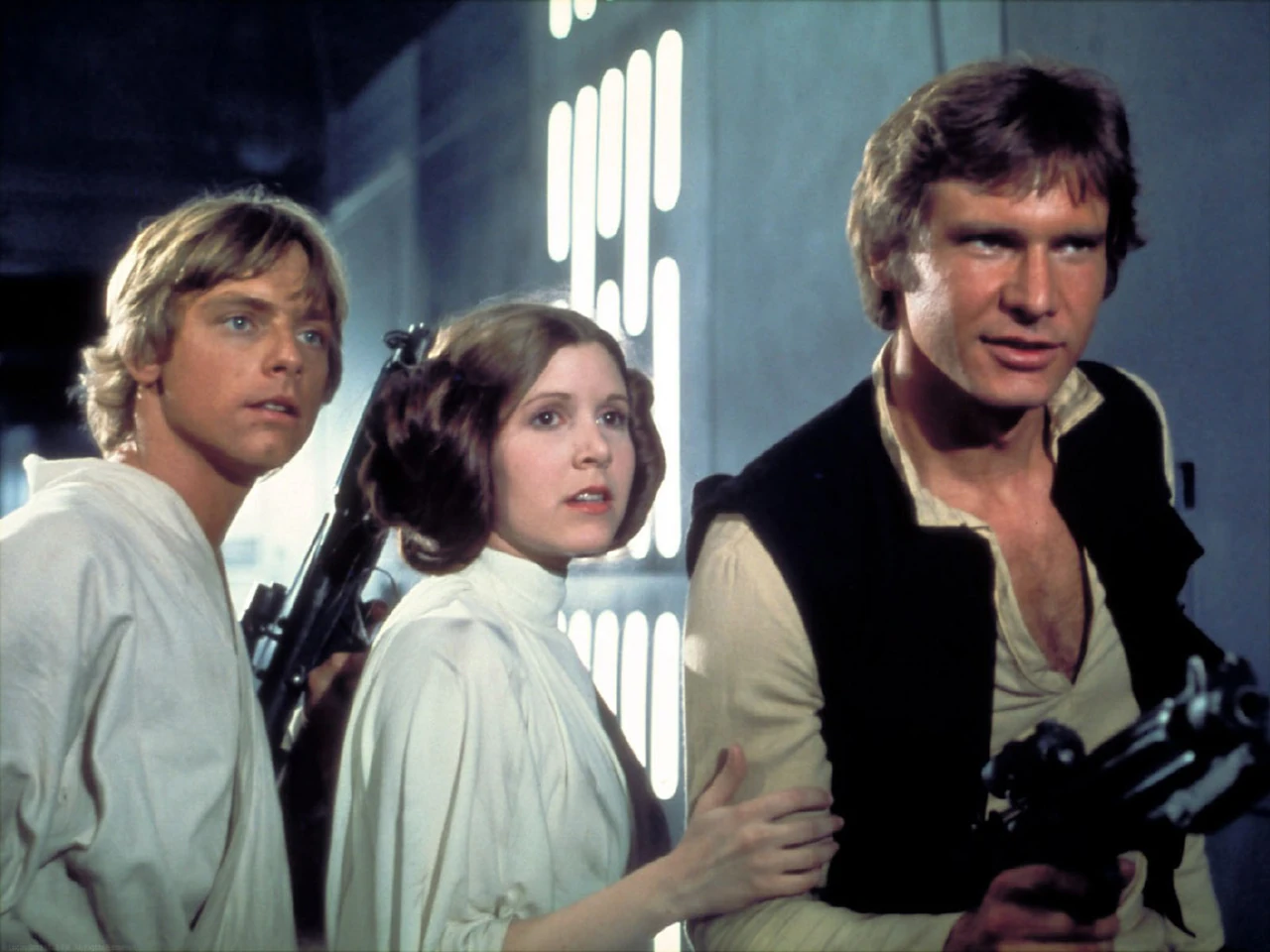
"The Star Wars Trilogy" (1977 - 1983)
It goes without saying that George Lucas's space opera franchise is an out of this world kind of story, that is so intricate, so precise and so creative that you kind of have to sit back and think, "how the hell did he come up with that?" From Wookies, to Yoda, to Alderaan, Tatooine and Jabba, it's incredible, at least in my opinion, that one single person thought all of these characters up and was awesome and creative enough to share them with the rest of the world. Whether you're a "Star Wars" fan or not, it's pretty impossible to imagine the world without it ever existing, isn't it?
Lucas's brilliance, besides literally everything else, lies within his characters and Luke's hero journey, where they play a major role. Han Solo, Leia Organa and Luke Skywalker's chemistry is so perfectly done and so comfortable that you feel as if you know them while you're watching the film. Lucas's ability to create such charismatic, investing characters that work so well together on screen is something that is rare to find.
Not only is Lucas's characters of sheer brilliance, but so is the storyline. Think of all the planets, solar systems, species and fictional terms that Lucas made up for his "Star Wars" franchise. Imagine the creativity it takes to make that world up inside your head and to write it down! Someone getting frozen in carbonate, lightsabers, a character like Emperor Palpatine…it's incredible. Lucas is, truly, a brilliant and extravagant storyteller, and without him, pop culture would not be the same.
Altogether, the films in the original "Star Wars" trilogy won eight Oscars.
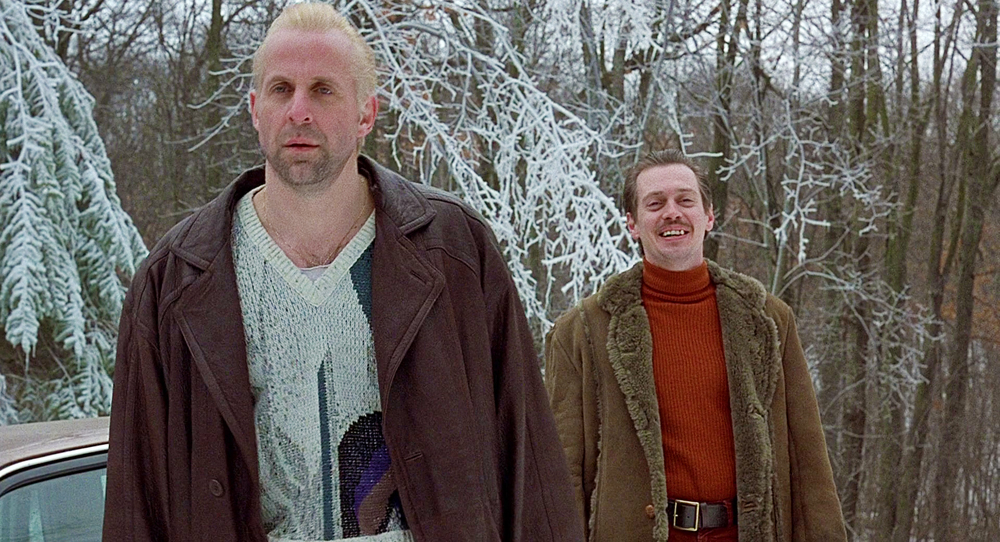
The best part about the Coen Brothers, among many other things, is that they don't take themselves too seriously. They're darkly humorous and know how to poke fun at themselves--which is exactly what they did in their Minnesota-based murder story, "Fargo". The film follows Jerry Lundegaard, a smarmy, sneaky weasel of a used car salesman who arranges for two idiotic, clumsy criminals to stage a kidnapping on his wife, which goes horribly wrong. Joel and Ethan Coen's masterful spinning of this black comedy is basically effortless--it comes off as natural, and the film is a breath of fresh air.
The characters, like many of the Coens', are quirky and peculiar. They're real and very well acted, almost scarily so--especially by William H. Macy, who was nominated for his performance by the Academy for Best Supporting Actor. Seeing the Coens' 2008 film "Burn After Reading" was almost a homage to themselves and the characters in "Fargo". The criminals are bumbling fools, a parody of crime films and the violence within them. The Coens interweave this comedy with surprise violence that reminds the viewer that it's still a murder story, but that it's okay to throw in a bit of comedy--it's just a movie. The Coens love to poke fun at themselves, and that's what makes the film so fun to watch.
The film won two Oscars, for Best Actress in a Leading Role and Best Writing and Screenplay Written Directly for the Screen.

A film that hits close to home and takes me back to childhood is Steven Spielberg's "E.T. the Extraterrestrial." It tells the story of Elliot, a lonely boy living with his recently divorced mother and his younger sister and older brother. After discovering an alien lurking in his backyard, he befriends the creature and they soon grow inseparable. After making the 1975 blockbuster "Jaws", Spielberg set out to make another terrifying horror film, that he originally wanted to be about an alien that comes and terrorizes a child and his family, calling it "Night Skies." The project was partially shelved, and it's remnants evolved into "E.T." and would eventually be morphed into Spielberg's 1977 film, "Close Encounters of the Third Kind."
Spielberg got the idea of the film from an imaginary friend he had as a child, and with that memory he formed the story of "E.T.," a story about friendship and overcoming loneliness. Spielberg's character development of all the children, especially Elliot from angry young boy to more mature through his journey with E.T., is nearly flawless.
The film provokes incredible emotion and will make the audience feel nostalgic for the childhood they have since left behind; Spielberg's writing is so raw, so visceral, that you will be left in tears by the end of the film.
The film won four Oscars, for Best Sound, Best Effects, Best Sound Editing and Best Original Score.
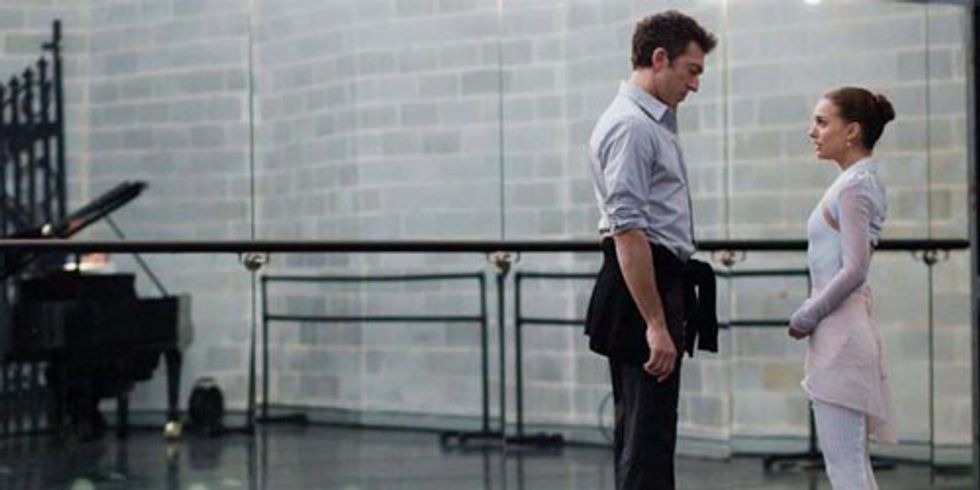
"Black Swan" (2010)
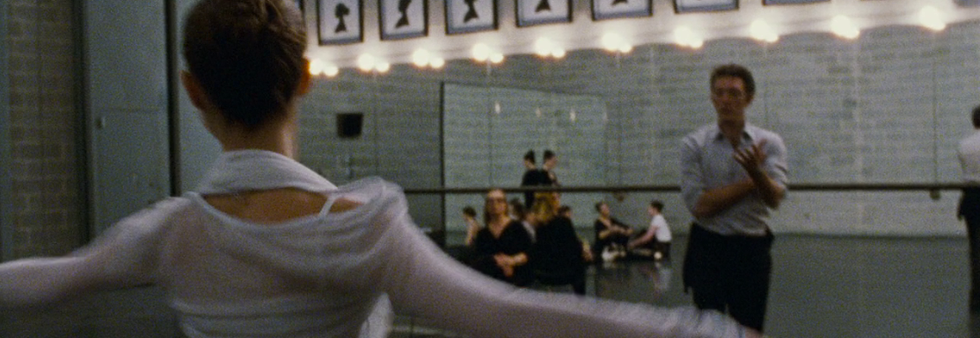
The story of "Black Swan" directed by Darren Aronofsky and written by screenwriter Mark Heyman is not one for the faint of heart. It's very dark, very gloomy, and above all, full of paranoia.
The film shows us the world of young, very naive and very innocent Nina Sayers, an ambitious (maybe a little too ambitious) dancer for the New York City Ballet, who is given the part of the prima ballerina, the Swan Queen and Black Swan, in the company's production of "Swan Lake." She has endless amounts of trouble trying to embody the darkness of the Black Swan, much to the chagrin and irritation of her manipulative ballet director and lover, Thomas.
Heyman writes the character of Nina with such innocence, naiveness and gentleness that it comes to a shock to the audience just how disturbed her character truly is. She is written perfectly as the suppressed, deeply troubled young girl just trying to prove herself, to everyone--to the other girls in her company, to Thomas, and most notably, herself. It's a story of insecurity, neglect and uncertainty, with Nina only being able to let go of her obsessions and herself and find peace in the darkest and saddest way.
Something Heyman does in "Black Swan" is that he shines a light on how it is not easy to be a dancer, something I believe is very important in the film and its plot. These dancers practice all day, all night, until their feet bleed--an aspect that Heyman does not shy away from. He shows the grittiness of the business and how one must fight to stay on top, and that there is a reminder that you are always expendable.
The film won one Oscar, for Best Actress in a Leading Role.
I close out this ode in saying thank you to all the writers, the directors, the filmmakers, who inspire writers and artists everywhere with their creativity, their drive and their ambition, and their skill to share their stories.
Cheers!