



College and depression can sometimes be a hard mix. The transition might be tricky, or the new environment might be too much for you to handle. I get it, it's hard. I've been there, a lot of others have been there, too. So here's five tips on how to make sure your depression doesn't get in the way of your learning from me, an undeclared UNH student, and definitely not a doctor. Remember, not a doctor, just a student.
1. Ask for help

Therapy, DDS, counseling, group counseling, even professors. This can be lifesaving, I should know. Admitting that I had a problem, getting help and putting myself in a hospital is probably one of the many reasons that I am still here today. Asking for help, however hard, could be the reason you are still here tomorrow. Not even that, it’s so hard to keep your struggles, feelings, and problems to yourself. That’s what counselors are for. All colleges have options for counseling sessions on campus, which means you don’t have to try and find a ride to some office towns over. Better yet, at UNH, the first eight sessions are free. Everything is confidential, too. None of your classmates or friends have to know you’re going if you don’t want them to know, and your counselor can’t say anything about what happens in your sessions. I’m almost at one year now of therapy, and I can’t imagine not doing it while I’m here at college. Talking to my doctor (remember what I said: I'm not a doctor, so someone with a PhD might have better advice than me), therapist, and other health care providers have given me tools to make sure my mental disorders don’t get in the way of my learning. I bet they could help you, too. So, reach out. I know it’s hard, but the outcome will be worth it.
2. Eat Healthy

That kind of sounds like a joke, but eating healthy can go a long way for you. We’ve all heard it before, the whole “breakfast is the most important meal of the day” and all those other annoying sayings. I get it, you’re tired, and staying in bed probably sounds a lot better than getting up, walking to the dining hall and exerting all that effort. But we all know three meals a day makes for a healthy body and a healthy mind. With a body that’s full of proper nutrients, it’ll run better and smoother. Not to mention your brain will work better. Think of it as a car. No gas, no power. Likewise, no food, no energy. Fruits and vegetables, protein, grain, all those delicious things help your body and mind work properly. Obviously, the dining hall doesn’t always have the best options for vegetables or food in general (shoutout to UNH for their delicious cheesy bread), so maybe pick up some V8 next time you’re at the grocery store or those Chobani smoothies, great sources of calcium, vegetables and fruits. Talk with a nutritionist from the school if you have difficulty figuring out how to make your meals healthy. If you’re from UNH like me, UNH has great nutrition educators and counseling sessions for it as well. Call them at (603) 862-3823 or make an appointment online.
3. Sleep

This sounds like an even bigger joke than the first one. We’re in college, sleep does not exist. I just pulled an all nighter studying for Art History where I mixed Red bull and Monster together. Definitely A) not healthy drinks to put into my body and B) the worst thing I could have done to my sleep schedule. Routine can be important, especially with a sleep schedule. Eight to nine hours of sleep is essential, and I don’t mean in tiny bursts of naps. A solid, straight through the night sleep is what you need. Over sleeping exhausts your body even more, so if you’re like me and sleep twelve hours straight on some days, you’re probably more exhausted than you would be with only eight hours of sleep. Try not to take mid-day naps, and try to aim for eight hours of sleep at night. Can’t fall asleep? Try some Melatonin, it’s naturally in your body, so if you’re against taking medication this is the perfect option. Still against that option? Chamomile and lavender are natural low dose sedatives, so try it in tea! Better yet, take the tea packets and put them over your eyes for ten minutes before you sleep, or put them inside your pillow case. Even the smell can help you fall asleep. Sleep well, rise out of bed, and start the new day refreshed and well slept.
4. Exercise

Exercise, gross, I know. Effort and movement and all those wonderful things that comes with exercise. But, we all know the health benefits. Exercise realizes endorphins, which make you feel elated, happy, etc., and who doesn’t need that when they have depression? Better yet, working out can help your sleep schedule, especially when done on a regular basis (whoa, routine and sleep, see how it all ties together?). More bonuses include added energy, a way to blow off steam, and a good way to get in shape so you can get that ‘summer bod’ everyone always wants. Intimidated by the gym? Go with a plan. Search up workout routines, make ones that fit you and your body. This way, you know what you’ll be doing before you get there and won’t feel too intimidated by all the equipment. Better yet, bring a friend, so that way if you’re super clueless about how to use the machines, hopefully your friend will know (or you’ll both be clueless together). Hate the treadmill and just lifting weights? Your gym usually has classes you can take that will provide amazing workouts for you without using machines. At UNH, our gym offers Zumba, yoga, spinning and more. Cardio Kickboxing here I come!
5.To Do Lists
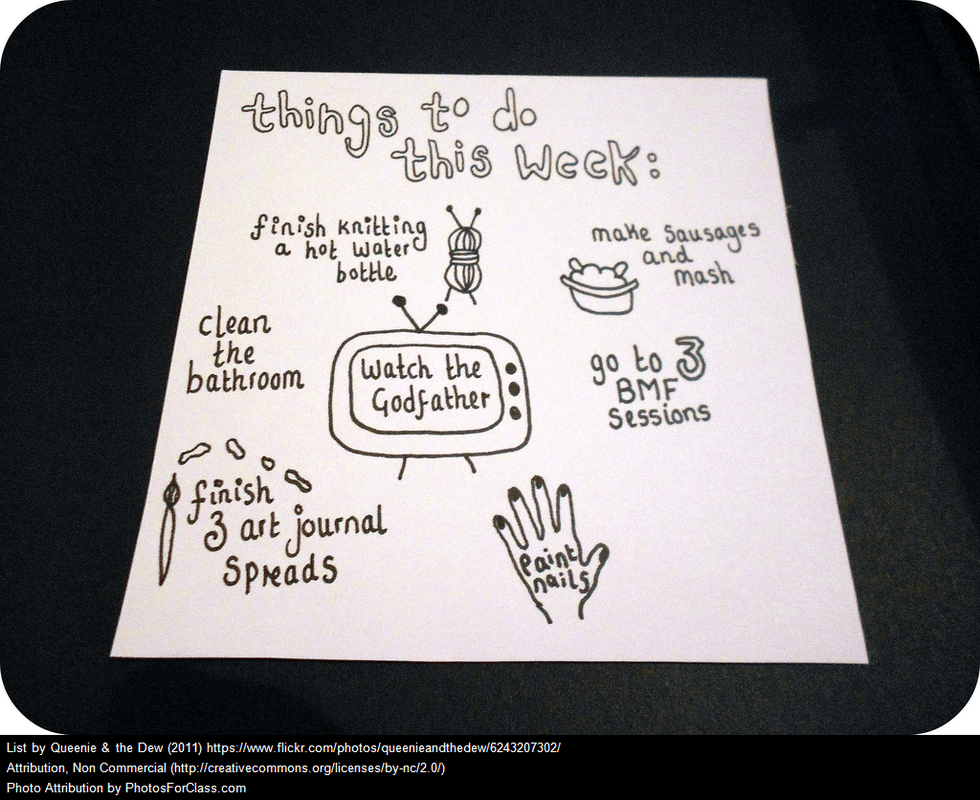
I find this personally keeps me on track and focused, especially with homework. Looking at it completed and all the tasks crossed out at the end makes me feel like I accomplished something big, especially when you’ve been in that funk of depression. Putting things like laundry, cleaning dishes, or making your bed on your to do list are small things, but it feels like you did something big when you slept twelve hours, didn’t show up to class and just barely got out of bed. We all have these days, especially if you have depression, so accomplishing just one thing can be a great feat. Better yet, make a to do list and give yourself a treat at the end, like buying that shirt you have on your wish list on an online store, or finally reading that book that does not pertain to school. Keep yourself organized with lists, and maybe you won’t feel like you’re drowning in things to do.
If you or anyone you know are having thoughts about self harm or suicide, please call the National Suicide Prevention Lifeline at 1-800-273-8255 or call 911.












