

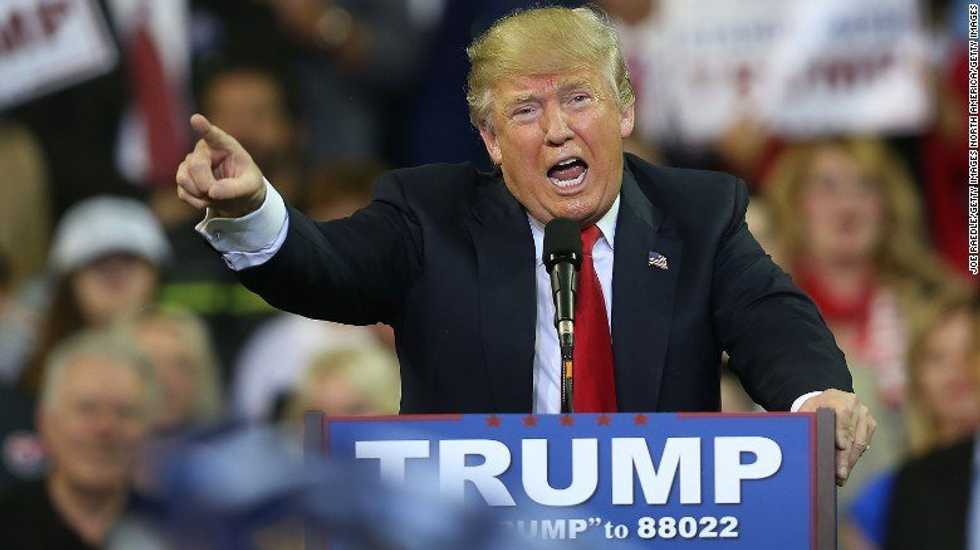
Whether you like it or not, Donald Trump’s quest for the White House has been wildly successful thus far. He has turned every news station in America into a 24/7 debate channel. He has turnouts at every rally, and has support of very wealthy people.
Why do people like Trump so much? The followers he does have would follow him to the ends of the earth. But why? How can a person consciously vote for someone who says things like: “You know, it really doesn’t matter what the media writes as long as you’ve got a young, and beautiful, piece of ass,” or “When Mexico sends its people, they’re not sending the best. They’re not sending you, they’re sending people that have lots of problems and they’re bringing those problems with us. They’re bringing drugs. They’re bring crime. They’re rapists… And some, I assume, are good people.”
According to psychology, there might be a reason why people think anything that comes out of his mouth is a good thing.
1. Conformity
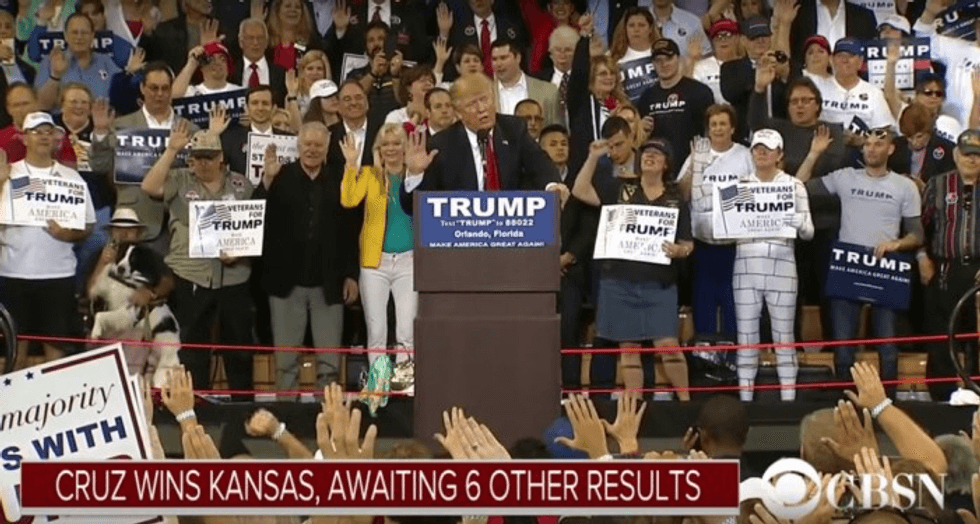
Conformity is the tendency to go along with the views or actions of others. So, if you’re in an auditorium with a bunch of people who believe with all of their heart that Donald Trump is the very best man to run the United States of America, to avoid feeling awkward, you might just slightly raise your right hand and swear to vote for Donald Trump. You might not believe it, you might not mean it, but you will do it because you don’t want to feel out of place or draw attention to yourself. You might look around to see what other people are doing. Are they sitting? Are they clapping? Are they cheering? By not doing what everyone else is doing, we open ourselves up to ridicule and anxiety. So for the duration of the rally, you look like a cookie-cutter Trump supporter.
2. False-Consensus Effect
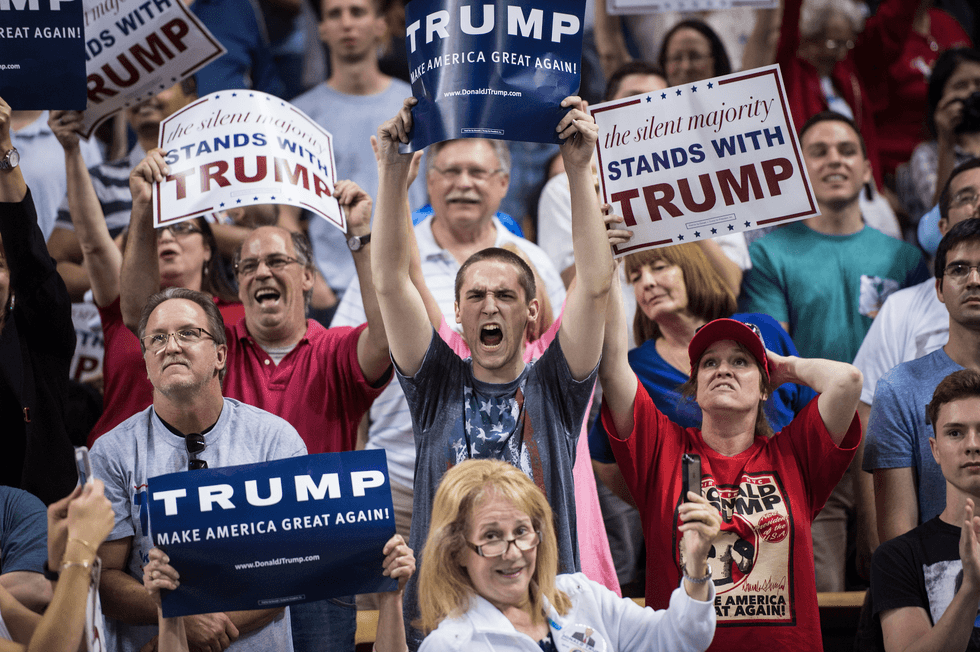
The false-consensus effect is the tendency to overestimate the number of people who agree with you. Trump’s ideas are very controversial. When asked, the majority of people who are voting for him say they like him because “he says things other people are afraid to say.” However “afraid” other people are to call Mexicans rapists and black people thugs, the majority of Americans do not agree with him. Yet, every time he gets on a podium and spews more nonsense, he has the confidence of a five-star athlete. He overestimates how many people actually agree with what he’s saying. People who are looking to be led find confidence attractive. Thus, more followers are born.
He constantly bashes Hillary Clinton, recently claiming that “women don’t even like her.” He is overestimating how many people actually agree with him and do not agree with Hillary. His campaign runs largely on bashing opponents and insulting others. His entire reputation would be different if he did not overestimate how many people believe his ideas.
3. Group Polarization
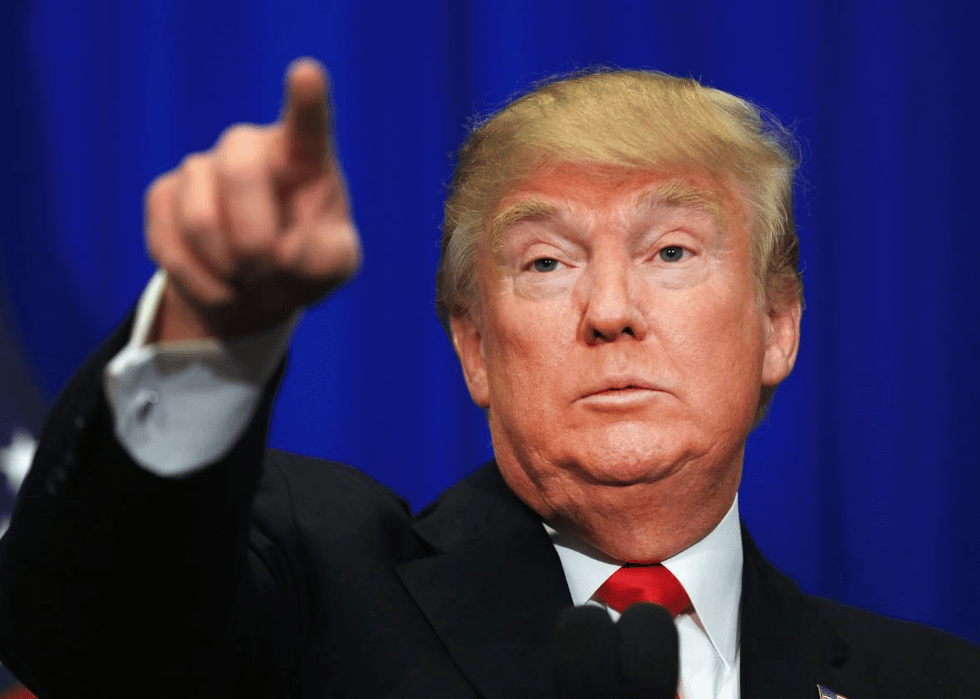
Have you ever seen a movie where there is someone on a podium or stage looking at a crowd of people? The person up higher is yelling, “Let’s do _____!” and the people in the crowd scream, "Yeah!" Then the person up top says, “Let’s also do _____!” Again, everyone screams, “Yeah!” Finally, the person above everyone else says something really extreme, but everyone thinks this person is great, can lead them, and has their best interests at heart. The crowd says, “Yeah!” anyway, and they have all agreed to do something that could do irreversible harm to their lives.
Trump uses his authority to get groups of people to feed off of his energy and “agree” to things that make absolutely no sense. We’re going to build a wall to block off an entire country and make them pay for it? “OK.”
4. Foot-in-the-Door Technique
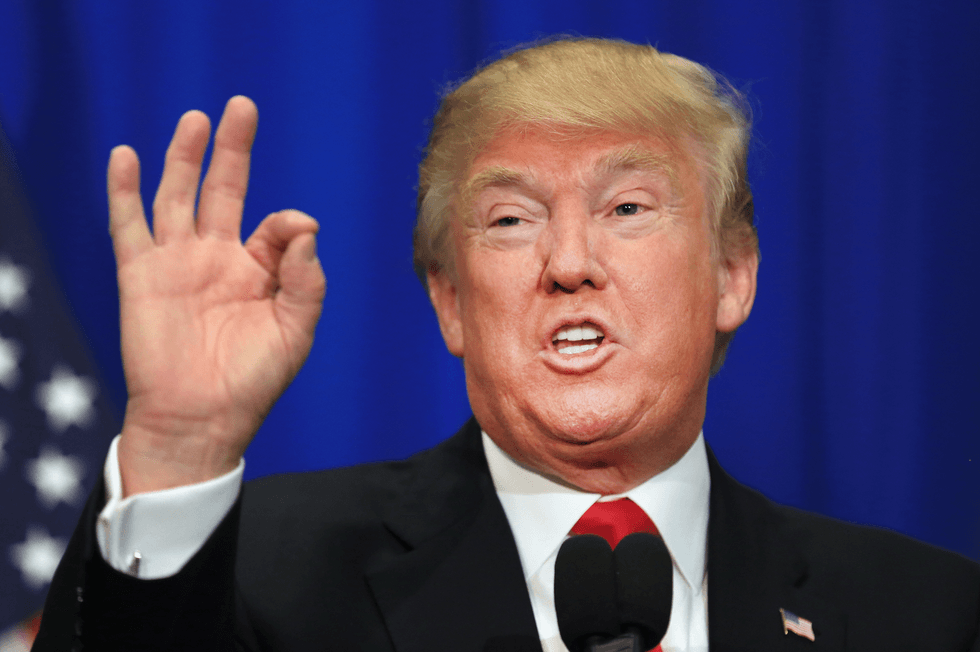
The foot-in-the-door technique is a compliance tactic that involves getting a person to agree to a large request by first setting them up by having that person agree to a modest request. For example, if I were Donald Trump, I would say, “Hey, just come to my rally. You don’t have to agree with everything I’m saying, but just come check it out.” Then I might say, “Hey, you came to the rally. Thanks so much! How about you just discuss what I’ve said with your friends? Maybe they can come with you next time.” Finally, when you’re in my audience decked out in Trump apparel, a Trump sign and some face paint, I’ll ask you to raise your right hand and swear to vote for me.
5. Diffusion of Responsibility
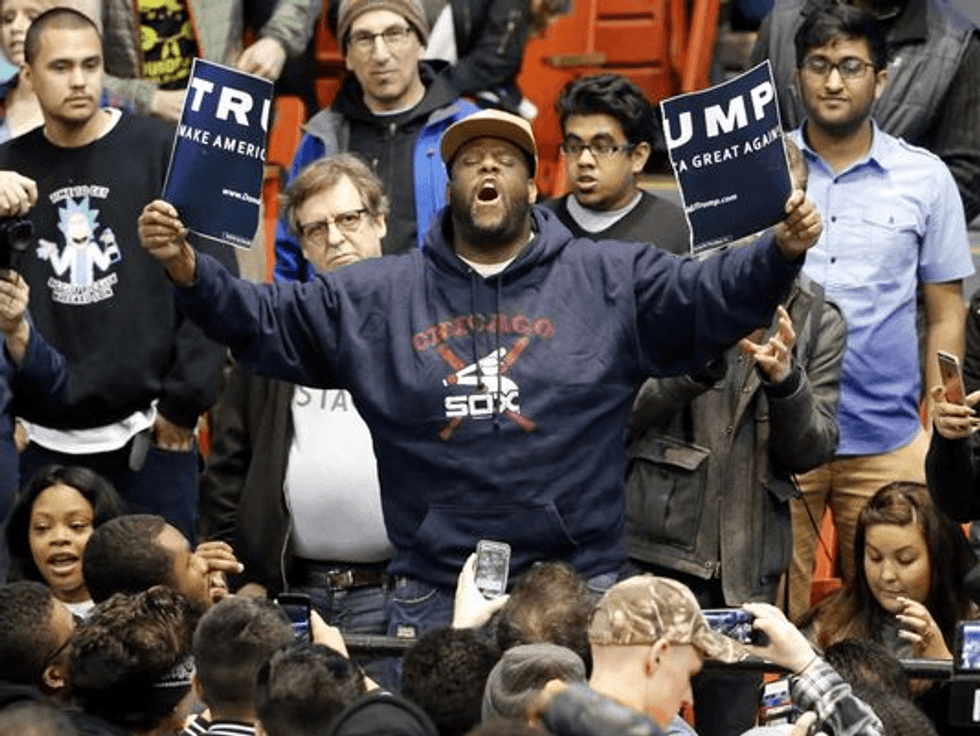
Diffusion of responsibility happens all the time. Let’s say there is a crime being committed in a park. The larger the group of people who witness the crime, the less responsible any one individual feels to help. You might think, “Oh, someone else will call the police. There are so many people here, I might as well just let someone else call.” If everyone thinks the same thing, do the police end up being called? No, they do not.
In Trump’s case, most people with a conscience know that labeling an entire group of people as “rapists” and “illegals” and putting up a wall to keep them out is a bad thing. However, some people might say, “Oh, this is such a bad idea that everyone else will make a big deal out of it. I don’t have to.” Are Trump’s comments frequently a big deal? Yes. This is largely because of how social media spreads information. But would more people stop supporting him if they took responsibility for what they knew was right? Yes.Don't feel bad if you've fallen victim to these tactics. It's politics, and it's human nature.