

A Homeschooler’s Lament
Most people who have met me have heard my proud declaration that I was homeschooled. It is something near and dear to my heart, and quite important to my identity. Most people I’ve told have found this either fascinating or surprising. Those that found it fascinating were more interested in the process itself: “How did day-to-day schooling work?” “Were there tests?”
Those who found it surprising were most interested in the results: “You’re so well socialized!” “You seem so normal?”
I’ve dealt with a large number of questions and confusions over the years, and found most of them stem from popular conceptions of homeschooling as seen in the media. Tropes ranging from “socially stunted” to “religious fundamentalist” are very common in the few representations of homeschoolers. I am of the opinion that some tropes have basis in fact, even if they aren’t accurate, but I would like to try and contextualize and provide my own thoughts on some of these popular perceptions.
1. No, we are not all geniuses.
The classic homeschooler stereotype, a young child who probably is also awkward or shy stands up to a microphone and is told to spell something with more syllables than a German pokemon. It’s true, there is a very large number of homeschoolers in the spelling bee hall of fame, and if you google homeschooling, you’ll probably find a large number of websites announcing the success stories of homeschoolers going to college or developing innovative technologies out of plastic bottles and strings. However, realistically for every Scripps winner and entrepreneur, there are thousands of average (or below average) students just making their way through education.
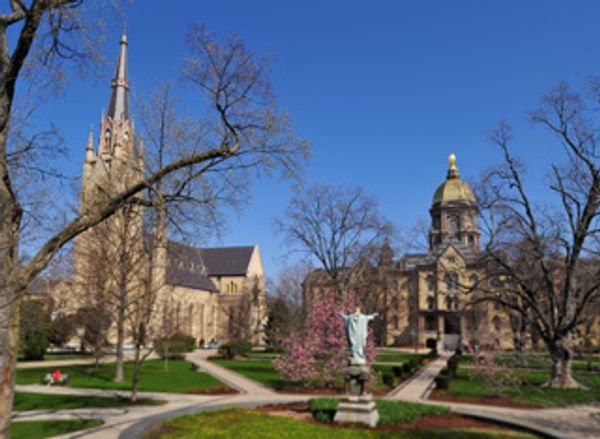
I liked to think that I was somewhat intelligent, that I succeeded in teaching myself everything I needed to know before my first year of college. Then my freshman year in at Ursinus College showed me how much more I had to learn. I graduated slightly above the middle of the class, just below the dean’s list. My brothers were also homeschooled, and while they’re smart (I guess), neither is reinventing the mouse trap.
The point here is that a good education can foster the talents and interests of smart children, regardless of where that education comes from.
2. Social Skills Aren’t That Hard (usually).
This one comes with a caveat: I’ve known several homeschoolers who had very poor social skills. But I believe it isn’t that they have poor skills because they were home schooled, it’s that they were homeschooled because they had poor social skills.
My eldest brother is a large part of the reason my siblings and I were homeschooled. He was the victim of bullying in the short time he was in public school. This is hardly a shock. Bullying is a common occurrence in most environments with large groups of children (and adults as well). But for children who are more sensitive, incapable of dealing with the bullies, or without teachers who will help, homeschooling is an excellent choice.
But even more importantly: Social skills don’t come from school environment. True, a school setting is great for children to learn how to interact with their peers, how to settle into groups or break out of caustic ones, all the good stuff. But there are plenty of other areas to obtain those skills.
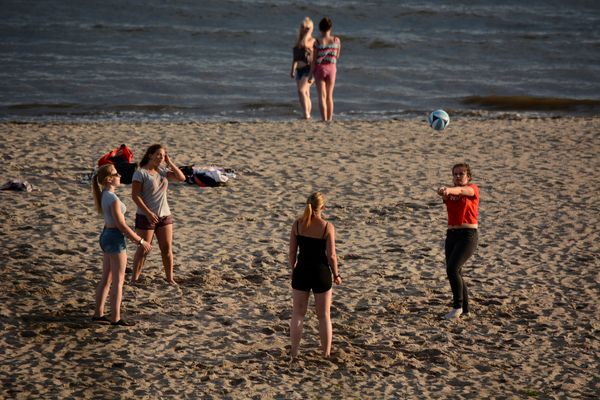
I took lessons of all sorts, and those were very social: gymnastics lessons, piano lessons, archery; my sister donated her time at a stable for abused horses; my brothers played soccer in a homeschool league. We all found niches where we fit in and were comfortable with other people our age, and even older.
3. We Understand Culture
The opening scene of “Mean Girls” features a voice-over by the main character, Cady Heron, explaining (as I have) that not all homeschoolers are freakishly intelligent or religious. This was one of my favorite movies for a long time, partially because of this opening. I’ve noticed many people are surprised at how knowledgeable I am about culture in and outside of America. Because of my homeschooling, which allowed me to take my work at a rate I (and my parents) were comfortable with, I spent an obscene amount of time reading every book and watching every movie I could find. I have grown into a very broad-minded pop-culture buff, with interests ranging from BET comedies to BBC dramas, and even anime and manga from Japan.
Beyond my own white, rural, middle-class experience, I am also aware of a growing population of black homeschoolers. Their reasons for homeschooling are no less diverse than any other groups, but there is a strong feeling that homeschooling is a good option for black students. Considering the danger of public schools, the fears of losing cultural history and ties, or even the fear of a school that won’t be as interested in helping all its students equally.
4. We Are Growing
Lastly, many people I’ve spoken to have been interested as to whether or not I would homeschool my own children, if I have any. And though I can’t say for certain at this point, I think it would be considered an option, and is an option more and more used in the U.S. According to the National Center for Education Statistics, there are approximately 50 million students in public schools, and almost 2 million students homeschooling. Not only that, but the number of homeschoolers has grown upwards of 65% in the past decade. I can only conjecture as to why this would be, but my discussions with friends who have attended public and private schools, as well as discussions with education majors and professionals, have led me to see how dissatisfied many are with the education system in America. It is not universal, of course, but it seems that the image of a school that is over-crowded and under-funded is being etched into the minds of many.
I would never say that public or private school systems are useless, nor would I argue for their abandonment. The ability to have a trustworthy school to send children to while parents are at work is invaluable. But as schools grow in size, and teachers have more and more on their plates, any school could reach a point where some students may fall through the cracks. I was lucky to have parents capable of dedicating time and effort to giving me the resources I needed; as well as having the passion and interest in doing the learning myself. While this may not be for everybody, I look forward to seeing a day when my own wonderful experience with my education isn’t thought of as “out there,” but as common.