
Preface:
When I first applied to write for the odyssey, I did so because I wanted a platform which would allow me to share my ideas, provoke thought amongst my readers, and help make me a better writer. As of late, many of my articles have been far less serious, often satirical and filled with memes and GIFs alike. After having recently written an article discussing how you can help ensure your 2017 resolutions are a success, I decided to take this week to write an essay regarding New Year's Resolutions which would allow me to return to my original purpose for joining this organization. In sharing my story, my hope is that you, too, can take a deeper look in the mirror and figure out what, if anything, it is that you want to change about yourself, not only in 2017, but for many years to come.
2017 Will Be The Year That...
"Grant me the serenity to accept the things I cannot change, the courage to change the things I can, and the wisdom to know the difference."
While I am by no measure a deeply religious person, the above quote - taken from what is known as the "Serenity Prayer" - strongly embodies what is by far and away my biggest resolution for the year 2017. Unlike typical resolutions, such as losing weight, saving more money, or becoming more organized - all of which are great goals to strive for as 2017 unfolds - the resolution I want to tell you about today is one that carriers a much deeper and far more personal meaning. It is a resolution that has been nearly seven years in the making, and it's one that will require me to take a deep look inside myself in order to accept my past and change my future.
I woke up on the morning of April 7, 2010 expecting it to be just another normal, happy day in the life of a freshman high-schooler. I had recently returned from a spring break trip with a friend and his family to St. Augustine, Florida. Although I wasn't terribly to be back in the swing of things at school, I was happy to have gotten a week-long break from the grind spent under the sun and an abundance of palm trees. I went about my morning as usual. I showered, brushed my teeth, ate some breakfast, and then piled into the car with four of my six siblings who were school at the time.
It was a routine that had surely happened countless times before, but, unbeknownst to us, would turn out to be far different from the norm. As we all sat waiting in the car, my father stopped for a moment before getting in as he clenched his chest and left arm. Albeit a moment that lasted only a few seconds, it was just long-enough to catch my eye as I sat watching from the front-passenger seat. The moment passed, he got in, started the car, and began to drive us all to school.
We lived only a few minutes from school, so the ride was short, as usual. Despite this, my mind began to flood with questions at a mile a minute - Is he having a heart attack? If he is, he wouldn't be able to drive so normally, would he? Should I suggest taking an aspirin? Should I even ask if he's ok? - until finally I silenced the questions running through my head, and began listening to music as the ride neared its end. Upon arriving, I got out of the car and went about my normal day until receiving a pass to leave school around 10:30am.
I can distinctly remember walking down the stairs, as I headed to the front office, wondering just how different my life was about to become. I assumed my father had a heart attack and began wondering how hard the next few days, weeks, or even years might be as he worked to recover. As I got closer to the front office I briefly clung to some hope that maybe I just had a dentist or doctor's appointment that I had forgotten about. Shortly later, I learned not only that my father suffered a heart attack, but also that he had died from it.
In the nearly 2500 days that have passed since that faithful car ride to school, I have asked myself time and again why I didn't act on the questions that filled my mind that morning. I have laid awake at night many times wishing I could just remember my father's last words to me - words which were drowned out by the music in my headphones. Despite all memories that occurred prior, the most palpable memory I have of my father is the image of his body laying on a hospital bed, just hours after he had passed away. Worst of all, I have spent much of the last six and a half years contemplating an endless degree of questions that begin with the words "what if."
I'll never know how the future may have been changed, if at all, had I only said something that morning, but that hasn't stopped me from carrying the burden all these years that I am somehow accountable for my father's death. In many ways, that burden has made me a better person. It has pushed me to make to work harder, become more resilient, and to strive for the greater things in life. Over the years, however, that burden has turned into a desire to prove myself and make amends to a world which holds no qualms against me. A desire which, at times, has been a destructive, even debilitating force in my life.
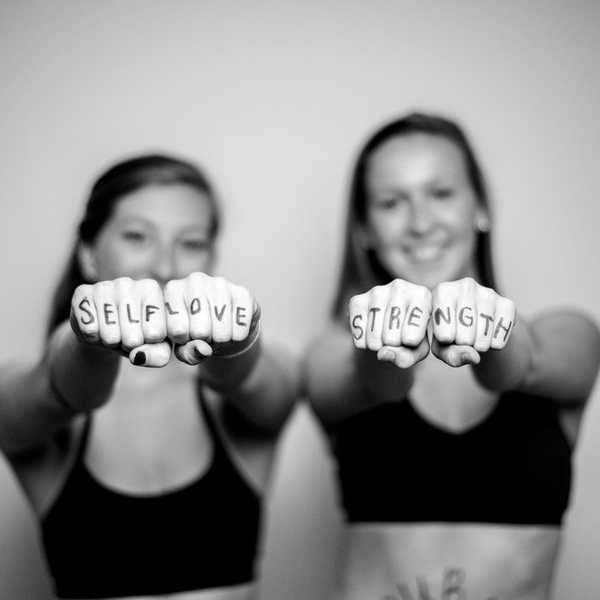
So - reverting back to the title of this essay - 2017 will be the year that I strive to become the greatest person I can be not as a means of reparation for a past which I cannot change, but rather in hope of seizing a future I which is fully mine for the taking. No longer will I hold myself accountable for answering, "what if?" but rather let go of such questions and ask, "what now?" Finally, and above all, 2017 will be the year in which I forgive someone whom I have frequently disdained, ridiculed, and even rejected - myself.