

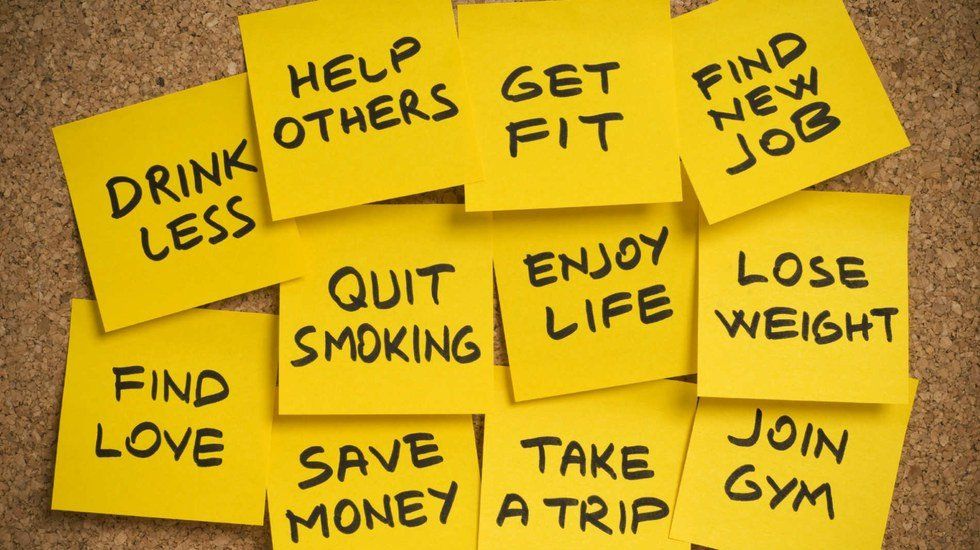
It’s that time of year again when we all take a moment to reflect on the year that has come to pass and also the year that lies ahead. For many people, the new year is a opportunity to start new good habits while kick bad old ones. Whether it’s exercising more, smoking less, being more kind, we all have goals we aspire to accomplish as the Earth begins a new trip around the sun. While many of these desired habits are great to strive for, they require – like all good habits – not only the capacity but, more importantly, the willpower to exercise them on a routine basis. We’re all familiar with how quickly our New Year Resolutions can fizzle out as the days and weeks since January 1st continue to pile on. What is it, then, that allows some resolutions to stick while so many others end up failing?
Willpower as a Keystone Habit
Over the course of the last few weeks, I took the opportunity to read The Power of Habit, a New York Times and USA Today bestseller written by Charles Duhigg. A central component of his thesis is that much of what we do in life and business is not the product of informed decision-making – as is the popular belief among individuals and corporations alike – but rather the aggregate sum of deeply ingrained habits in our lives.
Moreover, Duhigg argues that while these habits are so influential in our lives, they are not immune to change. More specifically, he discusses the role of Keystone Habits in creating a sustained and positive transformation in one’s life. A keystone habit, as he describes, is “an individual pattern of behavior that is unintentionally capable of triggering other good habits in the lives of people.”
When seeking to identify these patterns of behavior, numerous studies have confirmed that the single most important keystone habits for success are that of self-discipline and willpower. One such study titled Self-Discipline Outdoes IQ in Predicting Academic Performance of Adolescents found that self-discipline “accounted for more than twice as much variance as IQ in (areas such as) final grades (and) school attendance.” The study goes on to conclude, “these findings suggest a major reason for students falling short of their intellectual potential: their failure to exercise self-discipline.”
You see, the problem with starting new habits – and New Year’s Resolutions alike – isn’t that we aren’t capable of achieving our goals, rather we lack the grit and the self-discipline to stick to our plans long enough to see them take hold in our lives.
Improving Self-Discipline through “Small Wins”
One of the biggest hindrances of truly transformative change comes by its very nature – that is, the prospect of systemic change can often seem to be daunting, even outright impossible, to achieve. Overcoming this hurdle requires focusing not on the whole picture, but rather small day to day incremental steps towards the end goal – small wins.
The types of small wins come from simple achievements in one’s daily life:
- Developing a more consistent routine of both going to bed and getting up earlier
- Drinking less frequently and in moderation
- Developing small, but important, daily routines – making one’s bed in the morning, exercising more regularly, eating healthier, etc.
- Keeping better track of one’s day to day life – finances, diet, homework assignments, etc.
Building on Small Wins to Produce Big Victories
While these aren’t necessarily the exact actions people resolve to achieve going into the new year, they are the type of actions that in turn are capable of being strung together to produce big time results. What they provide is a measureable set of objectives which allow one to track their own progress, hold themselves accountable to, and – most importantly –improve my self-discipline and willpower in a way that will give rise to the systemic changes one seeks.
“Small wins fuel transformative changes by leveraging tiny advantages into patterns that convince people that bigger achievements are within reach” – Charles Duhigg
This is a strategy that has been shown time and again – through empirical research and anecdotal analysis of both individuals and corporations – to create fundamental shifts in thinking, behavior, and – what matters most to both you and I – results. By focusing on small wins, understanding what causes one to deviate from these behaviors, and gradually working to improve willpower and self-discipline, you can bet that 2017 will be a year unlike any other. With that being said, good luck, and happy New Year.