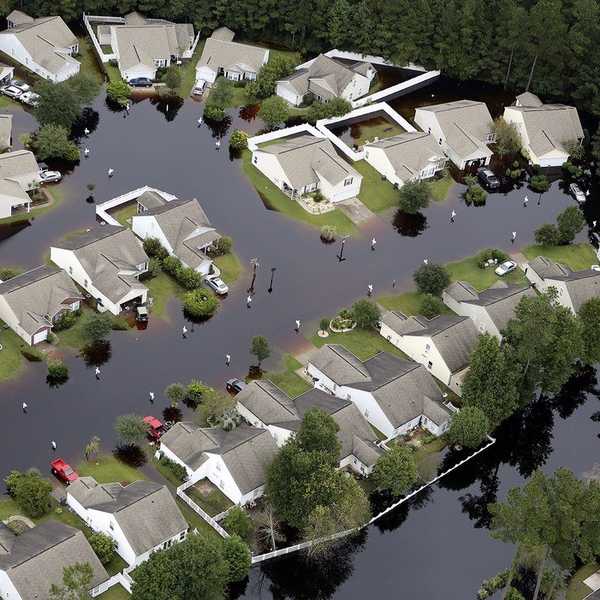

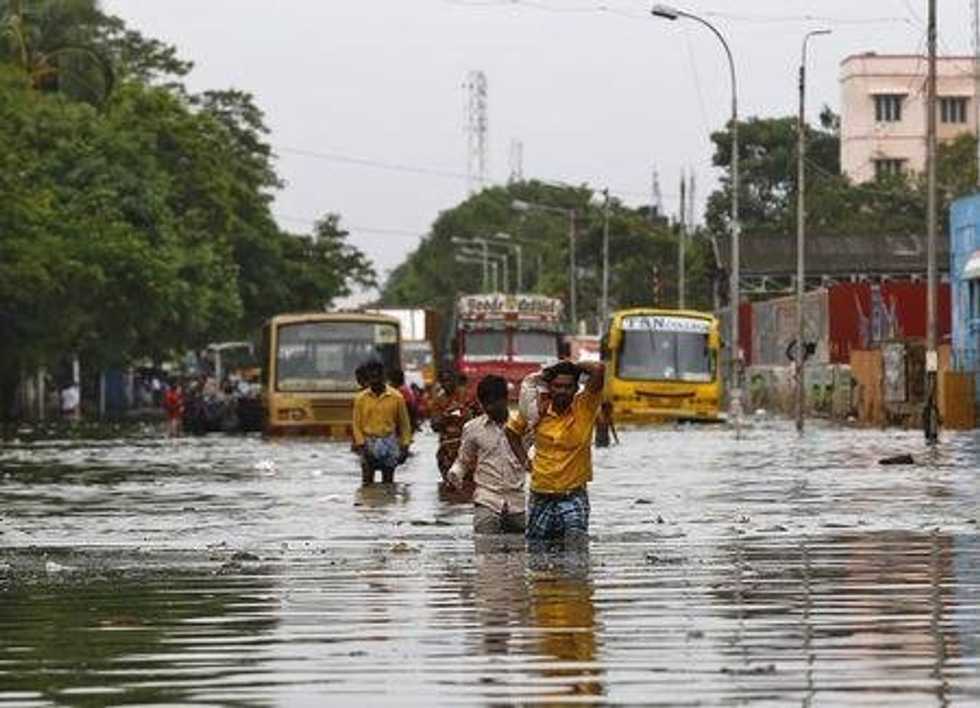
Throughout India, flooding occurs annually during the monsoon season from June to September. The northeast monsoon has been particularly vigorous over southern India, especially in the Tamil Nadu state, of which Chennai is the capital.
Chennai, India has recently been struck with intense flooding due to a monsoon rain this past week. At 490 mm, rainfall on December 1st was the highest amount experienced by Chennai, India in a century.
Much of the city’s infrastructure is submerged but the water levels have been stabilizing and decreasing. Coastal and the interior part of Tamil Nadu will receive more rain in the time.
Rescue and relief procedures are continuing to provide support as the National Disaster Response Force (NDRF) increases its operations in the affected areas on Friday.
Chennai city remained practically detached from the rest of the country with the suspension of all air, rail and road transport services. Flooding greatly hindered public transport of the arterial main roads, including Mount Road over the Marmalong Bridge.
Additionally, the Southern Railway cancelled all inter- and intra-state train services until Saturday, while the airport operations won’t proceed until Sunday.
Moreover, food prices increased dramatically due to short supply and people were forced to pay a substantial amount for essentials.
Following on this catastrophe, on Thursday, Prime Minister Narendra Modi undertook an aerial survey of the flood-hit areas of Chennai, its suburbs, and the neighboring districts of Kancheepuram and Tiruvallur, two of the cities of Tamil Nadu. Modi is supporting the people of Chennai by sponsoring relief work. "I will stand in support of you," the prime minister of India said in his remarks after the review meeting with the chief minister.
Teams of NDRF, army personnel, and police and fire service men helped rescue people from their flooded homes as did many others. Twenty-eight NDRF teams with at least 1,200 personnel were deployed and rescued approximately 5,000 marooned people by organizing over 110 boats. Also, much of the Indian air force distributed food packets in response to calls of distress. Some places in the state of Tamil Nadu will experience more continuous and heavy rainfall.
The Indian Express newspaper reports, "What may have been a tank, lake, canal or river 20 years ago is today the site of multi-story residential and industrial structures."
The floods in Chennai are not only due to environmental factors but also those of human resources such as construction and urban development. Some are blaming the city’s planners and engineers for poor development of the infrastructure. Many have been criticizing the city’s administration and urging them to take action by providing more advanced accommodations and calling out illegal construction that has been present in the area.
In times of civic and humanitarian crises, it’s fortunate that the citizens of Chennai are helping each other and providing aid constantly. They are even providing escorts to animals and bringing those that are stranded to shelter. In spite of this natural disaster, communication is gradually being restored and people are determined to get through (and out of) the waters.http://timesofindia.indiatimes.com/city/chennai/So...