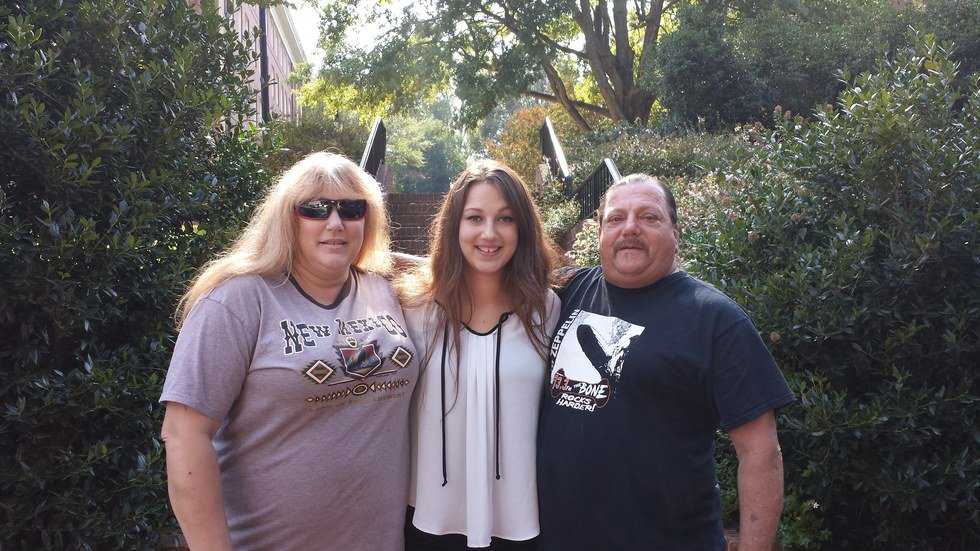
I started dreaming about Ivy League schools and decided I wanted to be an anesthesiologist at 4 years old. I played sports through the eighth grade and maintained honor roll throughout school. I loved everything about school! In high school, I was valedictorian of my graduating class, held a 4.0+ GPA, was voted Miss Moriarty High School by faculty and staff, stayed involved in five extracurricular activities and remained heavily involved with my church. Everyone expected a kid like me to go college. I had the resume, desire, and abilities to be successful there. However, many are still surprised, shocked even, that I attend one of the most rigorous colleges in the country once I tell them I am a first generation college student. Why are we surprised, or overjoyed, when successful students admit that they are first generation college students? The answer is simple: we have created an archetype for the “first generation college student.” We expect these students to struggle in college, to have more obstacles than the average student or to have endured a harder life than us.
As the Millennial generation, most of our parents have attended college. When we encounter a student similar to ourselves (successful, capable, similar background, etc.), we assume their parents went to college as well. However, when that student admits being a first gen, or first generation college student, we are surprised because we expect these students’ lives to be vastly different from ours. We might imagine that their parents work minimum wage jobs living paycheck to paycheck, that they struggled to reach the point of applying to college and being accepted or that have a profound success story. Subconsciously, we have linked college education to a successful life. Consequently, we have also linked a lack of college education to a more difficult life. But that’s a conversation for another day! This link, however, explains the underdog archetype created to fit the “first generation college student” mold. But, there’s an issue with creating archetypes or defining identities for these students: we come from varied experiences that do not allow for any one type of person.
As a first gen, I have received numerous reactions from peers and professors. Some will say “Wow! That’s amazing,” “Really? I would never have guessed that,” or “I’m so proud of you!” Others will say “I respect you so much” or “That’s such a powerful story.” While I appreciate the encouraging responses from those around me, each time, they are more surprised, proud and in awe of my life than my entire hometown! People hear my story and assume that being a first gen defines my identity as a person, rather than seeing it as a characteristic. My first gen status compares to other students’ statuses like coming from a particular socioeconomic class, a single parent home or being home-schooled. None of those define who we are or dictate our identity. Rather, they play a crucial role in an all-encompassing human. Coming from a particular socioeconomic class contributes to the growth of a student in a particular way. Maybe they learned what it meant to work, learned to appreciate all they were blessed with or had a reality check when they left home. Those lessons and experiences helped shape that student into the person they are today, but in no way are they defined by that status. Being a first gen falls into the same category as a socioeconomic class: it does not define a person but helps shape one. As a community, we need to be aware of the mindset and attitude we have about first-gen students. Rather than allowing the “first gen” status to define the identity of a student, we should simply see it as another characteristic.
By creating an underdog archetype for the first gen student, we undermine their success. Here’s an example: In high school, I had friends whose parents attended college, and I never felt any different from them. I always knew my chances of going to college were the same as theirs, so I worked just as hard. I never felt as though my status as a first gen defined my college path or limited my college ability. I never thought that because my parents never went to college that affected my path in anyway. From a young age, my parents encouraged my education because they knew what it was like to lack one. That encouragement placed college in my hand of cards from the beginning. We do not expect first gen students to be the “likely” when it comes to attaining a college education. That mindset creates a dangerous precedent. If first gen students want to attend college, we should encourage and expect them to accomplish that goal.
The parents of one of my co-valedictorians, Savanna, went to college. She and I both applied to colleges, had similar test scores, received scholarships from numerous organizations and were decorated with a multitude of sashes and cords at graduation. She and I had the same AP classes senior year, succeeded in our extracurricular activities and found security in our identity through Jesus Christ. Yet, she was never told, “That’s such a powerful story” when she went to college and told her friends about her status as a second generation college student. In creating the underdog archetype for first gens, we also create expectations for non-first gen students that can undermine their accomplishments as well. Savanna had a powerful success story too. We need to remember that being a first generation college student does not define nor limit our success, neither does it make our success greater or harder to achieve than others’.
Being a first-generation college student means that I must work differently in certain areas, but everyone has to do that in some capacity. While I am not defined by this status, I was shaped by it throughout the college application process and the process of adjusting to college. My parents were not able to assist in my college application process, which meant I had to search elsewhere when I had questions. When my mom and I visited a college I had been accepted into, she gawked and awed over little things like dorm rooms. I think the major difference is the way I relate to my parents now that I am in college. I find myself having to explain things that seem mundane to me, like a meal plan. I have been able to learn patience with my parents about all things college! Stay tuned for an article next week that investigates these differences more in depth.
If you enjoyed this article, or would like to see more riveting pieces written by Davidson College students, please visit our Facebook page.
Here are articles I personally enjoyed from last week, or that relate to this topic: Makeup Trends On Social Media Are Draining Our Individuality,
Free College: Has The Government Earned Our Confidence?,