

Meal plans are convenient and easy, especially at Davidson. All you have to do is swipe your Catcard into Commons, grab some ready-made food, shove it in your mouth and you’re on your way. But we all know there are some downsides to the cafeteria: you don’t have control over the menu or the quality of the food, you don’t know where the food came from and eating their food is exorbitantly expensive. The summer before going to college, I became interested in cooking and spent hours experimenting with ingredients in my family’s kitchen. When I got to Davidson, the option of choosing any kind of food sitting right at my fingertips often led me to pick unhealthy options, such as desserts and sugary cereals. With the task of cooking for myself at home, however, I was much more inclined to keep track of what I was consuming, which led me to incorporate more fresh produce into my meals and ultimately eating healthier. Cooking also calmed me after a stressful day or week, so if it does the same for you, read on for tips about cooking in college.
All the pros of cooking I listed above have convinced me to sign up for the lowest meal plan at Davidson for the fall semester of my sophomore year. The 75 block (along with a six meal plan at Rusk Eating House) will allow me to prepare at least six meals a week for myself in my dorm’s kitchen. I’m lucky enough to be able to practice meal-making this summer since I’m staying on campus for a job, so hopefully, I’ll have some great meal ideas for the school year. I’m really looking forward to cooking for myself because it’s fun and stress-relieving in an environment where tension thrives. If you’ve found yourself in a similar situation as me, then maybe some of the things I’ve learned while “practice-cooking” will be helpful to you!
- Start by buying only necessities. Every college student has struggled with a low budget, so grocery shopping may seem like a daunting task. The first time I went grocery shopping for this summer, I was overwhelmed with the amount of food that I thought I needed. What worked for me was only purchasing basic necessary food items (such as fresh fruits and vegetables, a source of protein, dairy and some grains) that I needed for that week. Make a shopping list and keep it to a minimum. It’ll save you time and money at the store.
- Buy nonperishable food items. Figuring out how much perishable food you should get for a week can be tricky since you’re only feeding one person, and food can go bad quickly. A good and long-lasting solution to this would be to stock up on non-perishable food items that’ll last you a long time. I found this to be helpful for snack items like dried fruit and nuts, as well as meal components, such as rice, soup, beans and quinoa.
- Plan meals before shopping to aid in list-making. If you’re anything like me, you’re pretty unorganized, especially when it comes to shopping for food. However, planning ahead is key to keeping your list short, simple and inexpensive. Figure out before you go to the store what meals you want to cook for the week and buy only what you will need for those meals. I’ve often found it helpful to cook with versatile base ingredients for my meals, ones that I can use in several different ways. Some good examples would be sweet potatoes, kale, mushrooms and of course, meat and chicken can be prepared in several different ways, as well.
- Have a core set of go-to ingredients to work with constantly. This is essential for someone on a college budget because it helps limit what you buy at the store. Your core ingredients can rotate every couple weeks or so, so that you’re not constantly eating the same food or cooking with the same sauce. For an example, here were my base ingredients for the past couple weeks: lemon olive oil dressing for all my salads, olives, mushrooms and parsley with all of my pasta, sweet potatoes prepared three different ways (fries, baked and cut up in a skillet), avocados (if you love them like I do, they become very useful in many dishes), plain yogurt (I’ve used it to make pancakes and parfaits for breakfast), bananas and blueberries. Yes, I know there’s no meat or fish in those ingredients, but I’m working towards incorporating those as I start to try cooking more complicated meals.
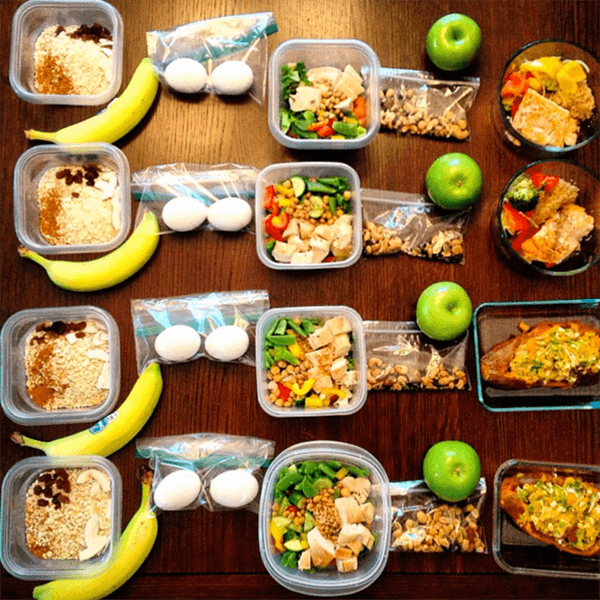
- Meal prep. It’s your best friend. Don’t get me wrong, I like to cook, but most weekdays I’m busy from 8:30 a.m. to 9 p.m., so cooking daily isn’t always an option. What I’ve found helpful (and fulfilling) is to get all the ingredients you need for the week over the weekend, and then cook all of your food on Saturday or Sunday to last you throughout the week. Meal prep for me takes about two to three hours, but the end result is extremely satisfying. Plus, I don’t have to cook the rest of the week, and can just grab my lunch and run out the door in the morning. In the end, for a college student, meal prepping saves a lot of time and energy that comes with cooking your own food.