Within the past couple of years, science has given the world unimaginable discoveries that have stricken us with amazement. Some, which we have never thought possible, became a reality before our very eyes. Such advancements have been achieved in just about all fields, including medicine, chemistry, physics and astronomy, just to name a few. Although in most recent news, we are being told to turn our attention toward a different area of interest and study. Where will the next great scientific phenomenon occur?
Genetics.
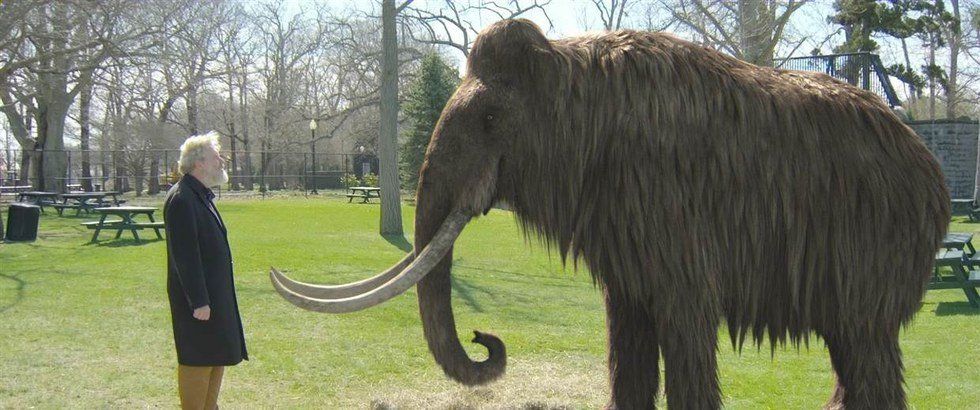
Fairly recently, remains of the prehistoric Woolly Mammoth have been discovered in various locations across the globe (United States, Russia's Yamal Peninsula, as well as Russia's Siberia), some being more intact than others.
But how does this have to do with genetics?
The acquisition of these remains allow scientists the ability to venture into uncharted territory; territory that science has never experienced before. Molecular engineers and geneticists believe the Woolly Mammoth can be recreated and brought back to life through hybridization. By extracting DNA from a test subject (organism), they can nurture that strand and create living cells of any given species. Therefore, borrowing DNA from the deceased mammoths creates the assumption that scientists can conduct the same procedure with the same result. By using new genome modification technology, referred to as CRISPR, scientists can edit any species’ genetic code. Once the procedure is perfected, DNA taken from Woolly Mammoth will be transplanted into that of a modern day Asian elephant (closest relative). One gene at a time will be altered until a Woolly Mammoth is finally created. The process is time-consuming, but the potential outcome will be groundbreaking.
What is interesting to think is that geneticists could essentially do this with virtually any species on Earth. In a perfect scenario, we could prevent any organism from ever go extinct, but I think we’re still very far from that point just yet. There is no telling what will come next, but it is right to assume that the odds are in our favor and it will be nothing short of incredible. "Jurassic Park" doesn’t seem so out of the question now does it?
Genetically engineering animals to bring them back to life sure does sound like a monumental feat, although it raises one controversial question: should we do it?