This past weekend, I had my team retreat with Speech and Debate in Pensacola, Florida. We were discussing and introducing the team rules and policies to our new members. We came across our policy for "no weapons," which brought us to the discussion of concealed carry. Our team competes mostly in Texas, which recently legalized concealed carry on college campuses. Our head coach told us that, even though it was legal to do this on a campus in Texas, that we were not allowed to do concealed carry on a tournament weekend. Currently, Louisiana colleges do not allow concealed carry on campus. I asked the question of, "well, if we have a license to do so, why can't we?" No, I'm not licensed to participate in concealed carry, but I plan on doing so once I'm 21. The response was that it was a "safety issue."
If one knows what he or she is doing when owning or operating a gun, then it's not a safety issue by any means. Not understanding gun safety or usage is a safety issue.
Now that I've made that point clear, let me explain why carrying is necessary.

Here are some directly quoted campus crime statistics. According to the National Center for Education Statistics, "in 2013, there were 15,500 burglaries, constituting 56 percent of all criminal incidents. Other commonly reported crimes included forcible sex offenses (5,000 incidents, or 18 percent of crimes) and motor vehicle theft (3,000 incidents, or 11 percent of crimes). In addition, 2,100 aggravated assaults and 1,300 robberies were reported. These estimates translate to 10.3 burglaries, 3.3 forcible sex offenses, 2.0 motor vehicle thefts, 1.4 aggravated assaults, and 0.9 robberies per 10,000 FTE students."
Of course, the area of the campus could change how safe it is. If victims of these crimes would've owned a firearm for self defense and were able to use them, these numbers would be much lower, or almost nonexistent. A student resident would've been able to stop the burglary of their dorm room or apartment by firing at the burglar. Instead of permitting pepper spray as a form of defense in case of an attack (whether it's a rape, assault, mugging, etc.), permit a gun. This would be more useful in these types of situations because the spray might not actually work. The attacker could wipe it off. If the perpetrator isn't in close proximity, or if there is more than one, then pepper spray is useless. Physically trying to fight off an attacker might be too hard for some because the victim could be overpowered by the attacker due to height and weight difference or strength difference. Imagine a young woman who is about 5'5" and 140 pounds. If she is unarmed and confronted by a large man of 6'2" and 300 pounds, it is easy to predict who would overpower who. If she has a gun, she could pull it, shoot it, and be protected. If someone catches a person breaking into their vehicle, then the victim could shoot the perpetrator. Using a gun in these types of situations would be extremely helpful because it only takes a second to pull a trigger, while it could take up to 20+ minutes for police help to arrive.
Mass shootings, or an active shooter situation, can happen anywhere. However according to The Daily Signal, they are more likely to occur in a gun-free zone. Of course, they could happen in an area where guns are allowed, but with gun free zones, the shooter is unlikely to be shot at by a victim or someone who is non-police. If people were allowed to do concealed carry, then people could shoot back at the active shooter. It would not only help them, but those around them without a gun. It would also be of great help to the police, who may or may not yet be present. Also in this situation, it could take a while for police help to arrive on scene, which is why having and using a gun would be very useful.
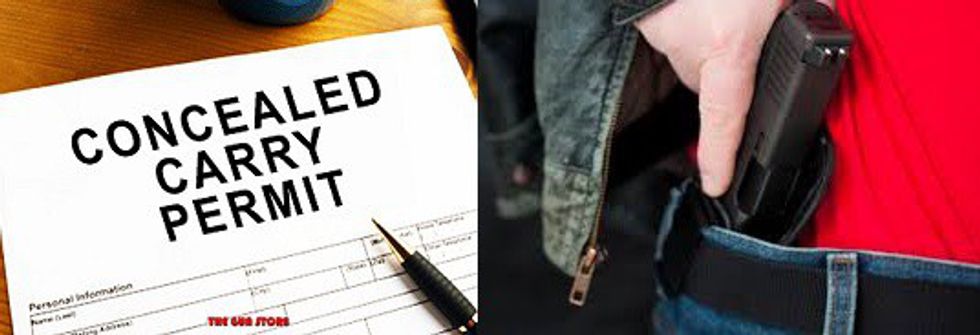
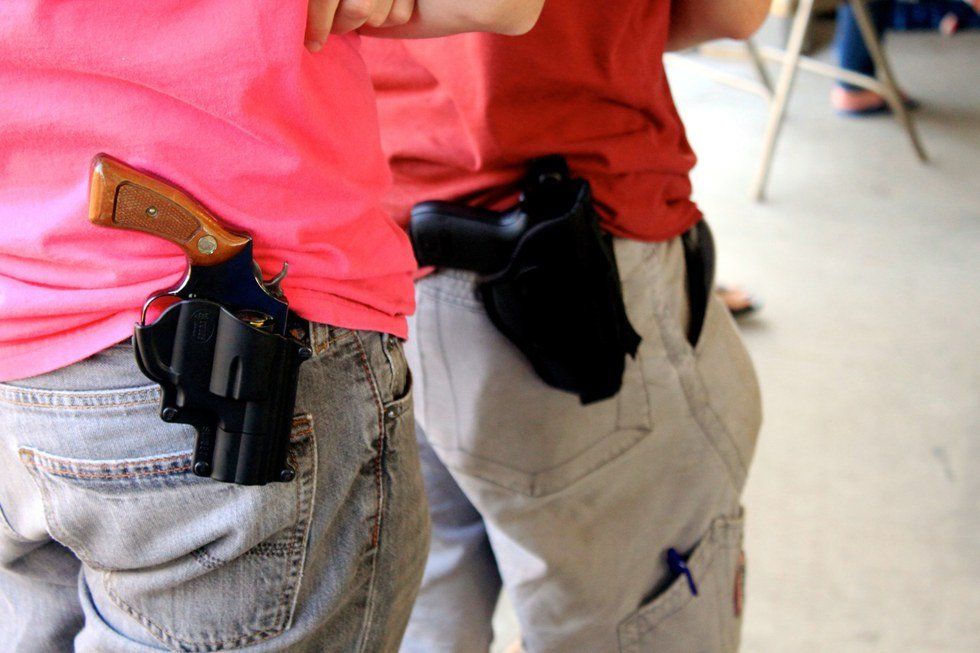
The difference between concealed carry vs. open carry, concealed carry is if the gun is in a holster that is covered by a shirt, in a jacket, in a backpack, purse, etc. Open carry is the gun holstered to the waist in plain sight. Before choosing to do either, consider some factors. According to Defend and Carry, location will depend on where you can open carry. All states require licensing for concealed carry, but some states may not require it for open carry. Concealed carry might be difficult for comfort because you must hide the pistol underneath your clothing. Open carry would draw attention from others, including anti-gun citizens, who could start a confrontation or call police to report someone with a gun.
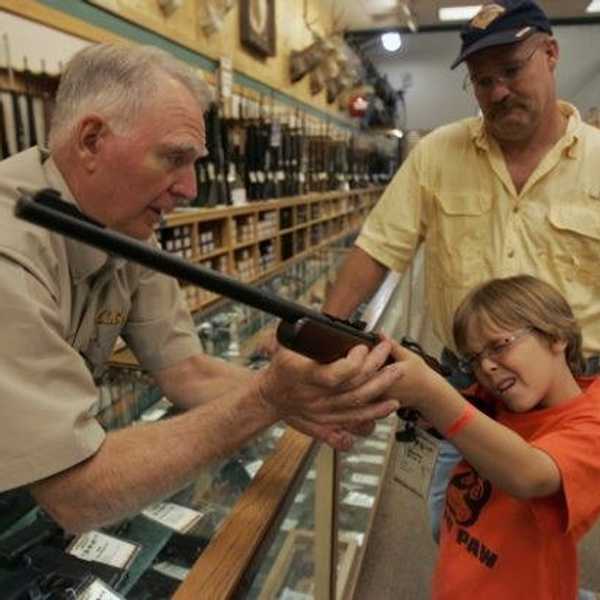
Going through the appropriate training and understanding basic gun safety will make a huge difference as well. According to the NRA, knowing basics of your gun of choice, such as cleaning and the different parts, is the first step of gun ownership, even before using it. Never point a gun (loaded or unloaded) at someone if you won't use it. Leaving it unloaded or on safety until using it is recommended. Other common sense bits, like gun storage, not using drugs/alcohol, and using correct ammo, are obviously important as well.
Self defense is extremely important. The ability to exercise the second amendment is a huge part of it. It is a person's right to own a weapon. Not everyone wants to own a gun, and that's fine. Don't rip on those who do, and don't take their right away because it could protect you, too.