Hello dear reader,
I grew up in a family that is, to say the least, fans of weaponry. Whether that be knife collecting, studying weapons most people in this day and age don't even know about, or guns. Guns get a lot of bad publicity, which makes sense to me — the things that they have been used to do are terrible. I am also someone who grew up around them and knows that they are basically a blunt object until someone puts their finger on the trigger. Today I am going to be speaking mainly on handguns and the safe way to handle and store them, because at the end of the day, legal gun owners are using them for home or self-defense. On that same note, people who weren't raised by walking gun safety handbooks can go out and pick up a handgun as easily as those that were, so in honor of all those who have interest in gun ownership and didn't get lectures on gun safety since they were 5, here are my handgun safety tips.
Handling a Handgun
If you were to come to my house, you probably won't notice the handguns until someone pulled them out, which we have an almost obsessive tendency to do. So if someone hands you a handgun, what do you do? Well, you first need to make sure that the gun isn't loaded. Odds are you aren't being handed a revolver, but you might be (like if you come to my house for example). To unload a revolver, you need know how, right? Every gun is slightly different, so your best bet is to ask the person who handed it to you, but I'll give you an example anyway, for good measure.
This is my dad's revolver:
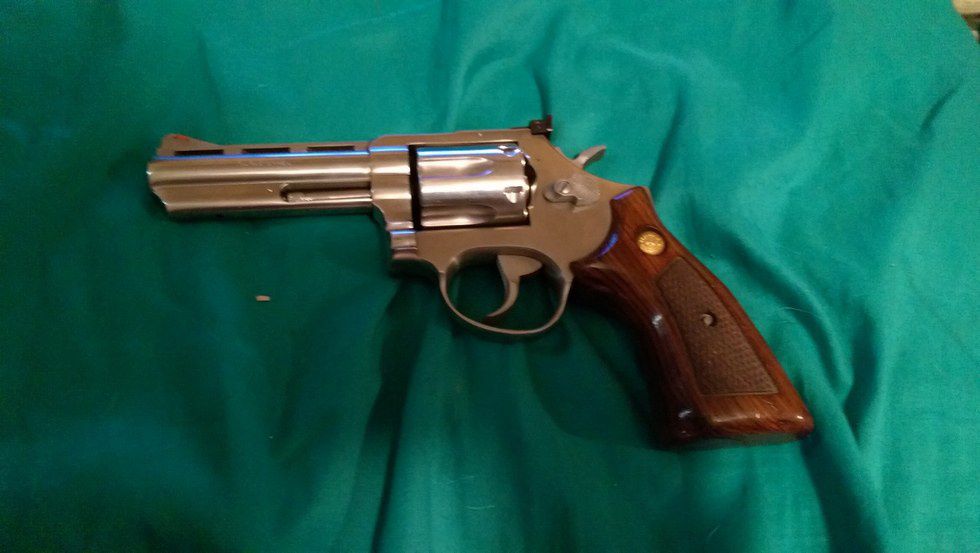 It is a 35 mm Taurus revolver and is pretty easy to unload.

See the little button looking thing my finger is on in this picture. If you push it forward and tilt the gun toward your thumb,
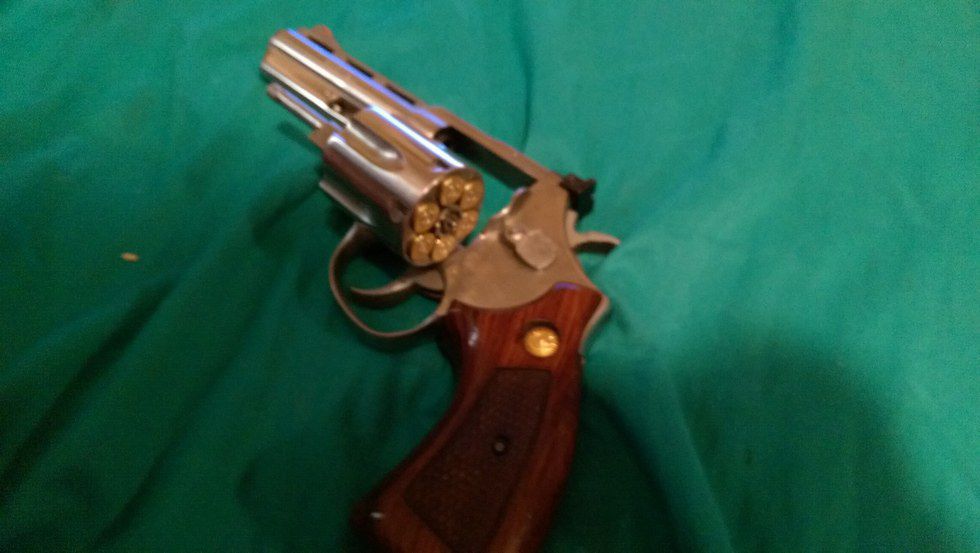 this happens. As you can see the bullets are now away from the barrel of the gun so how do you get them out?
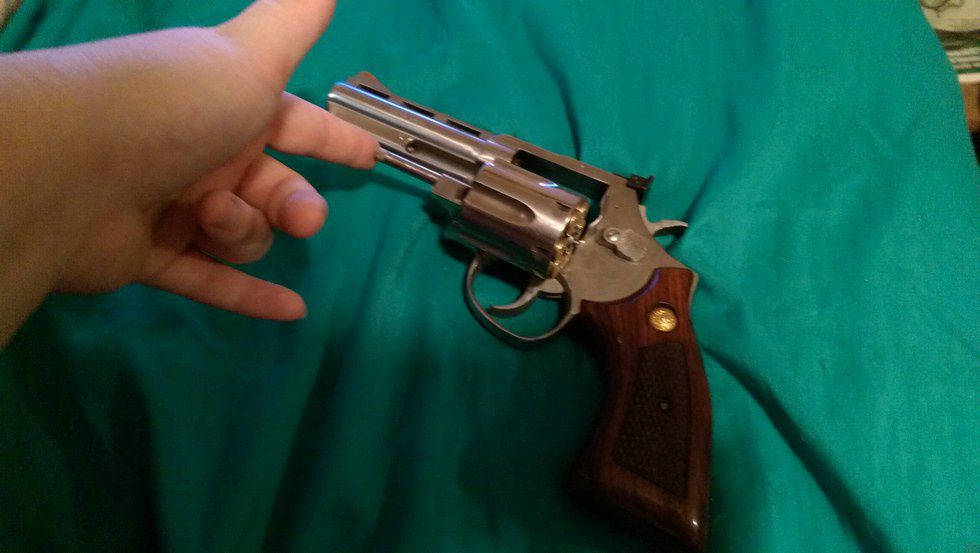 Simple; there is a rod in this picture that my finger is on. If you push it in, all of the bullets come out.
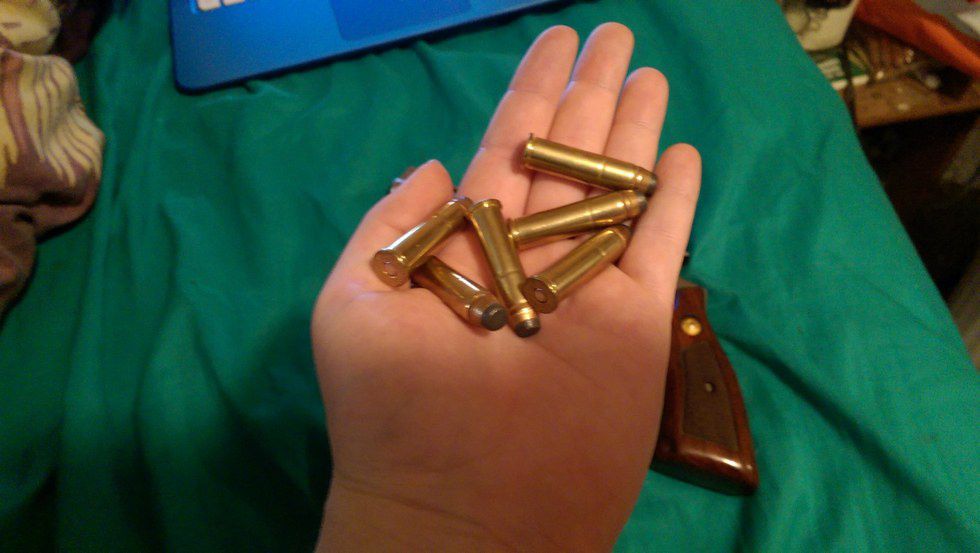 Tada! The gun is now unloaded and safe to handle. You should always make sure to do this whenever a gun is handed to you — it may already be unloaded, but you should always check because it is always possible that whoever unloaded it before you made a mistake, and in this case mistakes can be deadly.
Let's say the gun you are handed isn't a revolver, which is much more likely. Safety check still needs to happen so how do you do that? Well, I suppose that means its time for more pictures.
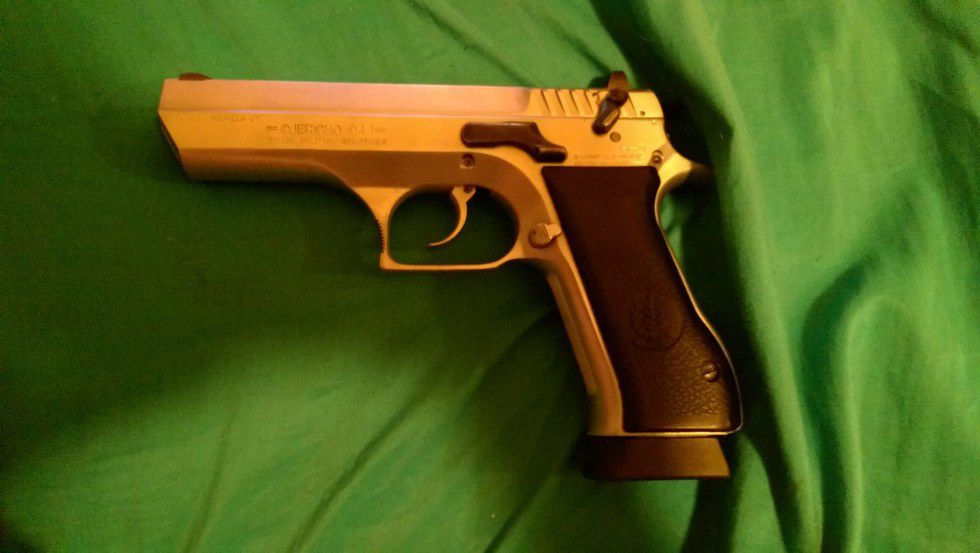 This is a Jericho 941 9 mm. Not necessarily the most common handgun, but it's unloading is fairly standard and similar to any gun I have worked with. As you can see in the above picture, just to the left of the grip is a button.

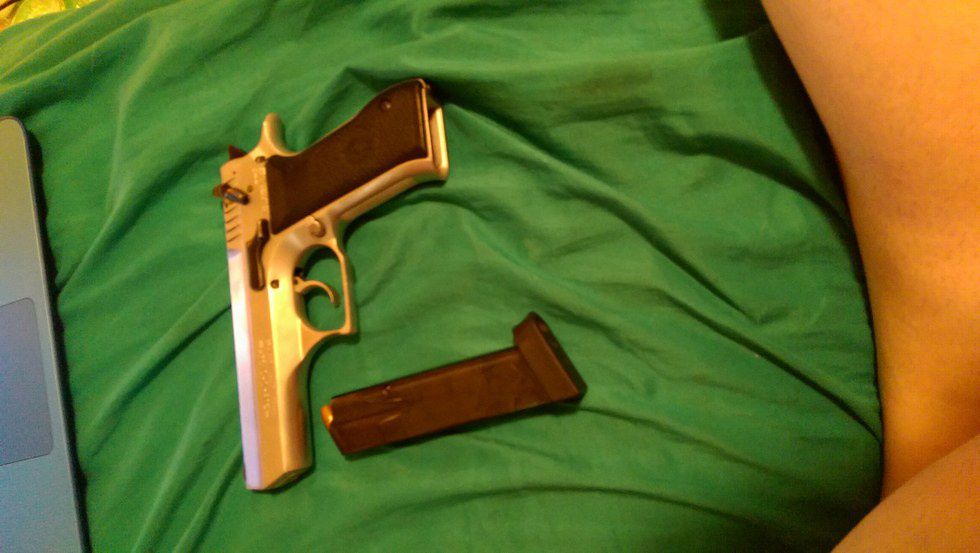 To unload the gun you press that button and the magazine drops out. You aren't done yet, though. With handguns like this you need to make sure that there isn't a bullet in the chamber. So you need to pull back the slide and check. To do this, you want to position your thumb and pointer on either side of the back sight and pull back.
 If you look into the hole and see a bullet, removing it should be as simple as tilting the gun upside down. The bullet will fall right out. The gun is now unloaded and safe to clean, check out, test the trigger, etc.
So let's say you don't want to unload the gun, maybe you're at a gun range to shoot the gun for example. Then there is, of course, a whole different set of rules. You always want to keep a safety on if you aren't firing the gun immediately; not all guns have safeties and some have multiple safeties. Whether or not your gun has a safety, keep your fingers outside of the trigger guard until you are ready to fire; this means in any situation, if you're at a gun range or someone is breaking into your home, always keep your finger outside of the trigger guard. Mistakes with a gun can result in the death or injury of the user or an outside party. Never, I repeat, never point a loaded gun at anyone you aren't going to shoot. If someone is breaking into your house you can point a gun at them but in no situation should you ever point a gun at someone in a joking manor. If you are at a gun range most of them will tell you to keep the gun pointed down until you are pointing it down the range because, in case it hasn't been said enough, mistakes can be deadly. When you are holding a loaded gun, there is no such thing as being too careful. You need to take every precaution to keep you and the people around you safe. So always keep the gun pointed down unless there is an immediate threat.
Storing Handguns
This can get kind of complicated, of course the safest way to keep a gun would be in a safe. No one can steal it, no kids or pets can get a hold of them, and all the other stuff we don't want to happen with our guns. There is a flaw in this: they are hard for you, as the user, to access, so if someone is breaking into your home well you don't want to take an extra 30 minute fumbling with the lock to have something to protect you or your family with. So here is what we did in my house.
Keep your guns somewhere high. Whether this be a tall shelf, or on top of an entertainment center keep them somewhere where it can be easily accessed by an adult but not a kid. Teach any children in the house about the gun. When I was young, my parents would bring out the guns once in a while, unload them, and teach us how they worked by showing us how to take them apart and put them back together. This may sound ridiculous to some, but it deletes the curiosity for a kid. I was supervised and safe while learning about them as opposed to finding a ladder to snatch them and trying to figure it out for myself. This made me not really have much interest in playing with them so I didn't neither did either of my siblings. It also taught us to respect them as weapons and not think they were toys. Next, always try to keep them in a holster, holsters generally block off the trigger so even if you have a really adventurous cat they aren't going to be able to fire the gun.
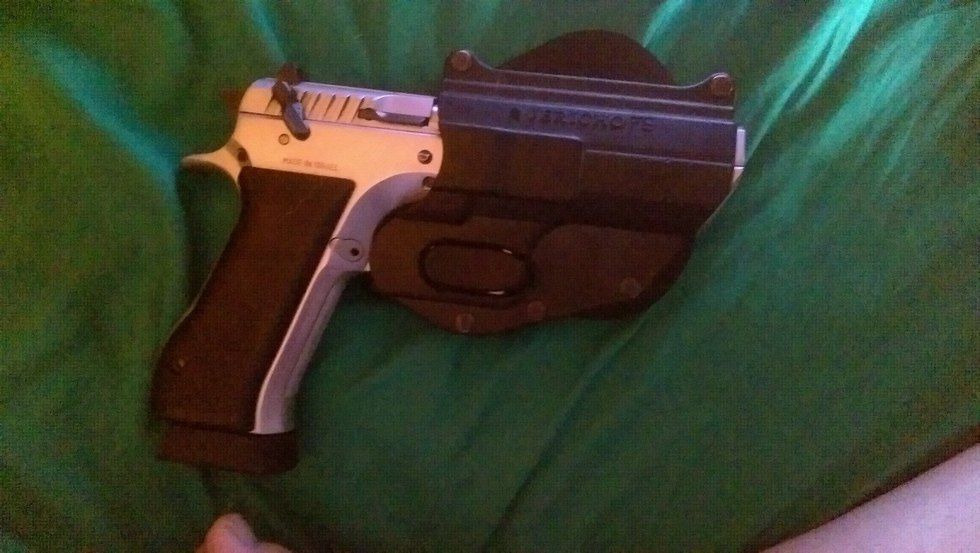 This is the Jericho in its holster; as you can see, the trigger is blocked off. It also isn't going to fall out; in order to remove the holster, you have to press a button, so none of my dogs or my cat are going to get it out of there. There aren't any small children in my house, so generally when my boyfriend is over and has his gun, I will just have him leave it on my dresser, high enough that the animals aren't going to get to it, but low enough no one has to stand on their toes to reach it. Putting a gun somewhere safe is going to be different in every household and the only one who can say what is safe for yours is you.
Carrying a Handgun
If you live in a state like mine, open carry is legal. So anyone who is 21 years or older can carry a gun on their person so long as it is visible. Most people will more than likely get a CCW if they want to carry a gun, allowing them to conceal their gun, more easily transport it in a car, along with other benefits. This is what I recommend. Either way about it, there are a lot of rules for carrying a gun. If you don't have a CCW and you are in a car, the gun and ammo need to be separate, and not easily accessed by anyone in the car. So the ammo could be in the trunk and the gun itself could be in the glove box. If you have a CCW you can have it on your person in the car, but if you were to get pulled over by a cop, you have to tell them when they come to the car that you have a CCW and are carrying. While doing this you should have both hand on the wheel and away from the gun. If there is a sign on a building that says no firearms whether or not you have a CCW, you can't take your gun in. So you need to store it safely in your car. I recommend a lockbox in the trunk to keep it in your car when you aren't in it.
So those are my tips for gun safety. There are many more but this article is long enough as it is. So remember to keep yourself safe and be careful.