


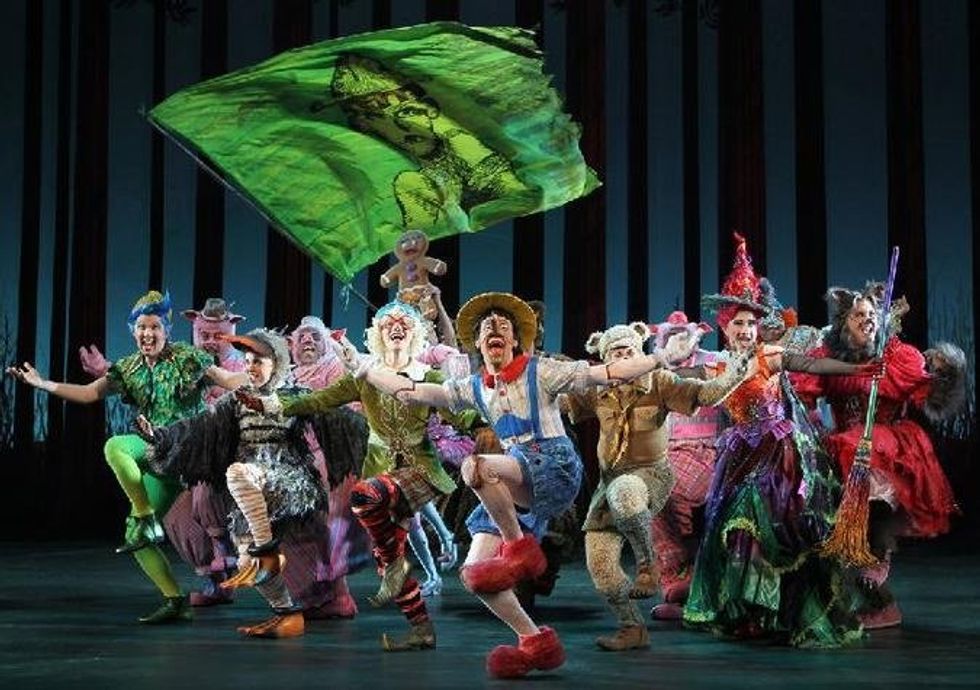
On my Facebook newsfeed, I recently came across a Pink News article about "Shrek the Musical," one of my favorite Broadway shows. The musical's Canada run, at the Neptune Theatre, has been challenged for its use of a transphobic slur. (If you want to learn about the word in question, which I will only refer to here as “the t-word,” and why it’s a slur, check out this and this.) Neptune Theatre has released statements apologizing for causing harm and distress to the LGBTAQ+ community and announced that they are editing the show and removing the word.
Naturally, the comments section on the article was full of protests. These protests that were insisting that the show should remain unchanged came down to three points: the word is only used once in the show, that there was no intention on the part of the writers to offend or make fun of LGBTAQ+ people, and that the use of the word is OK because it has a negative context.
These protests, although factually accurate, are nonetheless incorrect.
It’s true that the t-word is only used once in the musical’s original script. However, when musicals are put on in different locations, details change. A quick search on YouTube reveals several different versions of the show’s opening number, between the original Broadway run, the national tour, and runs in locations like Chicago and Canada. It’s entirely possible that the Neptune Theatre, through decisions made by the director or actors, added more transphobic jokes to the show. Regardless, when it comes to slurs, once is too many times for the people who are sick of having it used against them. Once is still offensive.
It’s probably true that the musical’s writers didn’t intend to offend or make fun of LGBTAQ+ people, but where bigotry is concerned, intent is irrelevant. The comments section mentioned that the songwriter of this musical, Jeanine Tesori, also wrote the music for “Fun Home,” a musical with a lesbian main character lauded for its respectful handling of sensitive issues. However, being aware of one kind of offensiveness and respectful about how you portray it doesn't make you immune to being offensive. We all have internalized societal prejudices. We all make mistakes. Those mistakes are still harmful.
It’s true that the word is used in a negative context. The song “Story Of My Life” includes a long list of grievances from the fairytale creatures about how other people have mistreated them for being different. People have made fun of the Mad Hatter’s hat, called the Three Little Pigs “fat” and blew down their houses, and called the Wolf the t-word (“They tore my cotton granny dress / and called me a hot and [t-word] mess.”) The Wolf is clearly upset about this and is, in context, expressing the injustice done to them. However, the t-word, a real-world slur with real-world harm, is the punchline at the end of the verse. Making fun of the Mad Hatter’s hat is funny. Calling someone the t-word isn’t funny. Yet, the audience, prompted by cheery music and a goofy rhyme, is supposed to laugh and always does!
There is a place for offensive language in theatre and it's when that language and the issues attached to it are treated with the proper respect. As a Jewish person, I would generally be OK with seeing a character onstage talking about how horrible it is that someone called them the k-word or the y-word. However, if the word was a part of a goofy song and the entire audience laughed at it, I would be very uncomfortable. Serious slurs should not be treated as jokes.
Later in the musical, in the song “Freak Flag,” the fairy tale creatures come to accept what makes them different and stand up to their oppressors. The Wolf puts on a sparkly red dress, is referred to with female pronouns, and is told to “work it out” by the rest of the cast. In this scene, the wolf’s anti-gender-norm behavior is respected and encouraged. There are no slurs used. This later scene does not excuse the former. It does, however, show that “Shrek the Musical” has a salvageable positive message about self-acceptance if the Neptune Theatre and other productions put their minds to finding a way to express that people have made fun of the Wolf for wearing a dress without using a slur and treating it like a joke.

















