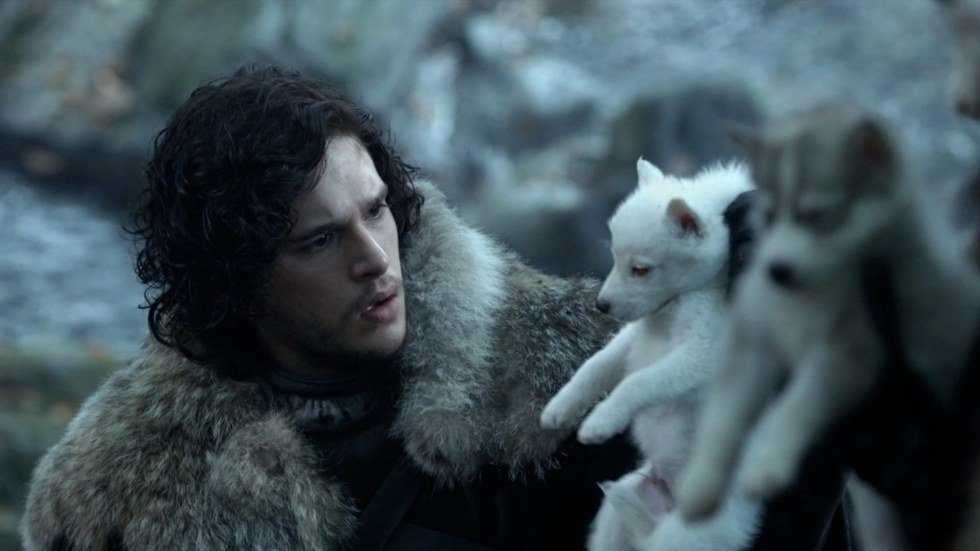
I, like most sensible human beings, absolutely adore puppies. I love their furry little bodies, slightly too large ears and cute little puppy butts. This is why when the six dire wolf puppies were introduced in the first episode of "Game of Thrones," I could barely contain my excitement. However, it didn’t take long for that excitement to turn to fear. Fear, because I knew that each of the Stark children would inevitably form a strong bond with their respective dire wolf, and fear because I knew that most, if not all of the wolf pups, would meet their end before their time had come.
Time and time again, poor, innocent dogs find themselves the victims of extreme violence in literature, television shows, and movies alike. "I Am Legend," "American Psycho," "Rear Window," "House of Cards," and more, all feature frankly unnecessary dog deaths. This trope is featured so often and with such casualty that it’s hard to pretend it isn’t a cheap shot to strike the audience where it hurts the most. It’s hard not to view dogs, or any pets for that matter, without big targets on their backs until the moment it’s all over. Essentially, I have two very big issues with this trope: the first being that these usually horrific deaths are sometimes used to display the strength and resiliency of the protagonist, and second, they’re an insult to the emotional capacity of the audience.
To set one thing straight, there is a very distinct difference between movies and shows where dogs are supposed to die, where the death is centripetal to the plot and actually makes sense, and the cases when they die for absolutely no reason at all and completely out of nowhere. When you decide to watch "Marley and Me," for example, it’s the equivalent to getting punched in the gut for an hour and a half for any human with a heart. But at the same time, you know what you’re in for. The entire movie is about the life of the dog, and there isn’t a shot in hell the movie’s just going to cut off at Marley’s peak physical condition. Valar morghulis (meaning: all men must die) applies to dogs, too. But that makes sense. It makes sense that in a biographical film about a dog, it would end at the end of the dog’s life. What makes significantly less sense is to throw a dog into the background of a program and barely touch upon their existence until the very moment they cease to exist anymore. These are the kinds of deaths that I, and many other likeminded individuals, take issue with.
Which brings me to the first major beef I have with this trope. Occasionally, the act of killing these poor animals is performed as a show of strength. In the best of these situations, the actions are taken to supposedly “help” the dogs, such as in "I Am Legend." This is also played out in the first episode of "House of Cards." When a car hits a neighbor’s dog, then-Senator Frank Underwood claims that strangling the dog is “the unpleasant thing, but the necessary thing.” Um, no. How about calling the local animal hospital, or, I don’t know, alerting your neighbors whose pet this was and perhaps allowing them to decide what to do rather than taking care of it yourself? There is absolutely nothing noble or brave about taking something’s life away that may even have the slightest fighting chance, and especially not something that may mean a lot to someone else. I get it, I get it, it’s all for character development. Frank Underwood is so strong and tough that he’s willing to end the life of a living, breathing animal with his bare hands nonetheless, because he believes it’s the right thing to do. But it’s also important to remember that though Frank Underwood is not a real person, real people really wrote that scene for absolutely nothing but shock value. Which brings me to my next point…
Shock value. Eliciting reactions. Emotional appealing. These are all things countless canines have lost their lives to. No one likes seeing a dog (or cat or horse for that matter) killed on screen, but isn’t that the point? Is that not exactly what the showrunners and directors are looking for? To go back to my "GoT" obsession for a moment, Grey Wolf did not have to die. For those who are unfamiliar, the Red Wedding is an infamous scene in the television show in which a wedding reception goes from zero to 60 in about 30 seconds, from party to full-throttle bloodbath. At one point, the cameras cut away from the action to an area outside, where in a cage, posing absolutely no threat to anyone, five crossbowmen shoot down the dire wolf belonging to Robb Stark, the target of the entire attack. Grey Wolf did not need to be shot by a small army of crossbowmen to die. Was the Red Wedding not chaotic enough? Why, in the midst of all of that madness must yet another life be taken? All things considered, this act served no function at all. Yes, Grey Wolf had a strong association with Robb Stark and yes, the act of killing the dire wolf was symbolic for killing the Stark family and whatnot, but why, why, did such a huge amount of effort go into killing a wolf that was virtually harmless at the time of death? For some good old-fashioned shock value, that’s why. Because we, as viewers, aren’t supposed to see it coming. But by now, we do. It’s old and tired; it's on the verge of becoming less shocking and more disturbing and sadistic. The mere fact that writers still think this trope makes audiences feel anything besides disgust and anger is insulting. If the entire emotional value in a scene comes down to murdering an innocent animal, then does the scene have any value at all?*
Chekhov has officially traded in his gun for a four-legged friend. It’s impossible for me at least to turn on any programming now and hear someone gushing about his or her new puppy without immediately thinking, “He’s a goner for sure.” This infection is even spreading to the realm of cartoon comedies like "Family Guy." It’s become so widespread, there’s an entire database that allows you to look up the title of any movie to see if the dog dies, appropriately called doesthedogdie.com. This isn’t a new phenomenon at all. It has existed since the virtual conception of film, with movies such as "Of Mice and Men" (1939), and the 1952 Spaghetti Western "Hondo." So as long as there are movies with dogs, dogs will inevitably take the fall. Obviously, there is another side to this, dealing with animal rights and cruelty. A side which I did not delve into, because that is another discussion entirely, and still very worth having nonetheless. The best thing to do is your research so you know what to expect, hug your puppy a little closer, and thank the high heavens you’re not in Westeros.
*NOT A REFERENCE THE RED WEDDING. That scene is legendary.