
Do your friends keep using that word "superdelegate"? Do you know what the word means? Don't feel bad, I'm a History and Political science major and I didn't even know about them until a few weeks ago. For the definition of that dreaded term I will have to paint a picture of how this whole thing works.
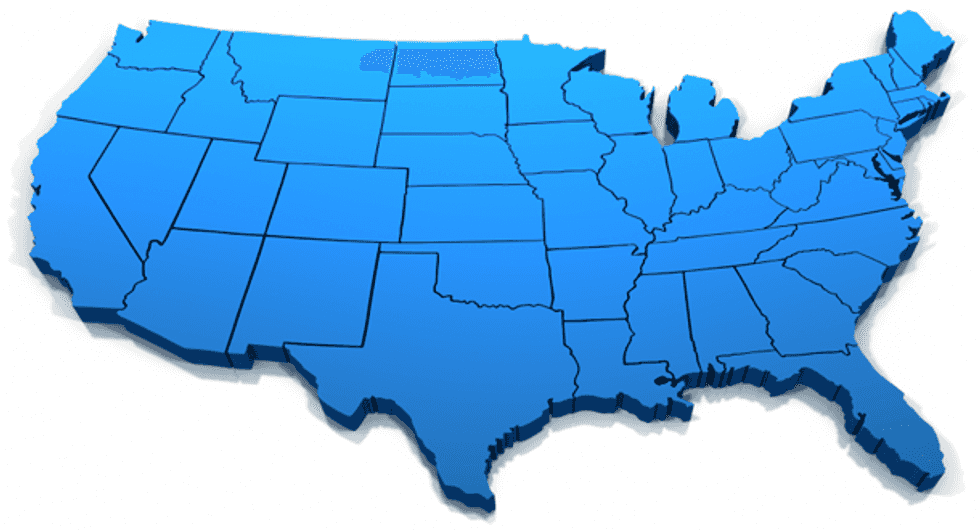
There is one of two options for the primary voting season: Caucus and Primary. 13 states caucus which are: Iowa, Nevada, Maine, Minnesota, Kansas, Alaska, Colorado, North Dakota, Wyoming, Kentucky, Hawaii, Idaho, and Washington (state). All the American territories caucas as well (Guam, American Samoa, and the Virgin Islands). A Republican caucus is not as complicated as it usually consists of writing on a piece of paper your candidate, sometimes standing in a corner for your candidate. The standing option is always the way a Democratic caucus goes. There is sometimes tradition or ceremonial measures involved. These states are very interesting as they have many more traditions than states who run primaries. Most other states have what are called primaries, which are like general elections where you just vote in a booth. So what does this have to do with superdelegates? Just give me another minute and I promise it will become clearer.
Delegates are people who are given to the winners of each state, either winner-take-all or proportional. States like Iowa award them proportionally (which is why the top five candidates for the Republican Party got delegates) and states like South Carolina who awarded all 50 delegates to Donald Trump. However for the Democrats, South Carolina is proportional (Hilary got 39 delegates while Bernie got 14). So when am I going to get to superdelegates? Well, right now.
A superdelegate is usually someone who has nothing to do with the primary process. This applies differently for each party. A Democrat superdelegate can be any member of the DNC, elected democrats from the House of Representatives, The Senate, Democratic governors and even past presidents. So there could be hundreds of them. A Republican delegate is the three members of each state's National Party. Delegates and superdelegates are not part of the governmental system -- instead they are part of the two national parties. Overall, there can only be 150 Republican delegates at most (not even as many regular delegates as the State of Texas), while the Democrats can have multiple hundreds of them (there are currently 715 of them and 436 of them are DNC members).
They are important because of the term "brokered convention." This term applies to both parties. A brokered convention is when the party (Democrat or Republican) does not choose the person with the most delegates. For Democrats it means the superdelegates choosing any one candidate that the people do or do not vote for. For example, if Hilary were to be indicted, and the DNC did not want Bernie, the superdelegates could choose Joe Biden if they had enough superdelegates. If the Republican superdelegates got on one candidate's side (which they cannot), it would be the equivalent of 3-4 states. This begs the question if the Republicans are more democratic than the Democrats. Also Republican superdelegates must always vote with their state (the winner, like Trump in South Carolina).
The overall delegates for the Republicans is 2470, while the Democrats is 4483. That is huge and the superdelegates number you think wouldn't matter, but if all the Republican superdelegates got on one side (which they can't) they would count for 6 percent, while the Democrats count for 16 percent of the vote. So they can swing an election, they are also very influential people. They are politicians who side with a candidate and persuade their constituents to do so. So that 16 percent doesn't even count the politicians persuading their states, counties, etc. That is crazy if you think about it. So I hope all of this clears up the whole superdelegates thing for you. If not, here's where I got the info. Look for yourself.
http://www.electoral-vote.com/evp2016/Info/delegat...
http://www.bustle.com/articles/141611-does-the-gop...
http://www.npr.org/2016/01/30/464960979/how-do-the...
http://www.bustle.com/articles/138406-how-many-sta...