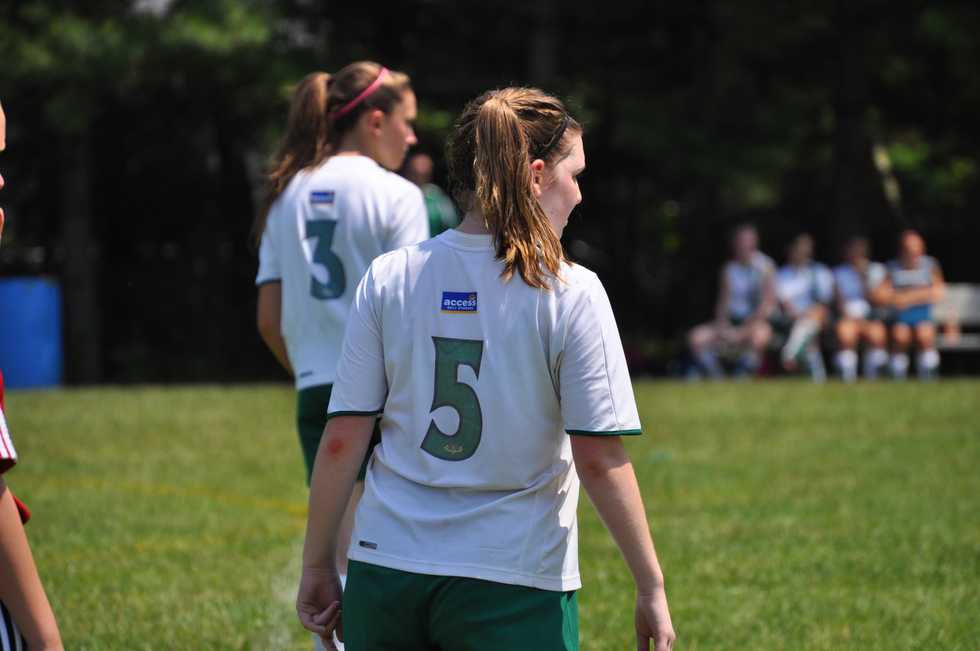
Every athlete knows the pain of working as hard as possible, only to not be able to play or participate. Injury and illness are feasible explanations for this feeling, as they physically prevent athletic ability, but that is not what happened to me. I have been a soccer player ever since I was five years old. I grew up in a family of athletes, with a dad that coached me from the very beginning up until I finally retired my cleats. Even though he was the coach of my team, I never experienced favoritism.
In fact, I probably got a bit harsher and more straightforward criticism than my teammates, since rides home from games would consist of dissections of various moments and instances. Since I was never favored, I had to fight for my spot on the field. Consistently, I would attend practice and then work on skills on my personal time, just so I could play in the games. On my club team, a team full of girls that I had been playing alongside for years, I had earned my place. Realistically, I knew that I was not the best. Speed was my greatest weakness, and consistent on all my other skills, but I worked as hard as I could.
In high school, I was faced with a broader pool of athletes and it became apparent that I was still nowhere near being the best in the program. I still worked as hard as I possibly could, but it was not enough to surpass the effort and talent brought by the girls around. Although my name was on the varsity soccer roster for three years, I only saw playing time in a handful of games. When I got the chance to play -- usually in games where we were either losing or winning by a significant amount, so my presence wouldn't greatly impact the score -- I still gave all of my effort. Why? I had every reason to be angry and frustrated, since I was giving so much and getting nothing in return, but after years of sitting on the bench, I learned a thing or two.
No matter how hard you work, you aren't guaranteed anything. As a girl that has been immersed in a world of soccer ever since I was a toddler, I fully understood how much skill the girls I played with possessed. They weren't lazy by any means, and they were gifted on top of that. They had skills and abilities that I did not, so it was logical to put them in the game over me. It came more natural to them. No matter how initially resentful I was about my lack of playing time, I learned to see the situation for the greater good.
Rather than sulk because other girls were getting more playing time than I was, I learned to be happy for the positive impact they were making on the game. We all worked hard to fight for our spots and I knew that the girls on the field had earned theirs. After a little bit of consciously reminding myself of that, it became my mantra. The most important word was what I focused on… team.
Sitting on the sidelines taught me to value the success of others. Time I could have spent sulking, ripping apart others or making excuses was instead dedicated to cheering for the girls on the field. I will not lie. There were plenty of tears. I was smiling on the outside but hysterical on the inside. I would warm up and down with my teammates like every moment mattered. I learned to put my own emotions aside to celebrate the achievements of others.
Someone scored? I wasn't pouting because it wasn't me. I was yelling as loudly as possible because they succeeded. Being a bench warmer taught me to not be bitter, because these people were the ones making things better. Making our team better. Even now, two years after the end of my high school soccer career, I maintain this mindset. Even if I fail, watching others succeed is incredible. One other thing I learned as well. I helped make my team better too, maybe not in the spotlight but behind the scenes and that is just as important as the spotlight. When someone score, I ran and hugged them or high fived them. If someone had a penalty kick, I was crossing my fingers and cheering them on and when we won the game I ran onto the field like I played the entire game.
I laugh off the days of riding the bench because even though they were painful to endure, they taught me so much. I learned that in order to go through life, I have to fail and succeed and fail to succeed. I am never a solo person because I am surrounded by so many different people: family, friends, and peers alike.
If I want my life to move forward smoothly and peacefully, I have to encourage the success of those that I surround myself with, even if it comes along with my own failure. Life is a road of ups and downs and I can't ignore someones high times if I'm at my low. I'll always be grateful for experiences like these, because even though they hurt, they made me stronger in the end. Never underestimate the benchwarmers in sports and in life because some are doing things behind the scenes that make the end result that much better!