
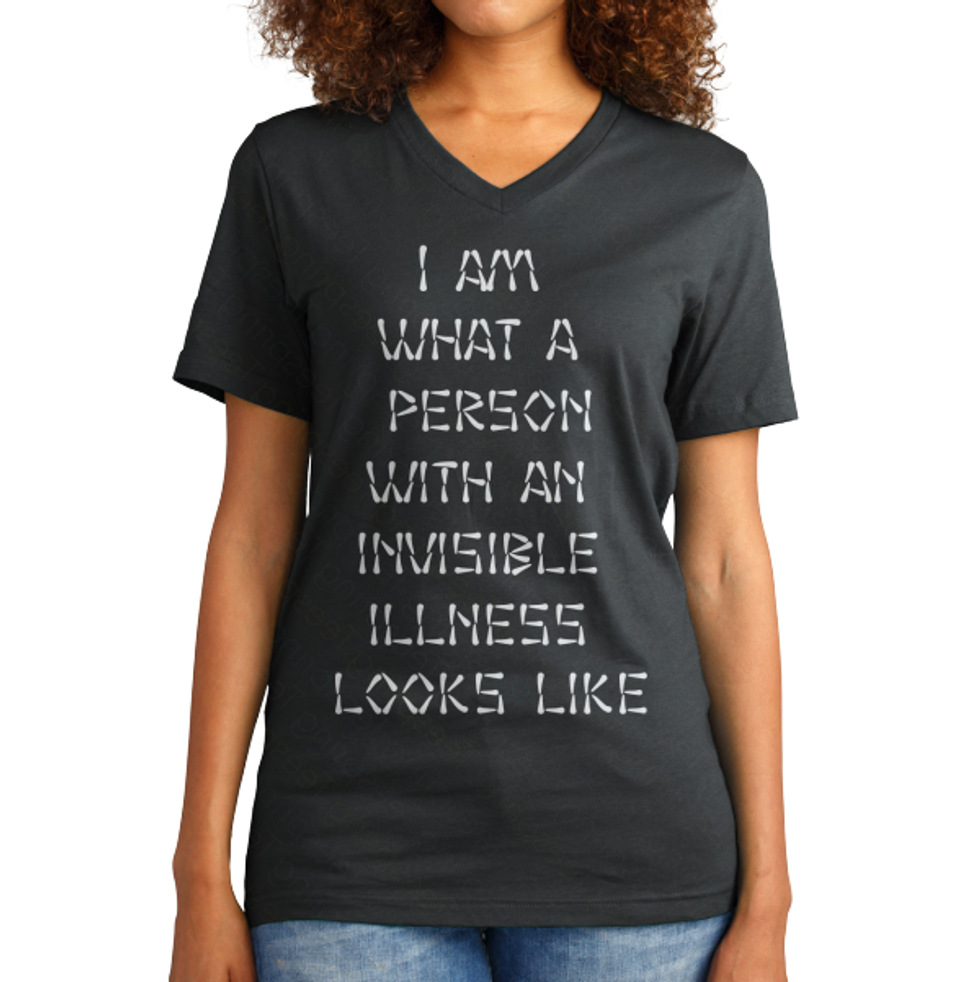
Of course disability and illness is widely known in today's day and age, but how much do we really understand about it all? We can sympathize when we see another person with a broken leg or someone who is running a high fever. We can even sympathize with things as common as stitches and headaches. We often tell these individuals that we hope they feel better and that we are sorry that happened to them. However, all of this seems to go away when someone is invisibly ill with a chronic on-going disorder. We can’t see it so it must not be too bad. They’re probably just overreacting.WRONG. In order to get a broader point of view, I have asked people of different ages, and nationalities, who suffer from all different kinds of invisible illness the same question, "what do you think the hardest part about having an invisible illness is?" Below are some of the answers I had been given.
- “For me it is trying to gauge what kind of day I'm going to have when I get up in the morning. Sometimes I have good days and sometimes I have bad days. Also trying to explain to doctors how you feel and have them understand without it being written off as anxiety or depression etc” Anna, 21, IST
- “The hardest part for me is having to explain to people why I can't do something or go somewhere. People have problems accepting that I can't do something because I look healthy. “ Shelley, 37, POTS,M.E,EPILEPSY
- “The hardest part of my invisible illness is the hurt I have within the genetic mutants known as my family. The whole dysfunction that hinders the simplest of interaction which has now become total avoidance. The whole "I'm fine" so I don't interfere with their projection of my life that could make them feel something. I'm adjusted but it's sad....” Sonja, 49, Ehlers Danlos, Chiari, POTS
- “ The hardest part is that everyone around you (unless they also have a chronic invisible Illness) expects you to be at the same level as everyone else, and I just can't go at that pace. I can't work a 40 hour week. I can't go to school full time. I can’t go out to parties, clubs, or the other things kids do at my age. When most people think of their teen years they think of being so healthy and having so much energy, having the time of their lives. They can't understand that for me it's hard to just shower some days.” Sierra, 19, POTS, chronic pain, chronic fatigue, TMJ, non-epileptic seizures
- “The hardest part for me is having to give up so much of myself.” Ashley, 31, CCI, EDS, POTS
- “The hardest part for me so far has been having to try to prove to doctors that I'm sick enough to need/deserve their help, that I'm not just anxious or exaggerating.” Shandi, 21, POTS, undiagnosed GI problems, and undiagnosed chronic pain
- “People know me as the roger rabbit lmao I’ always going and doing, especially with my kids. I try to help them have an awesome childhood and make great memories. I go and do non-stop. They (people) don’t see when my kids are with their dad, how much I sleep and am in pain, hurting and can’t move. They don’t realize until I am in the ER or get admitted. Then it’s “oh you should take it easy just stop sometimes”” Tanya, 31, systematic Lupus
- “I think the hardest part of having an invisible illness is the fact that people who have them think they aren't good enough in the world or for other people no matter how hard they try. Some people out there are wishing "if I just didn't have this, I would be a better person in someone's eyes and be considered normal." The fact is is that isn't true at all. Everyone is beautiful no matter what they have or go through. If people keep comparing themselves to others who they think are better than them, they will never be satisfied with themselves no matter how hard they try.” Cameron, 18, Anxiety
- ,” I’m missing time with my parents who are getting older, missed family holidays, meals and it breaks my heart.” Michelle, 40, EDS, ME/CFS, B12 folate deficiency, IBS, Raynaud's
- “"The hardest part for me is that people often think I'm over exaggerating how I feel and disregard how I'm saying. They only take me seriously when it becomes a physically problem. Even then, they think it's for attention. My feelings are valid and what's I'm going through is real.” Reagan, 17,Depression and Anxiety
- “Dealing with thick-headed people & doctors is a hassle but, personally, the hardest part about having an invisible--not to mention permanent & degenerative--condition is that I wasn't diagnosed until 15 years after my eldest was born. If I'd known what my kids would be in for, I might've opted out of parenthood. Don't get me wrong...I love both my kids to bits & pieces, & this might sound selfish, but it's SO hard to watch them going through their own personal hells because of something I passed down to them.” Lydia, 35, EDS,POTS/Dysautonomia, & MCAD.
- “People not understanding how hard we crash after doing "normal people activities." For example, I love swing dancing and do it every week. When I get home after 3 hours of dancing, I am so tired and feel like utter crap, and no one I was dancing with would even have guessed I was sick.” Erin, 17, POTS, Psoriatic arthritis, and Fibromyalgia
- “I was just as smart as the other students, so it was frustrating that I couldn't keep up, and I felt like they thought I was stupid or lazy, which was not the case. I wanted to do everything on my own to prove that I wasn't. Not just to them, but for myself as well.” Andrew, 21, ADHD
- “The hardest part for me isn't having your body work against you, but having you cognitive abilities work against you. The brain fog is my biggest complaint.” Summer, 21, POTS
- “Being told it's all in my head or it will only affect my life if I let it; repeatedly, even by family .” Amanda, 31,Autoimmune Autonomic Ganglionopathy and POTS
- “The hardest part for me is having friends who want to go out all the time and not being able to keep up. I can't go out drinking as makes symptoms worse, I cancel a lot because of having bad days. Losing friends and falling behind.” Gee, 21, POTS
- “Getting to the place where you can say "who cares if they don't believe me" “ Lacy, 26, POTS, Graves Disease and Nutcracker Syndrome.
- "The hardest part for me is the feeling that I need to justify myself every time I do something fun or energy consuming. People don't see the amount of time set aside to recover after. I'm still human and try to feel as normal as possible." Cierrah, 19 POTs
There is a wide variety of disorder that are not visible on the outside. It affects many more people in your life than you can actually realize. There is so much more to invisible illness than people tend to realize. Just because symptoms aren’t physically shown, doesn’t mean they don’t matter. There is so much going on under the surface for some and as you can see, a lot of the time it goes past the symptoms. Sometimes the hardest part of it all, is human to human interaction and connection.