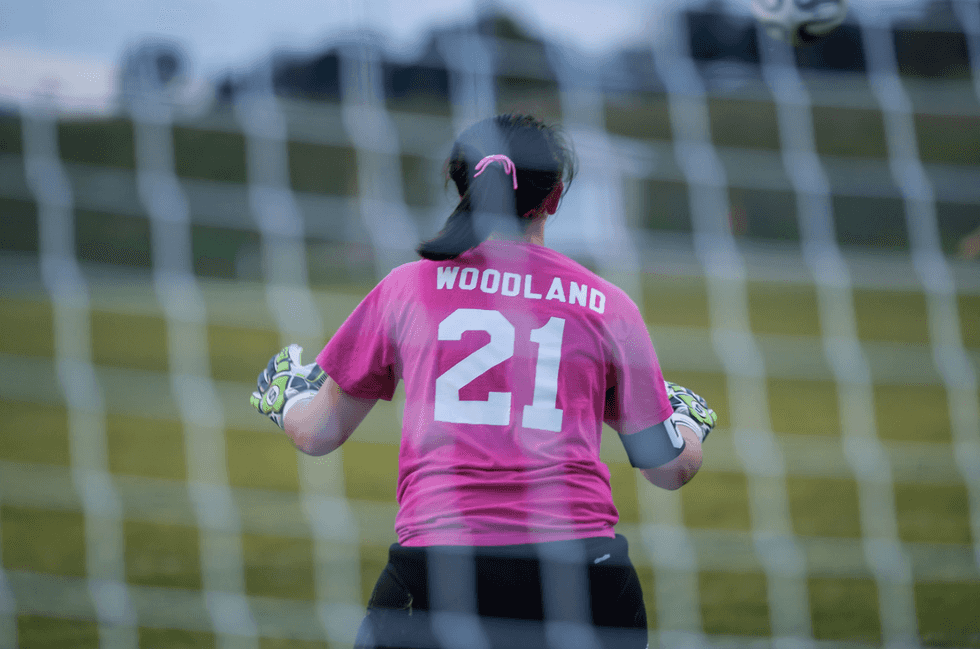
Sprinting full-speed, I dribbled the soccer ball down the sideline toward goal and glory! My gaze shifted quickly between ball and the open field ahead. I had successfully broken through the last line of defense; now it was one-on-one: me against the goalie. These were the moments I lived for on the soccer field. Adrenaline driving my legs, I took the right-footed shot on net. The lovely whishing sound of the netting confirmed I had scored. We were up one to nothing at the half.
After our last game I sat for awhile on the soccer field with my senior teammates, reminiscing. I had watched these girls grow up on the soccer field. Soccer was what uniquely bonded us as sisters. We had relied on one another for support during exhausting overtime games and exciting rivalry games. We had learned so much from one another; lessons applicable on and off the field. My senior season I scored 18 goals and had one assist. I was the leading goal-scorer and was voted MVP during our senior awards ceremony, but sadly, I knew I wouldn’t continue playing in college. Never again would I experience that same dizzying excitement I felt with the whish of the soccer net.
Walking away from a sport you’ve dedicated so much of your time and attention to is anything but easy. For me, it was a difficult decision to leave behind the sport I loved most. Abandoning the sport you love almost feels as though you’re abandoning an important portion of yourself, but I’ve learned most collegiate sports do not foster academic success.
Unfortunately, most games are in the middle of the day in the middle of the week, and are often countless hours away. If you do choose to play, keep in mind that means you’ll be skipping a few classes here and there. Skipping class in college is much more impactful than it was in high school, as these classes only meet two to three times a week. Attendance is crucial in college.
If you choose to play a club sport, recognize your practice schedule will be unpredictable. NCAA (National Collegiate Athletic Association) sports teams are granted priority practice hours, and so your team will choose only from what is left after the collegiate teams take their pickings. Sometimes that means practice won’t start until 11 at night and may run until one in the morning. An ever-changing, irregular practice schedule may negatively affect attentiveness and retention in the classroom.
The term “student-athlete” places “student” before “athlete,” insinuating academics come first and competitive sports come second, but often times, that’s not the case. Inflexible practice schedules and long-distance competitions hurt students who are serious about academics.
Want my advice? If you’re seeking only a bachelor’s degree and planning on joining the workforce following graduation, play the sport you love. Grades matter less—the physicality of the degree matters more. If you plan on attending graduate school, undergraduate transcripts are closely examined and considered. Grades matter more—the physicality of the degree matters less. Leaving behind the sport you’ve poured your blood, sweat and tears into will be trying—trust me—but, it may be necessary.