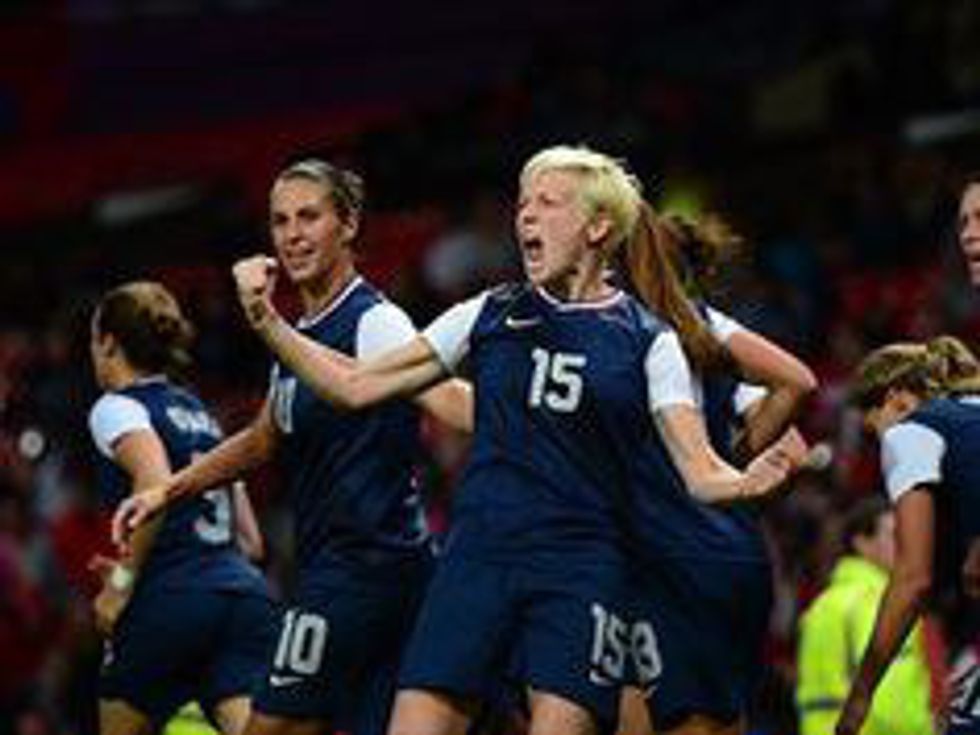
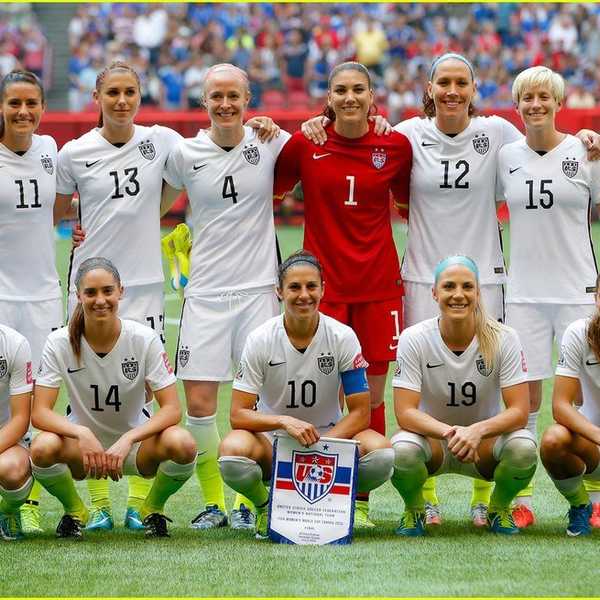
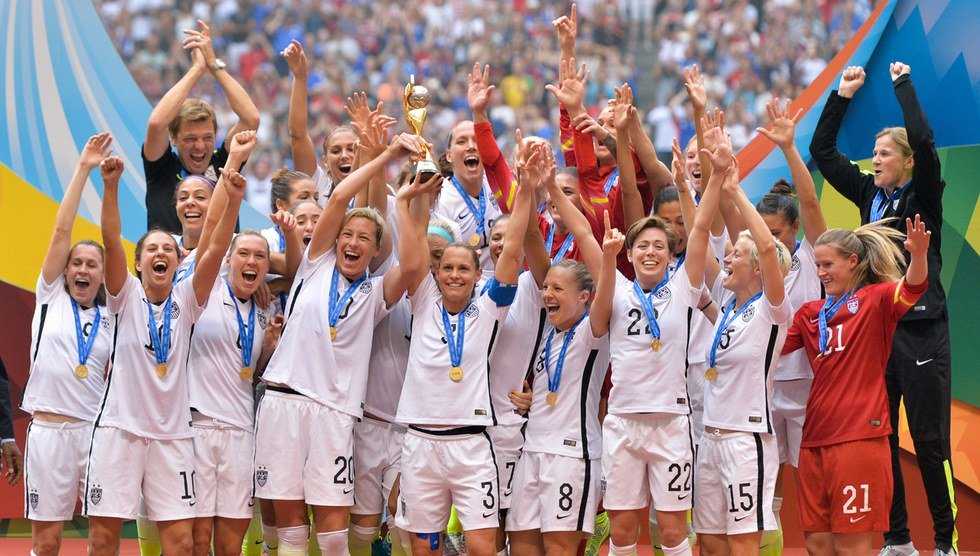
If you didn't get the email about campus closing down Wednesday, March 9, then let me reiterate the message to you: Four of the best teams in the world are playing in our stadium, including our own world champs!
The USWNT is hosting a SheBelieves Cup in the South East with games in Nashville, Tampa and Boca Raton. Teams from England, France, Germany, and our national team are all rotating over six games on three separate days.
With this event coming up, I think it is time for us to turn our attention to the lawsuit filed by U.S. Soccer against the USWNT player's association on Feb. 3, National Girls and Women in Sports Day.
Yeah. U.S. Soccer is suing the World Champions of 2015, and began the process on National Girls and Women in Sports Day. You're probably baffled so I'll start at the beginning.
The right to strike is a pretty fundamental human right among employees (just ask France). Well, through a collective bargaining agreement, a union and an employer may define the terms of employment, including a no-strike clause.
The latest collective bargaining agreement expired in 2012. U.S. Soccer says a memorandum of understanding extends a new collective bargaining agreement to the last day of this year, but Rich Nichols, the new executive director of the player's association, and the WNTPA disagree and question the legitimacy of the memorandum of understanding.
U.S. Soccer made the provocative move against the Women's World Champs on such an ironic day, worried that Nichols was encouraging the players to strike post-Olympic qualifiers. Nichols, however, told SI.com that he did not threaten a strike, at least not so soon after the qualifiers.
U.S. Soccer is hoping that they can keep the WNTPA in the contract, but the Player's Association is trying to get out of any agreement that prevents them from work stoppage to protest conditions.
Why would the best female athletes in the world want to strike, you ask. For starters, the men's national team gets paid per point earned (in a tournament group stage, a team earns three points per win and one point per draw). The women are not paid by the same standard (you can imagine how this might have induced a pay gap before the women kicked ass and won the World Cup and all the endorsements that came with it).
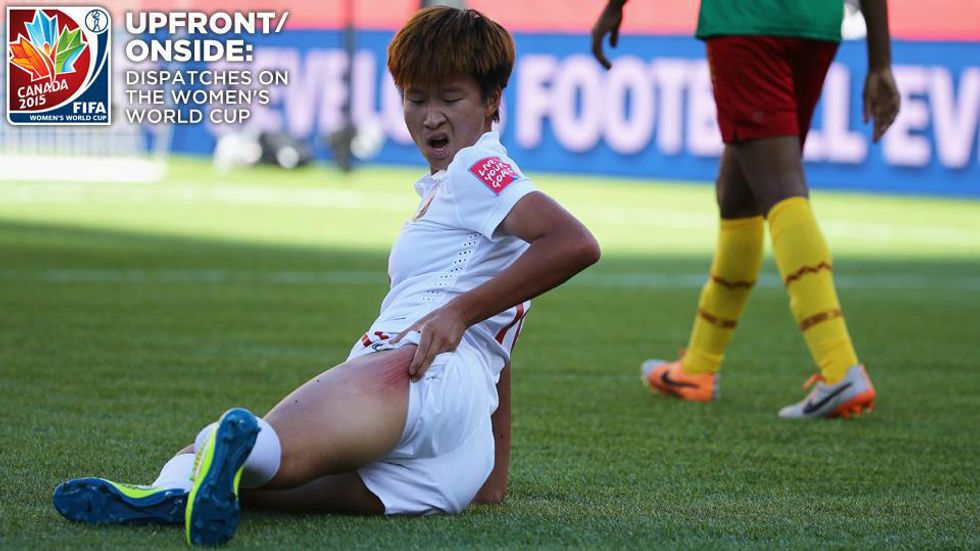
The women also had to cancel a game in December in Hawaii because the field conditions were terrible; Megan Rapinoe suffered an injury on the training field. The team apologized for this cancellation in their victory tour but noted that it wasn't about artificial turf versus grass, although it is an issue that the women are put on artificial turf more often than the men are. (Canada, just last year, The World Cup, ring any bells?) Artificial turf is made of synthetic fiber that is really rough—it will tear you up on a slide tackle and is often laid over concrete, causing more intense injuries. In 2009, the U.S. Men's manager asked FIFA to ban all artificial turf. Also, the men's team (not recent world champions, not really even close) flies first class regularly, while our world champions are in coach because they are females in a female league.
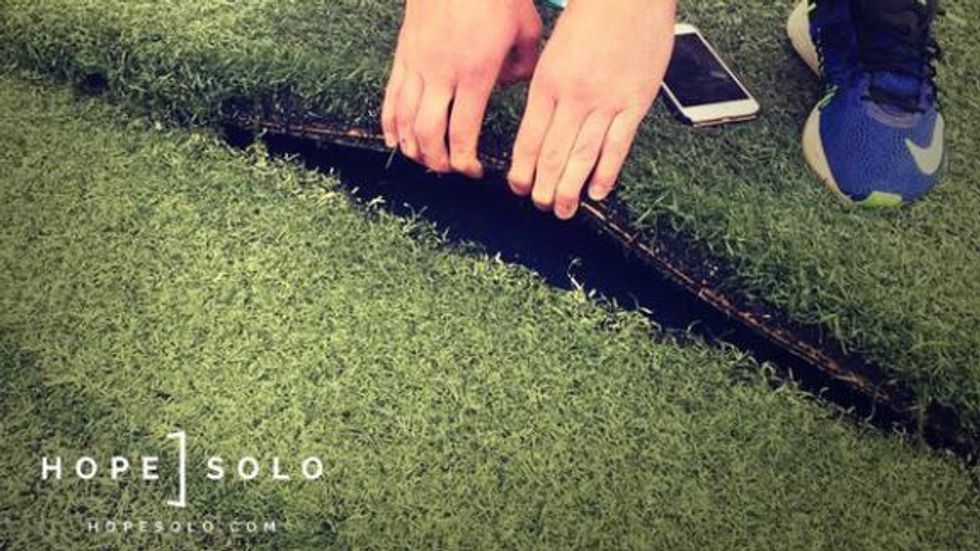
The team had to cancel their game versus Trinidad and Tobago because the field conditions were so bad, but they, right now, may not strike to protest this inequality. Once again, women are held in a binding agreement to keep them from making a statement. (Does that sound like anyone in the media right now?)
Thank you for filing a suit, U.S. Soccer, against the most successful people in business with you, against the best athletes in America, on a day celebrating the advancement of women in sports. We hear you loud and clear.
Now, hear us roar.