

Consent is a topic that I never thought I’d have to write about because it seems obvious enough – or so I thought. But after being raped almost a year ago and having multiple experiences with guys pushing me to do more than I’m comfortable with, I’d like to add another voice to the multitude that are calling for consent to become a priority rather than an afterthought.
Merriam-Webster defines consent as “permission for something to happen or be done; agreement about an opinion or about something that will happen or be done.” In terms of sexual activity, this would mean getting permission and agreeing on whatever sexual activity is taking place, from mere groping to full out sex. The involved parties should be in agreement, whether explicit or implicit, about whatever is going to happen; otherwise, sexual assault is occurring. Just to clarify, sexual assault is defined as “illegal sexual contact that usually involves force upon a person without consent or is inflicted upon a person who is incapable of giving consent or who places the assailant in a position of trust or authority.”
Simply put, consent is necessary. The moment that someone wants to put the brakes on anything, it should stop, regardless of the relationship between the involved parties, regardless of anything sexual activity that has taken place between them before.
Ideally, that should be the case. However, realistically, I’ve noticed that people often don’t take “no” seriously. They somehow misinterpret it to mean “Convince me. Keep trying until I say yes or give in.” And that’s not okay.
If someone says no or asks to stop, the immediate response should be to ask what they are okay with. Figure out boundaries – know how far the involved parties are comfortable with going, and go no further. Don’t push it beyond that. Consent can always be given for more later on, but sexual assault can’t be undone. There should be no pressure to go further; pressure could include things as overt as asking “Are you sure you don’t want to have sex?” or something as subtle as putting your hands somewhere that wasn’t agreed upon.
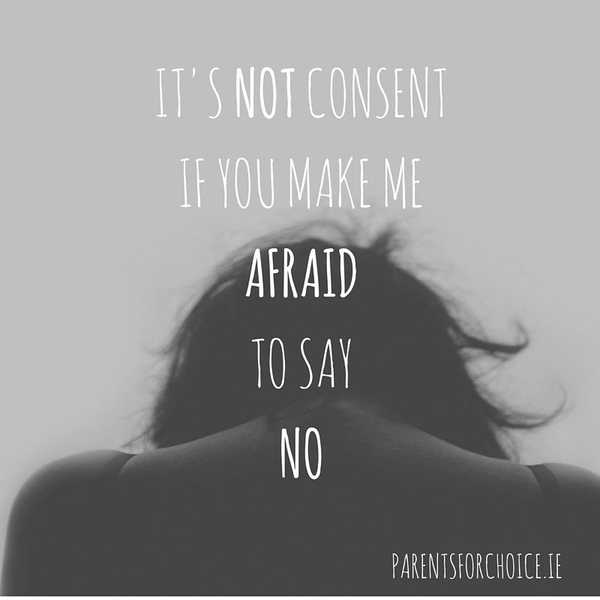
Even saying no doesn’t have to be overt. If someone is pushing you away or isn’t responding to what you’re doing, there could very likely be a problem and you need to stop and gauge that. Consent can be withdrawn, and it needs to be voluntary - it shouldn't be assumed or coerced. Additionally, if someone is drunk, unconscious, or under the age of consent, they cannot legally consent to sexual activity. State laws on intoxication and consent can vary based on their definitions of intoxication, so that’s an issue that you have to be cautious with because you could very well be playing with fire.
Sexual assault, or even just pushing someone to go beyond what they’re comfortable with – those can take a huge toll on someone’s mental well-being. Refusing to heed someone’s consent or lack thereof can suggest a lack of respect for the person themselves, and victim blaming is all too real in today’s society.
After I was raped, my best friend had to constantly reassure me that it wasn’t my fault. I never reported it and haven’t told my parents (and probably never will) because I know that they would blame me and my own stupidity for my rapist’s actions despite his blatant refusal to respect my lack of consent. For months after the fact, I had frequent anxiety attacks, and I was insanely paranoid, always looking over my shoulder out of sheer terror. I found myself internalizing the blame that I would have expected from everyone else. “Maybe if I had fought harder, this wouldn’t have happened,” I would tell myself. “Maybe if I had been more careful” or “I should have expected this” became constant arguments that I had against myself because I felt at fault.
Almost every experience I’ve had since then that has been sexual in any nature has started off with me telling them, right off the bat, “I don’t like sex,” and has been carried out with them trying to push me to have sex anyway, despite me saying no. Even recently, a friend picked me up after a date gone wrong and had to keep telling me as I sobbed in the front seat of her car, “It wasn’t your fault, Allison. It wasn’t your fault.”
And I know that logically, it’s not my fault, but it’s a lot easier to tell someone else that than to reassure myself of that fact. I know that in each of those cases, my consent was barely, reluctantly given or not given at all, so the burden of guilt falls on the people who have disregarded that. But that doesn’t change the fact that I have gone home after those experiences with my entire body aching, feeling disgusting, and even multiple attempts to wash the feelings of filth off are to no avail. I have hated myself for letting people take advantage of me, even when I clearly said no, even when I could barely fight back, even when there was nothing more that I could have done to escape the situation; at times, it has gotten to the point that I could barely live with myself. I have struggled with self-doubt and feelings of worthlessness because some people have made it clear that what I say and want, my consent – it doesn’t matter.
And that’s just my experience. Victims of sexual assault can all experience different effects, including but not limited to depression, flashbacks, rape trauma, PTSD, and sexually transmitted infections. Some may even become so depressed that they commit suicide.
And that shouldn’t be the case. No one should have to be traumatized because someone refused to acknowledge their “no.” No one should have to be wary of going on a date or being alone with someone out of fear that they won’t be respected, and I shouldn’t have had to write this article. Please respect people and heed consent. No means no means no means no means no.