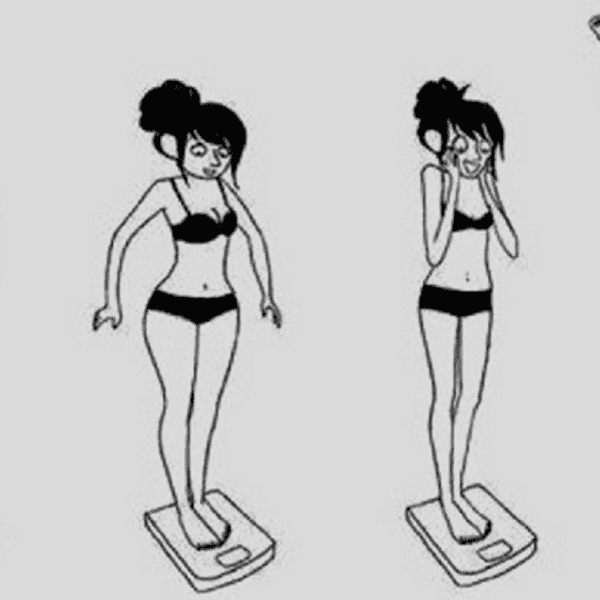

I distinctly remember watching an interview with Portia de Rossi on "The Ellen Show" one morning several years ago; the former model was promoting her autobiography "Unbearable Lightness." Having at the time been in midst of my own battle with anorexia, I thought that the interview, which focused on de Rossi's own past with an eating disorder, would be a breakthrough moment for me or at the least, some sort of motivation that would inspire me to try a bit harder to achieve my recovery.
Boy, was I wrong.
Minutes into the interview, Ellen told the audience the lowest weight that her wife reached before she decided to battle back to health; this is not an uncommon fact to highlight for those who have recovered from eating disorders, but it is a dangerous one to bring to light nonetheless. An eating disorder, first and foremost, is an internal battle, but what many people don't understand is that on one side of this war is a voice saying, "Be the best at this. If she got to x pounds, you need to be even less." This internal monologue is what makes current treatment for eating disorders such a crapshoot of a success. What do you think happens anyways when you confine a dozen or so men and women all with eating disorders to a single floor of a psychiatric hospital and expect them to decide to turn their lives around? I was in this situation at one point in my life, and I can attest to the fact that these epiphanies come few and far between; more often, conversations between fellow patients involve questions and answers surrounding incoming weights, the amount of exercise people were doing before they arrived, how many years everyone's been struggling and other probing questions that allow each person to compare his or her own struggle with those of their peers. Sure, at group therapy sessions, everyone said things that sounded right and went out of their way to make it seem like health was the most prominent word in their minds, but at least on my part, these were hollow words or ones that I knew weren't going to change my actions. Most of the time during these sessions, I was comparing myself to everyone else, and I was anxious every time someone looked sicker than me or seemed like they were going to be in the hospital longer than me.
Skewed? Yes. Debilitating? Yes. But when you're dealing with someone who is starving herself, how rational do you think her priorities are? After all, there is no obvious reason to want to be skeletal or to be placed in the constant supervision of nurses and doctors.
Even today, I'll have moments when I am speaking about my past experiences when I want to say how long I was in the hospital or how low my weight got, but I know that these urges are just the lingerings of that perverse competitive voice that at one time dominated my mind. And so, I hope that no matter how long it's been since people have overcome their eating disorders, they will not forget that destructive voice that once overtook their bodies. Stories of success are inspirational when they forecast hope for someone fighting with demons, but they need to be edited so that good intentions don't yield behaviors such words were meant to end.