
Ask any opioid abuser alive ever—whether currently using or not—why they turned to drugs, and their response will almost always sing to the tune of, “I liked the feeling.” This answer is completely plausible.
It’s also complete bullshit.
Yes, opioids relieve physical pain. Yes, they seem to temporarily numb mental anguish, albeit only for a short while, while circulating your blood stream. Yes, they cloak users and abusers alike in a blanket of happy hormones that make it pleasant for anybody to experience. But addiction itself does not stem from the way opioids make you feel; if that were the case, we’d be seeing 100 percent of medicated cancer patients railing lines of oxy off of pearl-colored hospital sink ledges. No, that’s obviously not the problem. Addiction flourishes and relies almost exclusively on two factors:
- An individual’s general state of well-being before drug use was ever present, and then later on,
- How one feels when they have no drugs in their system (like sh*t, obviously.)
“But don’t addicts like the way drugs feel? Isn’t that why they take them?”
Yes, of course. More importantly, though, is that addicts are so extremely f*cking discontent when they aren’t high (or before they ever got high, for that matter) that feeling something so wonderfully euphoric and numbing is a recipe for a life of drug abuse. When trying to understand addiction, it’s pertinent to question what Series of Unfortunate Events has led someone to such dysphoria. (Would Lemony Snicket’s traumatized and emotionally abused adolescent characters be opioid addicts?) Almost always, you’ll find that an addict has a history of emotional abuse, neglect, a lack of support system, mental illness or significant past trauma. Or, if they’re really lucky, they get a s**t-mix of all of these. That’s the jacked-up jackpot right there.
Some addicts have lost their families. Some have an inability to emotionally regulate or deal with distress. Some are/were abused. Some are seriously mentally ill. Some have low self-esteem.
All are hurting, and we are failing them.
These factors are not excuses for drug abuse, and they are not get-out-of-personal-accountability-free cards. Addicts know the repercussions that their initial choice has caused. They are aware of the suffering they’ve caused themselves and those that love them. But, if we’re being honest, their issues started way before they snorted their first line and extend much further than the simple explanation of "addictive personality." Most addicts use drugs as a compensation—for security, confidence, coping, happiness, whatever they’re missing. These masked issues are rooted in the deepest seeds of their being—something that a few months of inpatient or outpatient rehabilitation does nothing for. This is why these programs fail so often. They address and take away the addict’s only known "solution" to the issue, not the issue itself. Then, when all 12 steps are complete and these individuals are on their way to recovery, their rehabilitators ship them out on their own, back to the same environment that generated these deficiencies and (shocker!) they relapse.
Now here’s where opioid addiction gets all science-y and stuff:
You go on an oxy binge for a few days. A hundred milligrams later, and you’re down to one last pill. You convince yourself this is your last day of getting high. “This will be it. After this I’m quitting.” You snort a half; an hour later, the rest is gone. Three or four hours into your newfound sobriety, you’re feeling good. You go to bed motivated, sure that you’re ready to commit this time...
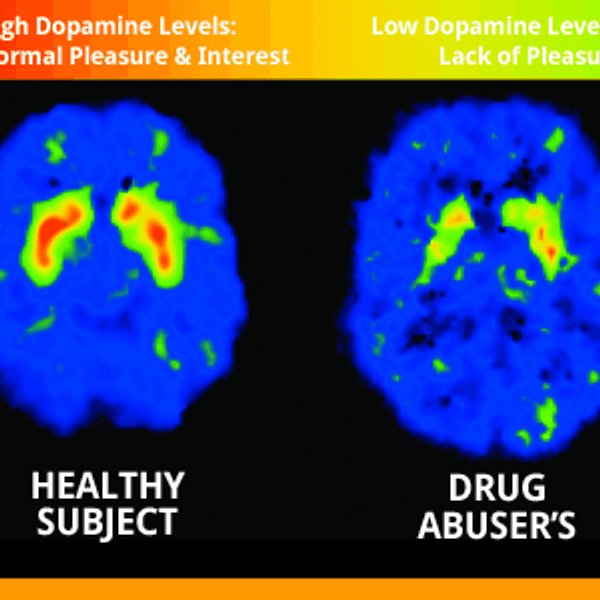
And you wake up the next morning and suddenly the world is ten shades grayer, and your whole sanity is teetering on the edge of earth-shattering oblivion. You, my friend, have just been hoodwinked of your happiness. This is how opioids work in destroying your attempts at sobriety: they bind to natural opioid receptors in your brain, allowing a flow of happy hormones several times greater than the normal amount. Your brain is flooded with these lovely chemicals—until it’s not. It recognizes this overflow. It understands this as excessive and shuts down those receptors and significantly reduces or ceases the natural production of endorphins and other hormones. Because you have just completely depleted your natural storage of these, they’re inaccessible. So, what do you want to do? What is your body literally begging you for?
You guessed it.
Addiction is a vicious cycle. It sucks you in and spits out a walking shell of your former self. It is something that is all too commonly looked at as a matter of physicality rather than a product of unfortunate circumstances, bad choices and vulnerable individuals. These people are hurting. They are dehumanized and seen as a blemish on the face of society rather than souls in need of help. Take it from someone who has counted pennies just to get high: we are sick and we want to get better, we just don’t know how. The topic of addiction must not only focus on physical dependency, but on the underlying psychological and external issues that have created an environment for this monster of a disease to thrive in the first place.