

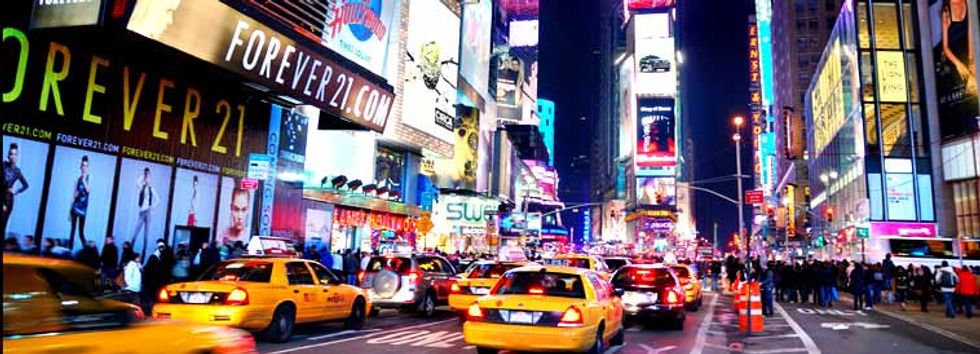
This past weekend, I took a trip to New York City to see Cirque du Soleil's new Broadway show, Paramour. I visited Madam Tussaud's famous wax museum and I even ventured into New York City's sultry Museum of Sex. Every other block housed a Starbucks and there was definitely no shortage of food carts, snacks, and sweet shops.
So, naturally, I planned to write either a review of Paramour or an article about all the cool things to do when visiting New York because everyone should know about the outrageous milkshakes at Black Tap, right?
However, now that my weekend has come to an end and I've actually experienced the city firsthand, I no longer believe writing about all the "cool" things to see is enough.
New York City is held in high regard. It's a bustling city full of opportunity and promise. It's home to stars, like Taylor Swift, and it produces great television, like the "Jimmy Fallon Show." But there's another side to New York City—a darker side—one that nobody wants to talk about.
This version of New York City is stripped bare of the glitz and glamour. It's apathetic to the bright lights and flashing signs and it's seemingly indifferent to the influx of tourists that block the busy sidewalks. Though New York City is typically thought of as alive and breathing, this side of the city seemed more dead than anything else.
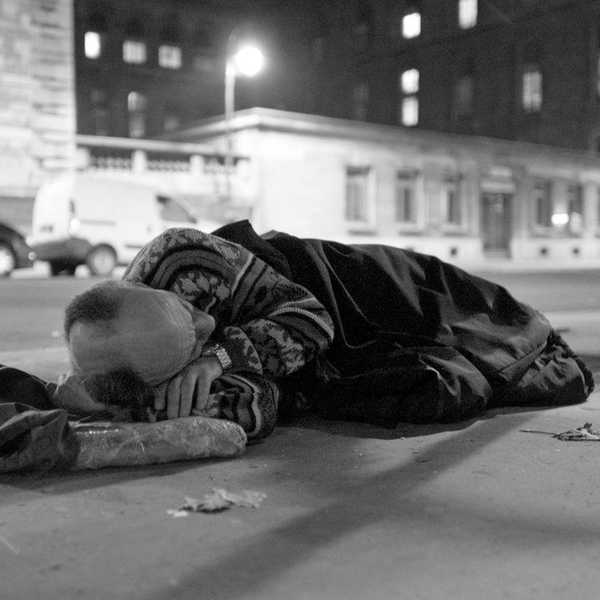
This New York City is poor and desolate. The individuals who reside here, if you can call it that, are not movie stars or musicians; they're not even typical blue collar workers. The people who live in this New York City are passed by and ignored. Every. Single. Day. They are the downtrodden, the outcasts; they are the homeless.
These people sit on hard concrete, clasping cardboard signs that tell of their plights as they hang their heads in shame. Some manage to sleep; others just prop themselves up against the walls of random buildings and rest.
I watched as, on at least every other block, tourists walked by, averting their eyes and clutching their handbags tight. They seemed outwardly uncomfortable—as if being forced to acknowledge a homeless person is somehow worse than homelessness itself.
The New York natives were the worst though. Most likely used to this, they carried on with their conversations and hustled past the homeless without so much as a look. It was almost like they saw right through them.
I found this both curious and disheartening. Surely, the yuppies who could afford their authentic Michael Kors bags could afford to spare some change as well. And though I know it's no one person's responsibility to help the poor, I couldn't believe the way most people strolled on by as elderly people slept on the hard concrete wearing ripped clothing and ill-fitted shoes. To me, it seemed like the homeless were viewed as subhuman and that's a concept I still can't stomach.
Don't get me wrong. This was not my first experience confronting homelessness. I live right outside of Boston and there's a similar problem there. That said, for every one homeless person I've seen in the streets of Boston, I probably saw seven in New York City. The sheer number of homeless people I came across was staggering and I was overwhelmed by guilt and sadness because, although I wish I could, I knew I couldn't help them all.
And how am I even supposed to decide who to help? Being forced to choose is awful.
Do I give to the homeless veteran propped up in a dirty wheelchair or do I give to the pregnant woman wrapped up in dingy sheets? Aren't both equally deserving?
It's an impossible call to make.
Still distraught from my experience, I did a bit of research when I got home from my trip. It turns out that, according to the Coalition for the Homeless, there are 60,410 homeless people living in New York City alone. 14,699 of those people make up adult members of homeless families and 23,783 of those individuals are children.
To put that into perspective, I grew up in the third largest city in Worcester County, Massachusetts. The approximate population is just over 40,000. That's 20,000 less than the number of homeless people living in New York City.
If that's not disturbing, I don't know what is.
Though I'm not here to preach or make anyone feel bad for not emptying out their wallets for the homeless, I do want to bring awareness to this very serious problem. Because, while the outrageous number of homeless individuals living on the streets of New York City is what really struck a chord with me, it's a problem far from unique to the Empire State.
In fact, a study conducted by the National Alliance to End Homelessness and the Homelessness Research Institute found that "on a single night in January 2014, 578,424 people were experiencing homelessness" and that's absolutely deplorable.
It's unacceptable and, quite frankly, it's inhumane.
That said, the next time you're walking down the street and you spot a homeless person holding up a sign and/or asking for some change, consider skipping out on your daily three dollar Dunkin' Donuts coffee and giving the money to them instead. Or, if you're one of those individuals who prefers not to give out actual money, consider grabbing that person a burger or even volunteering at a soup kitchen one day.
Though you might not feel personally responsible for homelessness, there's no denying that it's a serious problem that affects hundreds of thousands of people in this country, a few thousand of whom probably reside in your community.
So why not go out of your way, just once in a while, in order to help improve the life of a stranger? Don't just be a bystander. Instead, contribute to making a difference.

















