Dear Dancers,
When understanding the world of dance, it is perceived as artists doing what they love on stage. Although this is true, the genuine sacrifice is the stability and health of these artists who will do anything for what they love. Dancers are passionate and strong-willed; never realizing how they are increasing the wear and tear of their bodies by not eating correctly. They are manipulating their bodies each day by testing the durability of their joints and muscles through stretching and building endurance on the stage. Not only that, but they sacrifice their health by creating unintentional risks that lead to eating disorders.
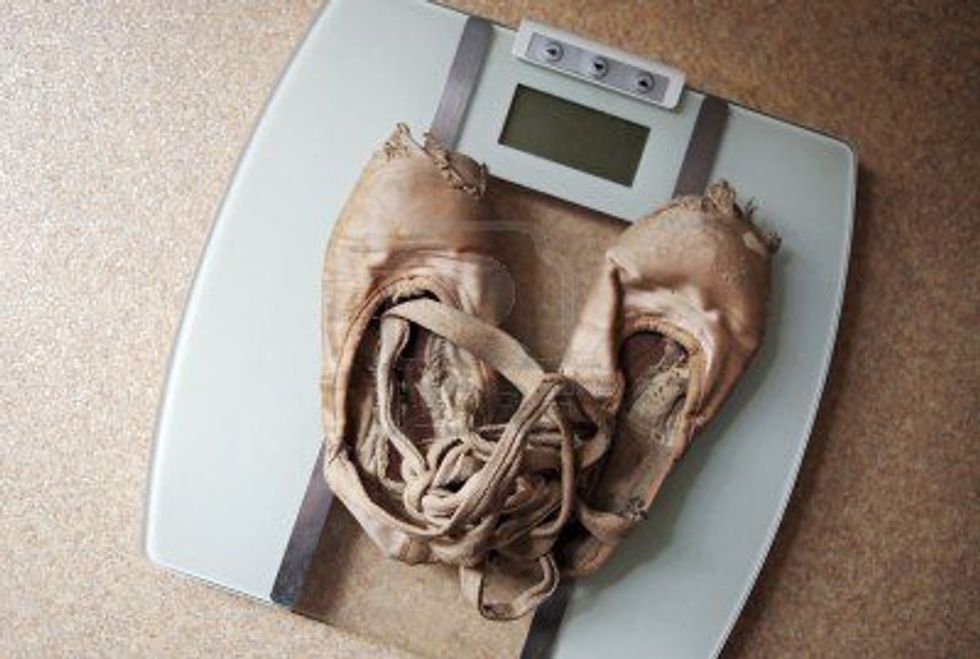
I am writing to you today because eating disorders within dancers are a common problem that isn’t addressed. In fact, statistics show that within a dance community, “… the incidence of eating disorders in the white middle-class population is one in a hundred. In ballet, this number is one in five,” (Eating Disorders Among Ballet Dancers 1). Not only do you not realize what you’re doing, you think it's normal to eat an incredibly reduced diet or throw up a few times a day. As a dancer myself, I too have experienced this first hand. Dancers focus on physical appearance, ranging from the lines our bodies make to the way we put on makeup. This was drilled into our brains at a very young age. This makes us feel in control since power is a key factor in becoming a well-known performer. With power, comes responsibility, but you and I didn’t know how this factor could deteriorate our insides, causing us to attain eating disorders. You girls are subconsciously obsessed with this control that you don’t realize your bodies are deteriorating faster than a Russian Ballerina’s pointe shoes.
Growing up in a dance studio was always a positive experience for me, as I know it is for you all. It kept me happy and brought me my best friends I consider sisters today. Thinking back, there was always an unspoken problem floating around the studio. Girls would develop symptoms of eating disorders right before my eyes, and no one ever said anything about it. I later realized, they did this because of the figure dancers are subjected to conform to, in order to be considered a ‘good dancer.’ I know for a fact that some of you are guilty of this, and it is okay to admit it. I know how it feels to see the girl next to you eat whatever she wants and never gain a pound. Not only that, but trying on the same costumes as the walking chopstick next to you makes you want to chop off your boobs and stomach. Even worse, being the girl who had to pay extra for an extra-large costume. In the end, all of our lives are centered on the idea of constructing a ‘dancers physique.’ Being a stick thin ballerina was expected from us at a very young age, without us understanding the actuality of this stigma.
Dancers who grew up in a studio are brought together at a young age and expected to live and breathe the artistry of dance. Studies show that dancers especially, “…begin to express concerns about their own weight by the age of six…” around the same time you begin your training (Eating Disorders Among Ballet Dancers 1). Our teachers put us in leotards and tights, placed us in front of floor-to-ceiling mirrors, and corrected every flaw they saw. This is just the nature of dance, which is why we are so passionate about it. It makes us drive to better ourselves, which is healthy to an extent. But when dancers begin to not eat and exercise excessively, it takes a toll in your future as a dancer.
Thinking back, always eating a reduced diet and having a naturally fast metabolism was what the world expected of dancers. Some of my friends weren’t so lucky, though, as I know some of you aren’t as well. As youngsters in middle school, we always asked our teachers to do certain things during class that we wanted to work on. This seemed pretty normal, sounding like dancers just trying to improve technique. In reality, we would ask to work on certain parts of our bodies- ranging from our butts, stomachs, inner thighs… sound familiar? As you can see, dancers get this habit from older generation dancers, by watching them starve themselves and workout excessively to get the bodies they dreamed of. Don’t worry, I was in your shoes too when the generation before did the same exact thing. This is true because dancers attain, “… intrinsic levels of perfectionism – a trait which correlates highly with anorexia in particular – being higher in girls who attain the standards necessary to enter the most competitive schools (Ballet and Eating Disorders 1). Doing this was perceived as wanting to work hard to be perfect ballerinas, but actually resulted in developing eating disorders.
As much as I want to, I cannot change the mindset of older generation dancers who already have done the damage to their bodies. Although a problem within the culture, it is hard to present a solution to girls who have been dancing for over ten years who have been starving themselves since middle school. By educating the younger generation to look away from their idols to sustain a healthier lifestyle, it will cause a positive ripple effect that will benefit girls who dance in the future. Releasing this stigma of starving yourself to look like a true ballerina will hopefully influence the next generation to be healthier and look at themselves with less criticism relating to their body image. Not only that but be aware of the comments the teachers make about weight and perfection. Although sometimes helpful, don’t take them to heart. You can still have amazing bodies without all the binging, starving, and negative comments.
My goal to change the stigma that dancers all starve themselves. We as a society need to make the next generation of dancers more confident and stronger for years to come. By eating healthier and focusing on positivity, it will increase the self-esteem making you all prosper in not only dance but overall in life. Achieving this goal would result in the new wave of dancers to be healthy and poised athletes, that will heavily influence prospect performers to follow in their footsteps, leading to a better dancing community. I cannot change the way the art has always been, but I can easily make you aware of this problem.
Let’s fix this.