

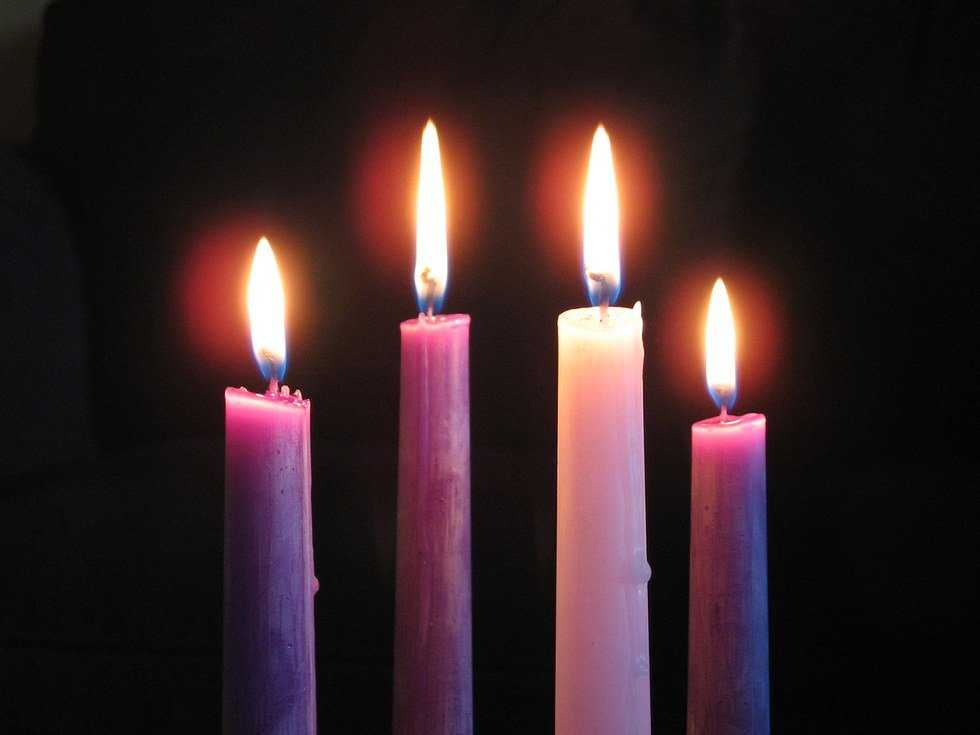
The Word "Advent" means "coming" or "arrival" in Latin. Advent is a four week period of celebration, anticipation, and joy before Christmas. The season of Advent is centered on the birth of Christ. We celebrate Christ's birth because it is through Him that creation is reconciled. We anticipate the daily comings of Christ in our own lives as He further reveals Himself to us, and we rejoice in expectation of his Second Coming.
Advent reminds the church of the profound faithfulness of Christ to the church and is a time of spiritual renewal to urge the church toward missions. God came in the flesh as the person of Christ to redeem the world of its depravity. Through Christ's work on the cross, redemption is made available. For those who accept this, 1 Peter 2:9 communicates the new life that Christ offers mankind, “But you are a chosen people, a royal priesthood, a holy nation, God’s special possession, that you may declare the praises of him who called you out of darkness into his wonderful light.” The church ought to not only rejoice, but also be reminded of its commission to share this Good News with others.
Advent is a period of great longing, groaning, and desire for Christ. The season of Advent renews the awaiting hope for Christ's judgment of evil, and His vindication of the righteous. A notable Advent prayer expresses this longing, “Come, O Come, Emmanuel, and ransom captive Israel!” According to Advent's purpose, fasting and prayer are practices that promote the heart of Advent.
For the secular world, the Holidays are a time focused largely on the self. Adjunct, Thomas Taylor, speaks to society's abuse of Christmas in a Baylor University article, “this mass-marketed celebration of material wealth is characterized as much by 'holiday weight gain' and credit card debt as by nostalgia and gift giving. Seasonal commercials lure us to purchase for ourselves expensive cars wrapped in red ribbons and to satisfy the voracious appetites of our children with the most expensive and exotic presents” (1).
Due to this dismal reality, believers practice the exercise of fasting. Various denominations of the church practice this differently, but it is characteristic to Advent. Fasting crucifies fleshly cravings, and rather seeks to feast on Christ, finding our fulfillment in Him. Fasting wages war against materialism, instant gratification, and gluttony. Furthermore, prayer reminds creation of its failure to look and depend on the Creator, and it prepares the hearts of believers to celebrate the true purpose of Christmas.
Through this semester, I participated in a ten week experiment for my Introduction to Practical Wisdom class. My responsibility was consistent prayer and different types of fasting. This experiment drew me to a sheer dependency on Christ, and brought me to an unceasing recognition for the necessity of God in my life. Advent is counter-cultural to the world's pursuit of pleasure, and it reminds the body of Christ of such greater purposes. Life is tremendously fleeting, and when the beauty of Christmas approaches, the world is in frantic hurry, consumed by want and anxiety. My prayer is that the body of Christ would turn its hearts toward the King. I encourage the church to crucify its tendencies towards conformity, and rather be transformed through Advent so as to desire Christ more, consequently joining Him more intimately in His loving work.
1. Turner, Thomas. "The Advent Fast." Center for Christian Ethics at Baylor University, 2010. Web. 6 Dec. 2015.