
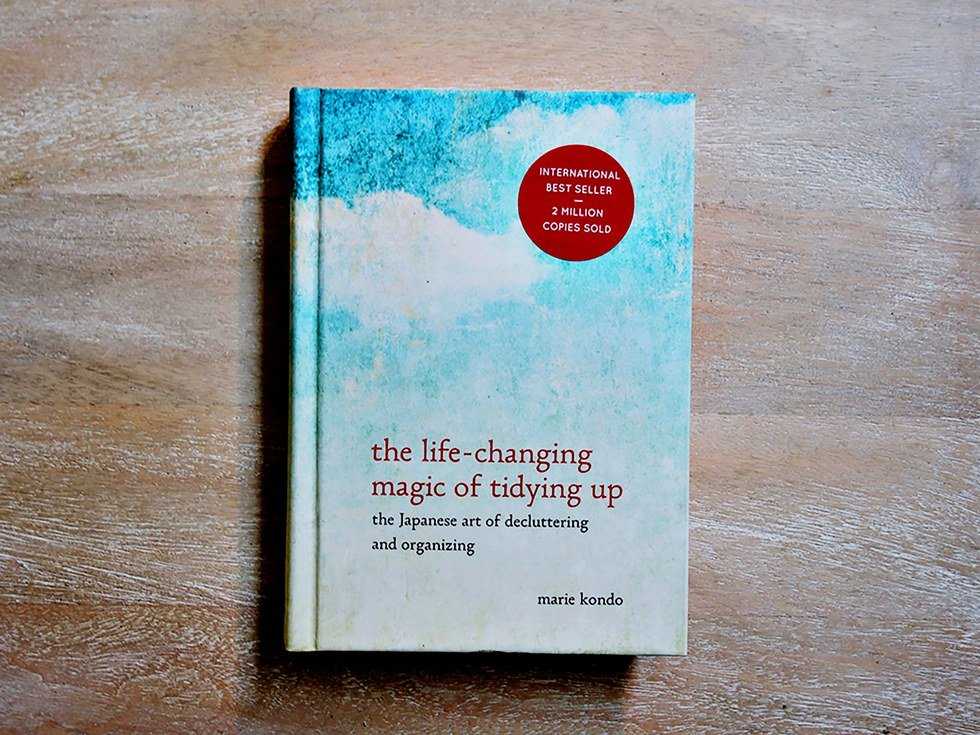
Given that this is an election year, the odds of me reading the news if it's not about gaffes, speeches, or polls is pretty low. Still, a few things managed to break through the fog: Juno reached Jupiter and is sending back pictures so we can all see what a great time she is having; there was a coup in Turkey; and a small Japanese woman named Marie Kondo thinks I would be happy with less stuff. This is probably an unfair characterization of Ms. Kondo, whom I only know through an article in the New York Times Magazine, Marie Kondo and the Ruthless War on Stuff by Taffy Brodesser-Akner, and who came across as entirely too polite to want me to do anything I wouldn’t want to do myself. However, what was more interesting to me than Ms. Kondo’s book was what people said about it.
The article describes a group of women “who knew that Kondo was speaking directly to them”. The description has a deeply religious tone, “They called themselves Konverts, and they say their lives have truly changed as a result of using her decluttering methods.” My imagination, taking things a step further, supplied me with an image of women, wandering from over cluttered city to over cluttered city, just waiting for the spirit to fill them. Their weak, physical bodies brimming with joy, they then fall into a fury, freeing us from the shackles of our out of control materialism and bringing us up through minimalism.
As prophets go, Ms. Kondo is an ideal one. Her creed is simple, all we need are the things that make us happy and anything that doesn’t either make us happy or is absolutely necessary (financial records, birth certificates, deodorant) should be removed. The unnecessary things removed from our lives, the things that make us happy can finally do their thing. But the simplicity of the message is why it works so well. It's not just about rooms and houses and documents, the article includes anecdotes about people decluttering husbands and jobs in their quest for joy. In the hands of a skillful storyteller, the parable grows to fill empty space; the house becomes the soul, the clutter becomes sin. Or the house is an ideal life, the one you see on TV, and the clutter is everything that doesn’t line up with that narrative. It is what you need to hear.
The language used by and around these products often implies that the message is semi-religious, not in the sense that they necessarily support or endorse a specific religious doctrine but that the products themselves have a religious feel. Ms. Kondo’s followers are referred to using religious language or language with religious connotations, they are “konverts”, and “their lives have truly changed” since they found Kondo. Part of this may be a utilitarian need for the best words, these words simply work best, but there are also the clear parallels with many things associated with religion, especially Christianity. The article states that Ms. Kondo’s method calls for her disciples to complete a “once-in-a-lifetime tidying marathon,” which has the feel of a baptism, Ms. Kondo’s description of joy involves pointing up, associating the heavens with happiness, and her ‘konverts’ speak similarly to religious converts. It is not hard to imagine that as the purpose provided by the church and similar institutions become less prevalent, people needed to look elsewhere.
I definitely have too many things. I definitely have things that make me unhappy. I am certain carefully cataloging my possession as well as any extra complications that take up my time and removing the unnecessary would make my life easier, it might even make me happier, but I do not believe it would make me happy. I don’t think any one thing can make me happy. It is easy to fixate on a problem and then, providing a solution for that problem, believe that the skies will part and you will finally be happy. Maybe there is too much stuff in your life, maybe not enough; maybe you need more sex, or are you having too much; you should watch less TV and work out more; all you have to do is eat healthy. Do this and you can change your life. But we are complex and adaptable and the world we live in is similarly overflowing with details and in constant flux, so the idea that one single thing, one ideology that wrangles and understands all of that, and by doing so brings you joy and meaning it is a pipe dream.
If your goal is simply happiness, the world is filled with distractions away from that. At least in the developed world, it is no longer necessary to spend as much time surviving as it was before the industrial revolution. I was not alive in the pre-penicillin/combustion engine/internet era so I cannot say for certain that it is better to live now, but I am certainly glad I wasn’t alive then. One of the many things (most of us) have gained with these advancements is more freedom. We can increasingly do what we want, marry whom we want, live where we want (minus most of New York and Los Angeles), and we have more leisure time. But as we have gained more, we have learned to want more as well. Ms. Kondo is probably not wrong in asserting that we have too much, but she misses that her book is one more thing promising to make us happy. It is competing with the TV, which is trying to yell over Netflix, which demands our attention instead of drugs and booze, which in turn claim that sex is a distraction, while sex says that church is just making us guilty… they all promise some form of happiness. They may promise ease, or distraction, or chemical euphoria, or it may be salvation, either from sin or clutter.
Among all of this noise, the promise that by cleaning out your closet you can be happy is appealing. Part of the appeal is that, though the stars and planets may not actually circle us, we are still very much at the center of our own worlds and that makes happiness a very personal thing. The personal nature is true whether you reject your possessions or not and the personal nature of happiness should preclude any system planned out by another person. Who could possibly know you well enough to understand what will bring you joy if you yourself are not certain? Ignorance of self is no different from any other form of ignorance. It is relieved through investigation, and in this case asking yourself hard questions in an attempt to understand who you really are and what you truly believe must be at least as valid as throwing out anything that doesn’t make you happy.
What is needed is not less stuff but more thought. Questioning the world and our place in isn’t an easy thing to do, nor is it something that will bring you immediate joy or relief, but when it comes to happiness only the truth will do. And the truth is there are no books, no studies, no ten-step programs, if it was that easy everyone would be walking down the street filled with joy. All there is to go by is a confusing, subjective world and careful, patient, thought. Maybe my path to happiness does involve throwing out all my needless possessions, maybe not. No one can know that but me.