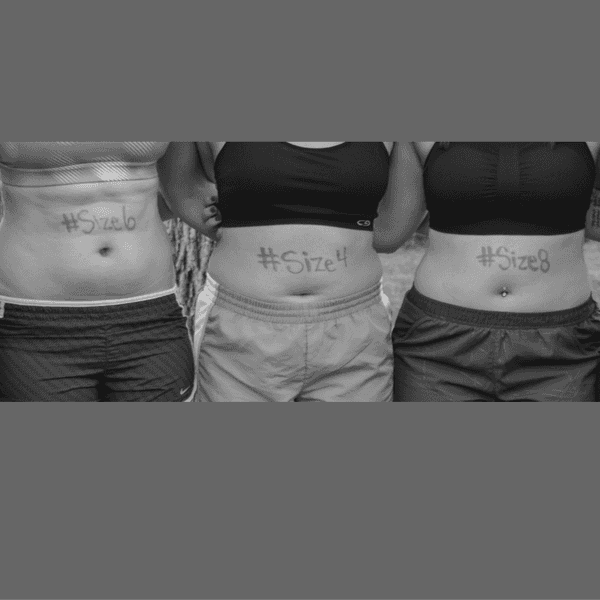

“Plus Size” is defined in multiple ways, as a category of clothing, as a body type, and as a range of clothing sizes. Wikipedia defines it as “a euphemistic term given to clothing proportioned specifically for people whose bodies are larger than the average person's … According to PLUS Model magazine, 'In the fashion industry, plus size is identified as sizes 12-24, super size as sizes 4X-6X and extended size as 7X and up.' The article continues, 'Susan Barone ... shared, 'Plus sizes are sizes 14W - 24W. Super sizes and extended sizes are used interchangeably for sizes 26W and above. Sometimes the size 26W is included in plus size.''”
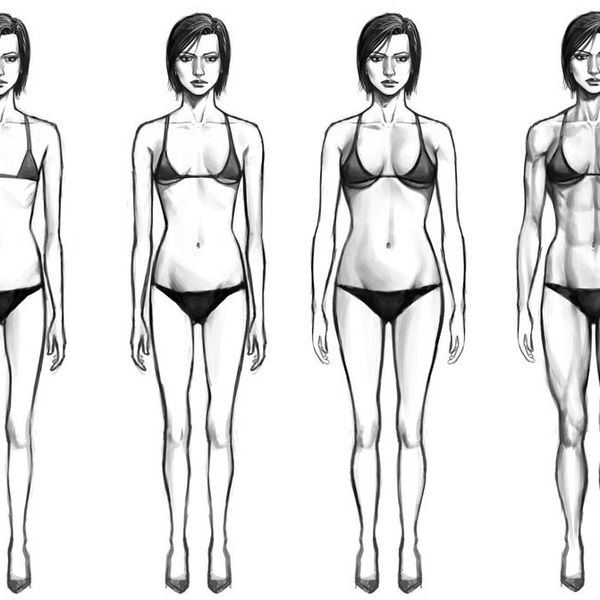
The fashion industry has always seemed to have a problem recognizing multiple body types. Lately, certain companies have been making concentrated efforts to move away from this and celebrate a wider spectrum of female beauty, but this trend is far from pervasive. And while stores with “normal” sizes are still struggling to be more inclusive, there is even less inclusivity in the entire spectrum of clothing sizes and body types. The fashion industry is obsessed and has made us obsessed, with categorizing ourselves based on our bodies. Are you pear-shaped, apple, hourglass, etc.? Are you petite, regular, tall, plus size? These labels are advertised to us as tools to find the clothes that fit you best. But in reality, they’re limiting and demeaning. What is “regular” anyway? And what’s the cut-off for “plus size?” What the hell does it mean to look like a piece of fruit or an outdated measurement of time? Absolutely nothing. And I have yet to meet a woman whose body perfectly fits any one of these categories.
Representation is a huge issue across the clothing industry, but especially with size ranges deemed “plus," "extra," and "non-normal," which further the stigma that anyone over a size 12 or 14 is somehow other, or odd, or irregular. Yes, Sports Illustrated put a model, an athlete, and a size-16 woman on their covers this year, which is amazing. But all those women were white and conventionally beautiful in some way. Yes, those women are gorgeous and talented, and earned their spots on that cover, and this is not to take away from them in any way. And it’s fantastic that Ashley Graham was on the cover as a beautiful representation of a body type that historically hasn’t been put on the same playing field as those of professional models and athletes. But it should not be considered revolutionary for a woman over size 14 to be depicted as beautiful on the cover of a magazine. She is beautiful, and was beautiful before she became a model or was featured in Sports Illustrated. Size 16+ women have existed for as long as other people have, so why are we only now starting to recognize them? And why are we comfortable only with recognizing them as beautiful "plus-size" women, as opposed to just beautiful women?
And where are the women of color? The women with flaws? The women with no a**, or no breasts? The women who have survived cancer or other diseases? Disabled women? Women with short legs, or long arms, or big heads? Women over the age of 35? Women under the age of 20 who haven’t been hypersexualized? Trans women? Androgynous women? Women who differ in any way from what has historically been represented as “beautiful,” basically? There are so many people in this world, who look so different from one another. But if you try hard enough, there is something beautiful to be found about every single one of them, just at the surface level. They’re probably interesting personalities as well, underneath the physical exteriors.
I’ve lived my entire life as a bigger person. Honestly, I have no idea what I really look like. Sometimes I feel like I’m huge, and have a hard time seeing myself the way others see me. Sometimes I feel fabulous, but catch a glimpse of myself in a mirror or window and am taken aback, because I look bigger than I feel. I was a size 12 or 14 by middle school, and have vacillated between a 14 and a 16 for the past several years. Now I’m getting my health in order, eating right and exercising, but will never be as small a size as many of my friends. I was excited to see Ashley Graham on the SI swimsuit cover, and have been interested in the increase of plus-size clothing and representation in the industry. But I hate the label Plus Size. I’ve vacillated between “plus size” and “regular” for as long as I can remember and have never really felt like a part of either category. It was great to see someone who looked more like me on that cover, but she really isn’t anything like me besides the tags that may be on our clothes.
There are maybe a handful of times in my 20 years of existence I’ve ever felt totally comfortable in my own skin, and a large part of that discomfort comes from these stupid labels. All I wanted in middle school was to be able to go to the mall with my friends and shop at the same stores. And I can’t remember how many times I would walk into a store with them, try on a few things, and leave empty-handed, as they racked up the purchases. “Plus Size” is a subtle form of othering. You’re “plus,” you’re extra, you’re not normal. And with “size” in the label, it’s impossible to forget that what makes you abnormal in the eyes of these companies is your body, something over which you have a relatively small to non-existent amount of control.
There has been a huge body positivity movement lately, with plus-size stores becoming more prevalent. This is all in a move to help people feel good in their own skin, but we keep emphasizing the labels and the categories and the sizes. For things to really change, we need to shift away from the labels. Of course, clothing items will always have to be made in sizes, and be marked with those sizes so we have a clue when walking into a store and shopping. And while specialty stores will probably always have their place in the market, we need to stop defining certain sizes as specialty. We don’t choose our bodies, but we should be able to choose how we dress and present those bodies. And since we get to choose how to feel about our bodies, it’s time we choose to start feeling good about these meat suits we walk around in. But it’s also time we stop categorizing our bodies. I don’t know about you, but I’m ready to see people who look like me, and like my friends, being represented. And I’m ready to see our bodies represented equally, not as “plus” or “normal” or anything else.
The problem with the “Plus Size” label is that it exists. Our bodies are our bodies, and they should be celebrated as they are. You are nothing more, or less, because of your size. It’s hard to really accept that, but maybe if we say it enough, we’ll start to believe it. The only label any body needs is confident.