

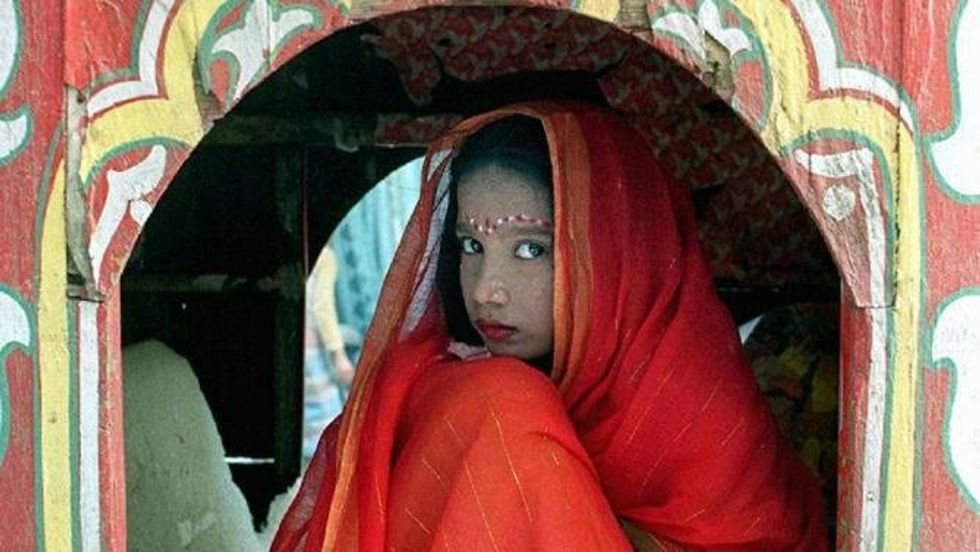
In South Asian countries, several women choose to become educated and married at an older age. However, society expects young girls (often living in rural areas) to marry an older man if they do not pursue careers directly related to their educational backgrounds. In other words, when girls are not motivated to attend school or participate in the economy, they are married off. Why are several girls unmotivated? Why do we not create a society where girls desire to become educated and fully participate in the economy? What is the reason for this occurrence?
Prevalence
It is not that many girls are unmotivated, but rather that their culture emphasizes the importance of performing household chores and caring for their future families and their spouses over a modern-day education. Even if women themselves choose to partake in household activities and support their households, they cannot always choose to hold paid careers. In circumstances of poverty, families often decide to fully educate their sons while deprive their daughters at some point of higher education.
Taking on the role of a housewife is one of the key roles that a woman will have to play. Even when women are highly educated, they often do not pursue careers related to their earned degrees, and simply become housewives. 75 percent of Bangladesh is rural area. Within the portion of the population in Bangladesh that identifies as rural, 70 percent of women identified as housewives in a recent survey.

Unpaid Labor
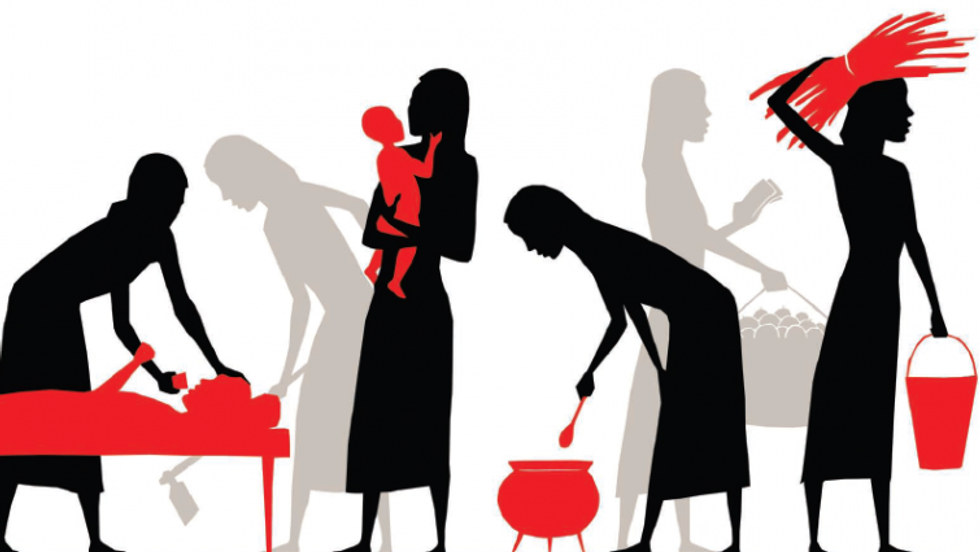
Most women report working an average of 16 hours a day on household chores. The total calculation of women’s unpaid contributions would round to 69.81 million US dollars if we summed the value of labor for women in rural and urban areas (including those serving as full time housewives or formally employed housewives). Women will find that their work as housewives is associated with a scale of unrewarding, unpaid labor.
Children, not Women
The major problem here is not that women are encouraged to participate in unpaid labor as housewives and domestic workers, but rather that many of these people who we call women are actually children. The average age of marriage for girls in Bangladesh is 16.4 years old, although recently the legal age of marriage was changed to 18 for girls and 21 for men. 1/3 of Bangladeshi women now aged between 20-24 confess to being married at the age of 15.
Due to poor records of child marriage among males, the average marriage age for males in Bangladesh is estimated around the mid 20s. This means that child brides are often married to men much older than them. While females are forced into homes at early ages, men are told to take strong economic roles outside of the home in accordance to Rousseau's separate sphere. Bangladesh currently does not ban forced marriage; however, consent of both parties (which often is the parents of both spouses) is required.

Personal Experience
In my personal experience, when I was thirteen years old, I was often seen walking around with my uncle or second cousins on the pavements outside of my house or sitting inside a bus in Bangladesh. While my older male relatives were perhaps 28-35 years old, I was only 13 years old. Yet, when I was introduced to several people, people constantly mistook me for the bride of my male relative.
Not only is this awkward because the person is my male relative, but it is also a harmful mentality to have, because it is considered normal for young girls to marry older men. This is an issue because marriage at a young age can lead to children, and child labor at a young age may lead to health complications for the young mothers. This also signifies that women may have to stop attending school to take care of the family, entailing a larger responsibility than a young girl should have to undertake.
Not only is this matter troubling, but a disconnect in communication may also occur between a young girl and an older man; there is a difference in maturity. A young child bride often has no room for love, education, or career inspiration. There is only childbirth, housework, and unpaid labor.
Where did idea of child brides stem from?
While many people may attempt to connect a religious basis to a child marriage in Islam, no such connection exists ... Since Prophet Muhammad acted uniquely, and because he was considered the ultimate perfect human being (who could understand all of his wives, their needs, and the importance of equity and love), it was only recommended that he take the duty/responsibility of marrying chaste women, whether they were decades younger or decades older than him.
If people are so willing to take child brides, why not marry old and widowed women, which also reflects what The Prophet did? The weak perception of pairing young women with older men stems from patriarchal society acceptance of men to exploit their physical powers over weaker women (oftentimes “girls”). Furthermore, men also can transcend their sexual urges onto “developing” women rather than women who are older and “less capable” of producing children.
Although we find that girls are often uncomfortable with producing children at such a young age, there is still an inclination for families to give off their valuable daughters to men. One could also argue that this has no religious basis because this does not just occur in Islamic communities but also in Buddhist, Hindu, Christian communities, and more. It is a regional phenomenon widely controlled by poverty and patriarchy stemming from pre-colonial times.

Overall, the child bride phenomenon proliferated due to plenty of speculation.