

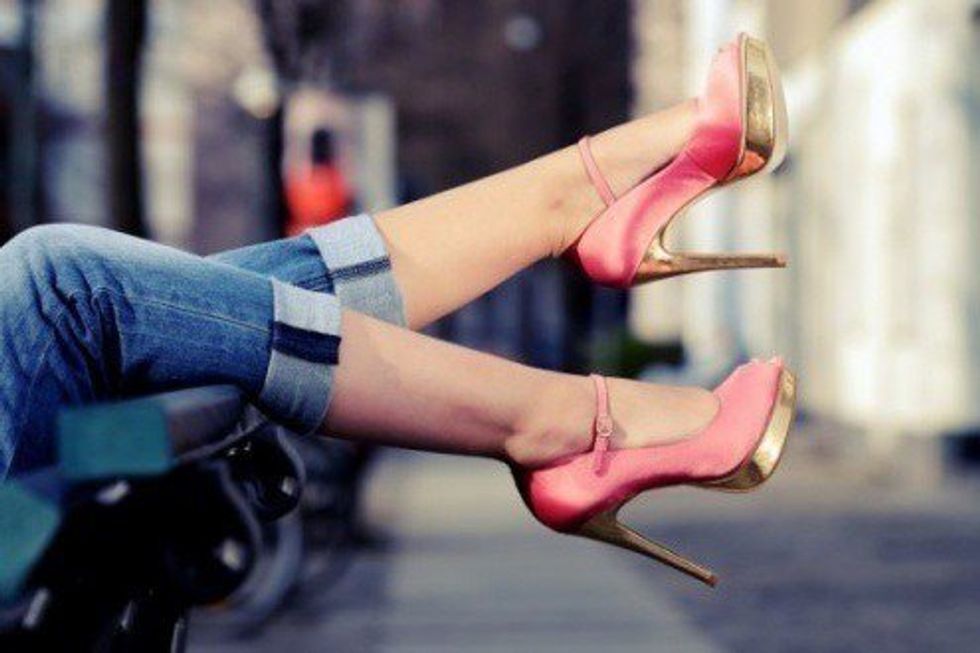
Heels are a sex symbol. They signify status, womanhood, and sexual power. They’re also uncomfortable as hell and a danger to walk in. So who, as Marilyn Monroe famously asked, do we have to thank for heels?
The origin of high heels is debated. One theory states that they evolved from the first platform shoes, chopines —
18-inch-high monstrosities popular among Venetian prostitutes. The second, more likely theory is that high heels are a descendant of the equestrian footwear once popular in the Near East. Popular, it should be noted, among male riders. (The heel, it’s argued, was used to secure the rider’s stance in the stirrups.)Women weren’t the first to wear high heels. With the exception of Queen Elizabeth I in 1588, men adopted the heel as a status symbol. The footwear wasn’t about mobility, but nobility. King Louis XIV made his red high heeled shoes a symbol of class, privilege, power, and leisure. In the 1670s, the lascivious monarch issued an edict that only members of his court could wear his signature shoes. As the heel circulated through the lower class, the aristocracy had to increase the shoe’s height to stay on top (pun intended). When a man wore heels, he stood above his peers literally and figuratively. Heels were meant to be impractical. They indicated that you were so wealthy, you didn’t need practical shoes to work. Or to walk in, for that matter. It’s little wonder women assumed the practice. In the early 17th century, women cut their hair, smoked pipes, and wore large hats. Adopting the noble heel may have been, as one curator suggests, an attempt to “masculinize” their outfits. The unisex heel lasted until the end of the century, when the toes of women’s heels became pointed to emphasize the daintiness of their feet. Men’s shoes in comparison became more square and robust, the heels lower.
Then the Enlightenment happened. So-called masculine pursuits like intellect and reason were privileged over the feminine vanity of fashion and appearance. Men abandoned all impractical clothing—bright colors, ostentatious fabrics, and high heels. Like the shoes, women were considered irrational. They were stereotyped as emotional, sentimental, and uneducated, and were desired precisely in their embrace of impracticality. High heels were stigmatized as feminine, the feminine stigmatized as foolish, and both were rejected.
Heels later became associated with Marie Antoinette’s excessive luxury. American and French women rejected this image of royalty, and turned to the far more sensitive flats. Nearly two centuries later, high heels were revived thanks in large part to new technology, which allowed for steel and metal to be embedded in the heel. It was photography, however, which popularized the heel’s sex appeal. High heels force women to walk in a way that puts pressure on their hips and back, and women have learned to compensate…butt out, chest thrust. High heels were fetishized by the porn industry and are still fetishized today.
Wearing heels doesn’t make you a bad woman or an even worse feminist. Your personal expression isn’t a feminist issue…but it may be a medical one. Yes, studies prove that women who wear heels are considered more attractive by both men and women. Think of all the action movies today. The double agent in stilettos is practically a staple character. But in all the kick ass action, how do these heroines run around? A third of women who wear heels daily will fall. Daily wear of high heels can also lead to long-term medical problems such as ingrown toenails, irreversible damage to leg tendons, frequent muscle spasms, nerve damage, and bunions. The way heels force the toes to curl is the gentler, modern-day Chinese foot binding. The increased weight on your toes forces the body to compensate, and the change in position puts pressure on the nerves in the back and can cause sciatica, a condition where nerves become trapped, triggering pain and numbness as far down as the feet.
What women wear shouldn’t be relevant to conversations about gender equality. But I will say that high heels promote an interesting construction of power—one gained through sexuality. And while heels are empowering, that power isn’t a lasting one. Even more, it doesn’t come without a price.
Until men in high positions also wear high heels, it’ll always be a question of what kind of power the heels assume and where that power derives. We’ll be able to tell with a glance when heels come to signify universal power: when men are as willing and eager to wear them as women.