
Disclaimer: All quotes and facts in this article are coming from Beyond Blue, Merriam-Webster, and Mayo Clinic.
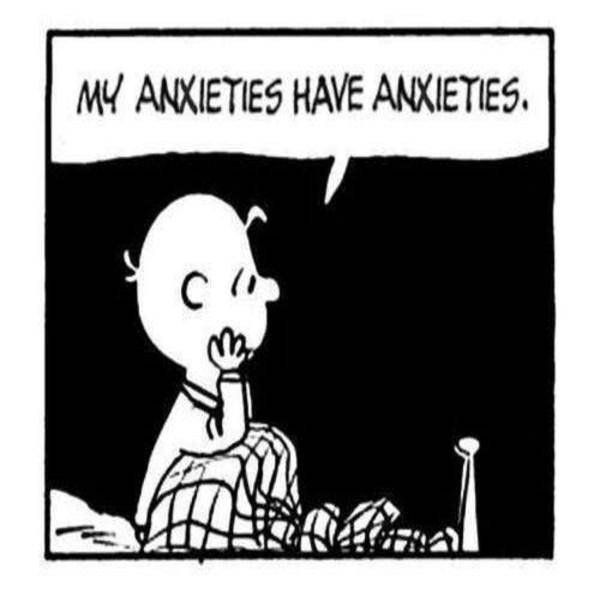
Most people see anxiety as something you have over a situation. Like going out in public, going out on a date or even going to a job interview. There is generalized anxiety disorder, wherein a person feels anxious on most days. Social anxiety occurs when you are anxious about being criticized about doing public things. Obsessive compulsive disorder can cause anxiety. Finally, post-traumatic stress disorder can cause anxiety.
Well, that’s not what my anxiety is like. My anxiety is over my friends. And mainly it is from worrying about my friends. This is because I care for them so much. I have one friend who is my best, most important friend and sister all rolled into one. She means so much to me and I tend to worry about her more than I should but I cannot help that because it is who I am.
I am going to talk about my anxiety and then I will go more in depth about other forms of anxiety. With my anxiety, if I haven’t talked to my friends in a while I start to worry about them. And then that worry turns into anxiety. Once my anxiety kicks in, there are two stages. Stage one is when it is not very bad, but it is still in the back of my mind. Stage two is the worst. When I get to stage two, I am sick to my stomach and I want to cry at any moment but I won’t let myself cry. At stage one, I can listen to a few songs and then be fine. At stage two, I need to constantly have music going and I need to be alone. I have to take constant trips to the bathroom because I constantly feel like I am going to throw up. Luckily, I have only had one stage two attack while I was at school. I went to my first class but I had to skip my second class because I was not stable enough. Even my roommate at the time agreed that I was not stable enough to go to class. Now. I want to talk about different types of anxiety.
First, to be able to understand these anxiety-inducing disorders, the definition of anxiety needs to be clarified: “Most people feel anxious and worried from time to time, especially when faced with stressful situations like taking an exam, speaking in public, playing competitive sport or going for a job interview. This sort of anxiety can make you feel alert and focused, helping you get things done faster or perform at your best.” I am going to touch on the six most common anxiety disorders.
Before I touch on the disorders, we need to talk about the symptoms of an anxiety attack. Anxiety is defined in the dictionary as “a feeling of worry, nervousness, or unease, typically about an imminent event or something with an uncertain outcome.” The symptoms of anxiety include: feeling nervous, restless or tense, having a sense of impending danger, panic or doom, increased heart rate, breathing rapidly, sweating, trembling, feeling weak or tired, trouble concentrating, having trouble sleeping, gastrointestinal problems, having difficulty controlling worry, and having the urge to avoid things that trigger anxiety.
Generalized Anxiety Disorder
This anxiety disorder causes the sufferer to feel anxious and worried most of the time. And not just in specific stressful situations. These worries are intense, persistent and interfere with normal life. Worries relate to several aspects of everyday life. These include work, health, family or financial issues rather than just one issue. Minor things like household chores or being late for an appointment can become the focus of anxiety.
Social Phobia
For people with social phobia, also known as social anxiety disorder, performing in front of others and social situations can lead to intense anxiety. They may fear being judged. They may fear being criticized. They may fear being laughed at or humiliated in front of other. Even in the most ordinary everyday situations. The prospect of eating in front of others at a restaurant can be daunting for some people with social phobia.
Obsessive Compulsive Disorder
“People with OCD often feel intense shame about their need to carry out these compulsions. These feelings of shame can exacerbate the problem and the shame, and consequent secrecy associated with OCD can lead to a delay in diagnosis and treatment. It can also result in social disability, such as children failing to attend school or adults becoming housebound.”
PTSD
PTSD can cause anxiety to surface when around an item that caused the PTSD. I do not wish to go more in depth with caution of possibly triggering someone to have an anxiety attack. That is not the purpose of this article.