
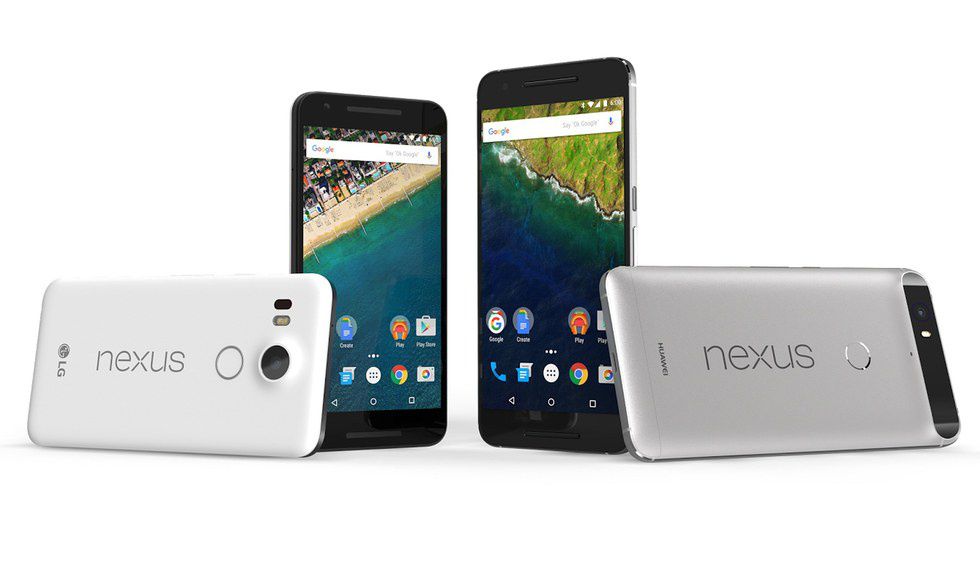
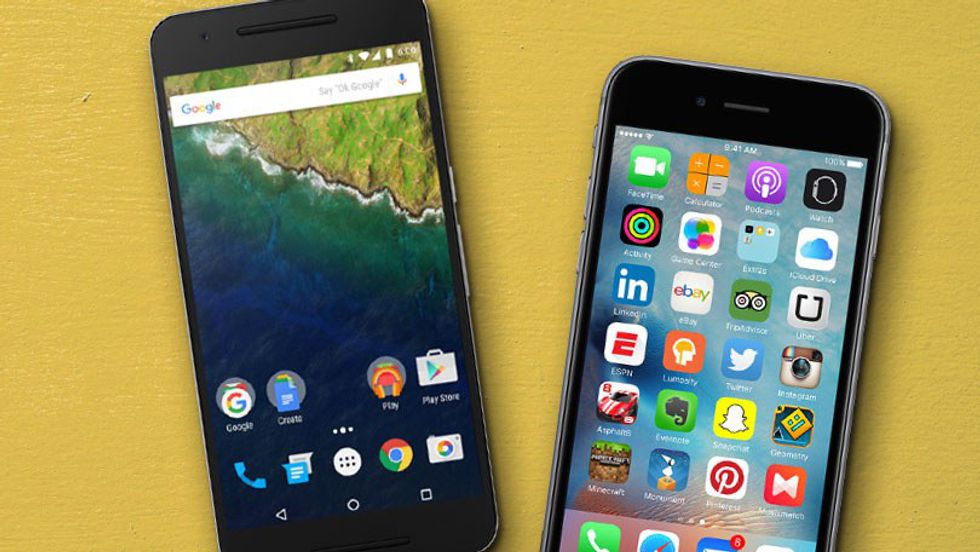
The Google Nexus line of smartphones is one of mostly obscurity. In the past, it has been a phone for developers to see the baseline of the Android operating system which they then used for their own line of smartphones and was more of a small niche phone, but recently, all that is starting to change. Google launched the LG manufactured Nexus 5X this past October along with the Huawei-manufactured Nexus 6P, pictured on the left and right respectively.
The Nexus 6P is the real gem of the two, being made of more premium materials, better hardware, and a larger screen size. It’s a true "phablet" and follows the trend that all phones are going in now: thinner and bigger.
But what makes the Nexus 6P so special when the line of phones has been largely unknown in the past? The big issue has been that the Nexus has never been up to par. It’s hardware and specs have never been as strong as the other available smartphones. But the Nexus 6P changes all of that.
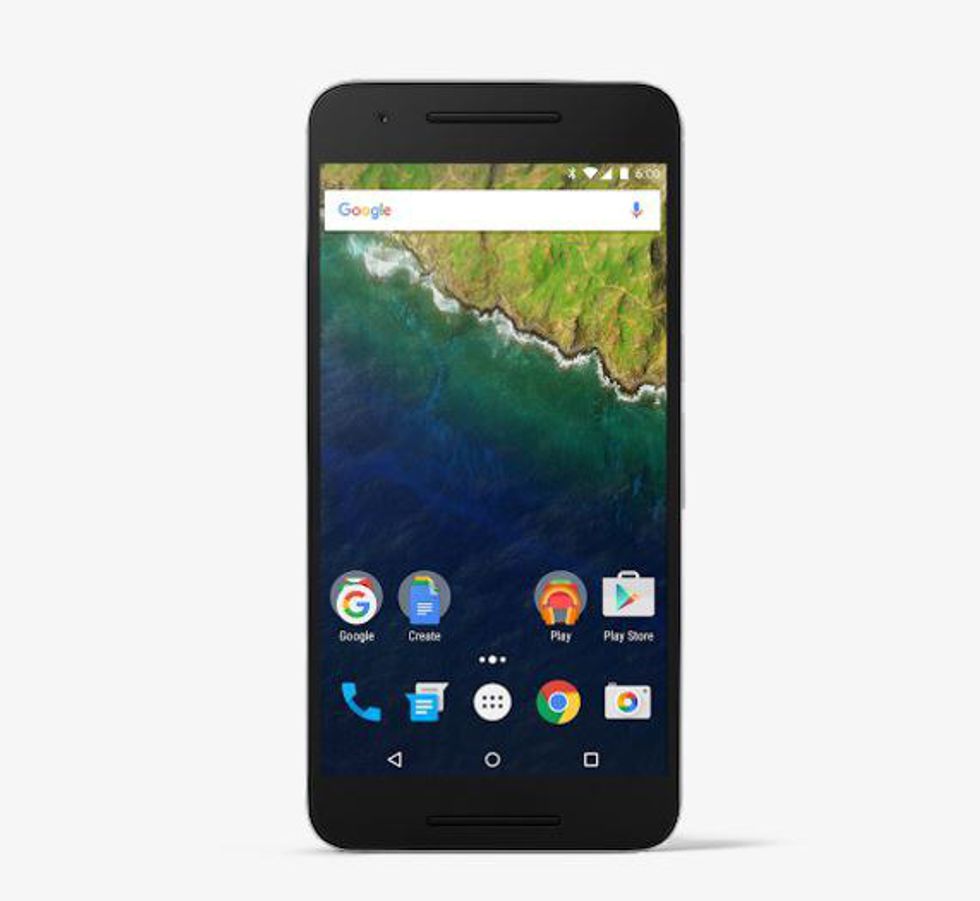
Critics have touted the Nexus 6P as the best Android phone on the market, “a better buy than the iPhone,” and that with it “Google outshines Galaxy s6 and iPhone 6S.” Its hardware is up to par with the best on the market or better. It features a design that feels incredibly modern—maybe even a year or two out of the future—and has a beautifully crisp colorful screen. It runs on Android Marshmallow (Android 6.0), which has some great new features, and it’s blazing fast. Many users have reported no lag whatsoever even with intensive use.
But of course, you’re certainly not ready to leave your iPhone and Apple altogether.
Apple’s reign in the world of smartphone’s is an interesting one. Outside of just the US, Android commands nearly 80% of the global market share, partly because Android has more than just flagship or top tier phones and are more easily available in other countries, but in the US, Android still commands the market share of cell phones with a little more than 50%. So when you look at the statistics, they don’t really have much of a reign at all.
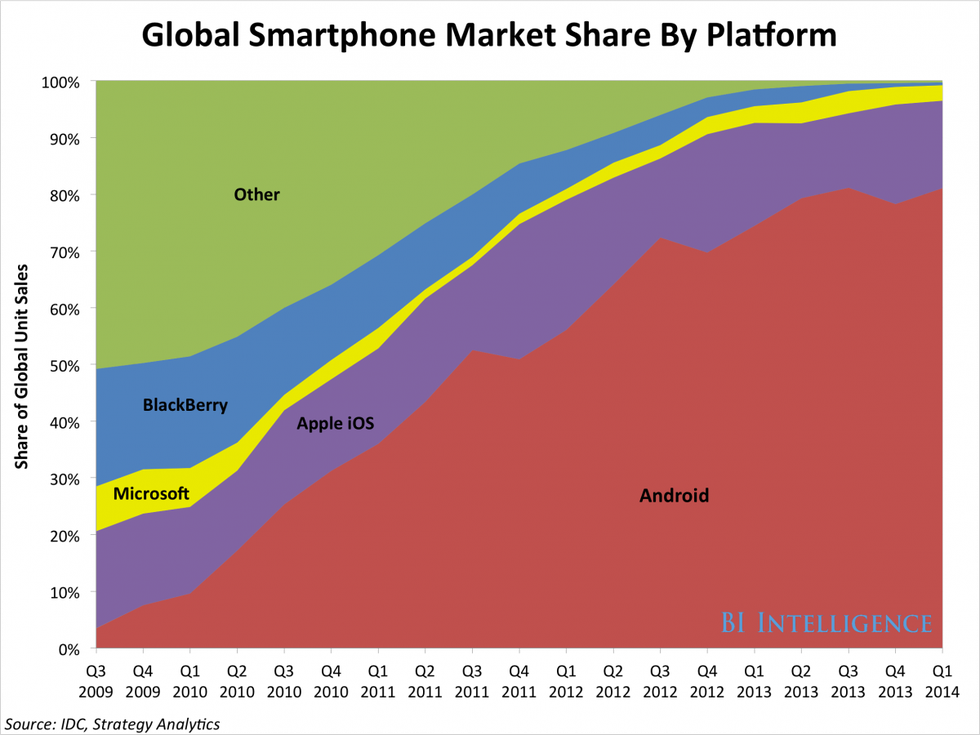 Courtesy of Business Insider.
I grew up seeing iPhones everywhere, though. Many people I knew in high school had them, and I still see them everywhere. With the younger generations of teenagers, college students, and young adults, the prevalence of iPhones appear to be greater than the overall population. One study found that over 60% of US teenagers own an iPhone. It’s way easier for me to find an iPhone user than an Android user among college students, so it seems iPhones are the trendy phone to have, but is that justified?
Ehh, maybe.
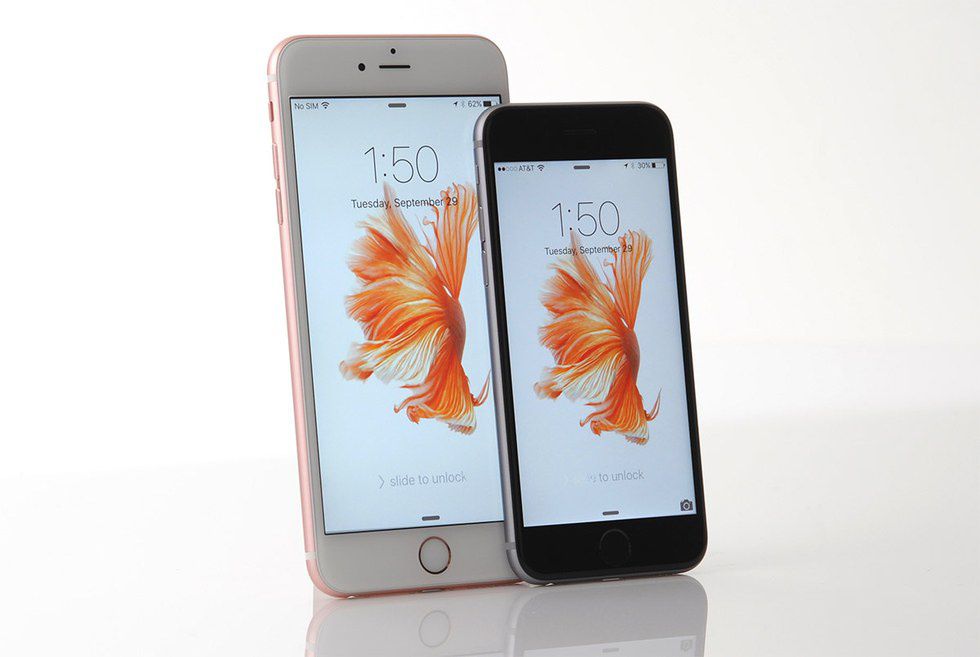 The iPhone 6s Plus and iPhone 6s shown above.
iPhones are a symbol of status. People know they’ve been made of good quality in the past (as with what people see most Apple products to be) and so they are associated with higher status because of their cost. And while Apple only sells top-tier flagship phones for the most part, a greater cost doesn’t necessarily mean better quality or a better product.
So I thought I’d start comparing—the Nexus 6P against the higher powered iPhone choice, the iPhone 6S Plus. The Nexus came out in October and the iPhone came out in September so they have nearly identical launch times, which makes this an even fairer comparison. Take a look at the hardware and specs.
Hardware and Specs Comparison
Display
Nexus: 5.7 inch AMOLED screen with QHD resolution of 2560 x 1440 pixels. 518ppi.
iPhone: 5.5 inch LCD screen. 1920 x 1080 pixels. 401 ppi.
Superior Display: Nexus.
Memory
Nexus: No SD card slot. Comes in 32GB, 64GB, or 128GB.
iPhone: No SD card slot. Comes in 16GB, 64GB, or 128 GB.
Superior Memory: Nexus, although the two are nearly identical here. At least, Google realizes that 16GB is no longer enough for the flagship phone playing field. With a bunch of pictures, some videos, some downloaded apps and any OS upgrades, you’ve already lost well over half of your memory, and we all know when you get close to filling up your memory whatever device you’re using starts to slow down. Why didn’t Apple release a 32GB version too if they wanted to keep the 16GB one?
Processor and RAM
Nexus: Octa-core Snapdragon 810, low energy cores, four high-performance ones. 2 Ghz and 3GB of RAM.
iPhone: It’s own A9 with M9 motion co-processor and 2GB of RAM.
Superior: Harder to compare, but the Nexus has more RAM. Apple also claims that it doesn’t need the extra RAM. Hard to compare the two processors as well
Camera
Nexus: 12.3 MP and 8MP front facing
iPhone: 12 MP and 5MP front facing
Superior Camera: Beyond the above specs, it gets more complicated to compare exact quality, but overall they appear of similar quality. The Nexus does lack Optical Image Stabilization, whereas the iPhone does have it, which may put it up just slightly, however both can take great photos in low light or darkness. The Nexus 6P was able to take a picture of just stars in the middle of the night with it coming out clearly. The regular iPhone 6S lacks this feature. Google has said that OIS is unnecessary with their phone and some reports have said that the Nexus instead as Electronic Image Stabilization which effectively removes this advantage.
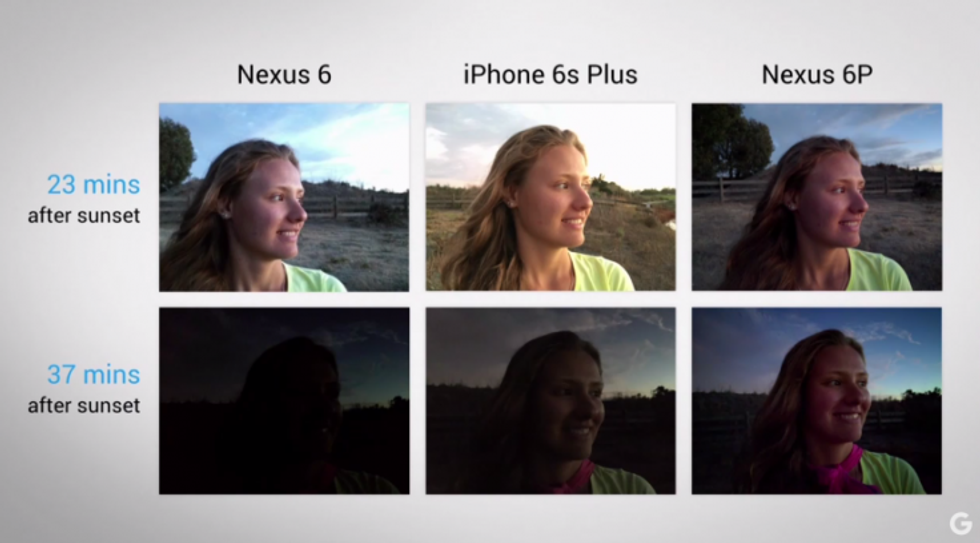 A solid comparison between the iPhone 6s Plus, Nexus 6P and the year-old Nexus 6 in low light. The best one isn’t completely clear, besides the Nexus 6. The Nexus 6P looks slightly better here.
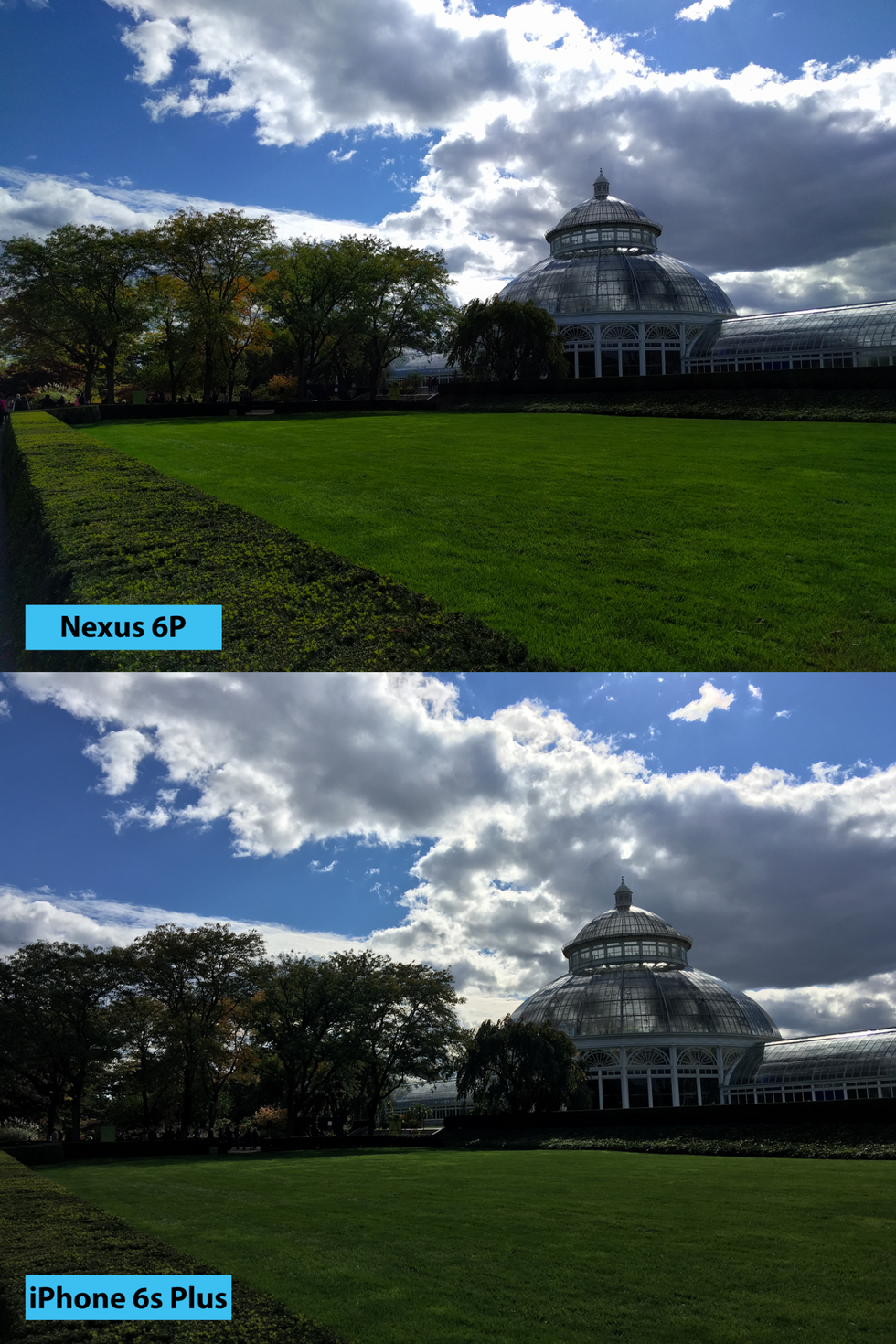
They look nearly identical here.
Overall whichever camera is superior will likely come down to aesthetics and personal opinion of the user, but both take beautiful pictures.
Fingerprint Scanner
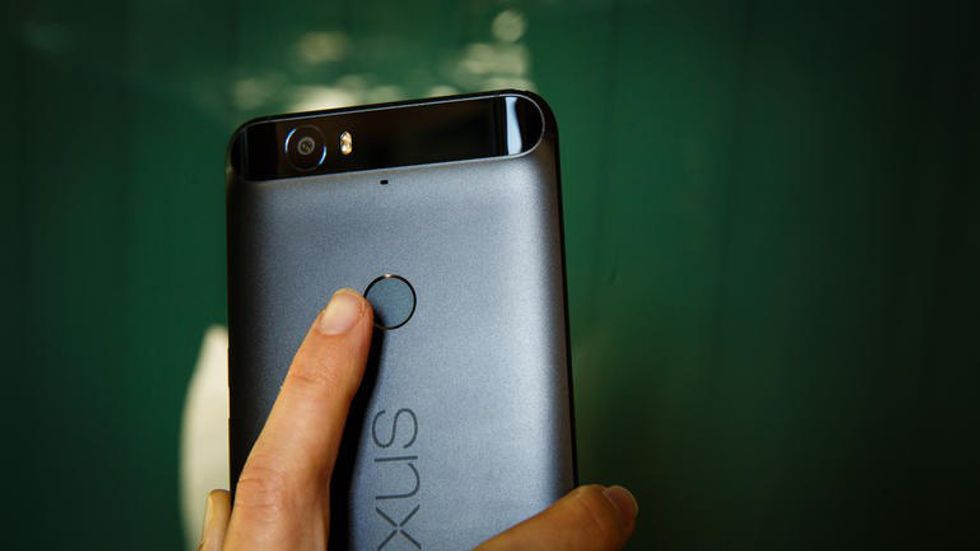
Nexus: On the back of the device. Works very fast, can encode up to 5 fingers, no issues reported. Brings you straight to home screen.
iPhone: On the bottom of the front of the screen. Works well, has had issues in the past, fast, similar to Nexus on.
Superior Fingerprint Scanner: Somewhat up to taste, although the Nexus one on the back feels more intuitive and works well with the large screen. Huawei has had experience with this with the line of Ascend Mate phones.
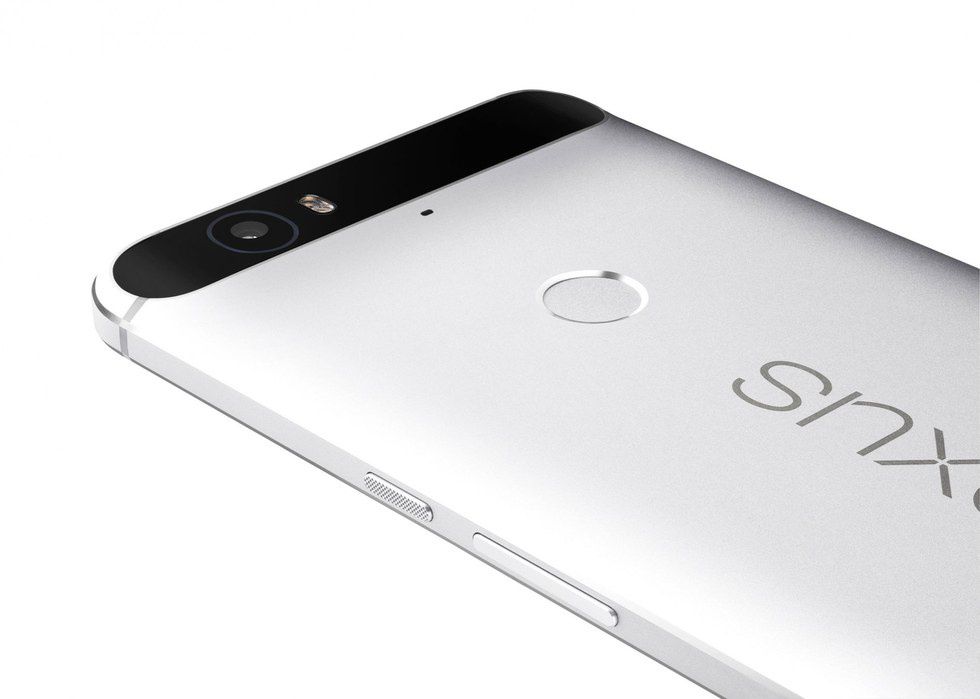 The fingerprint scanner located on the back of the Nexus 6P
Battery
Nexus: Non-removable 3450 mAh. Doze feature saves lot of battery when not in use, USB Type C charging allows for 0 to 100% in about 90 minutes
Apple: Non-removable 2750 mAh. Apple says that their hardware and software are optimized for slower battery drain, however, many have disagreed with this in actual practice. Lightning Cable charging.
Superior Battery: Nexus. USB Type C is the future and will become the standard in the next couple of years. Charges faster than iPhone. Charging for just 10 minutes can give you up to 7 hours.
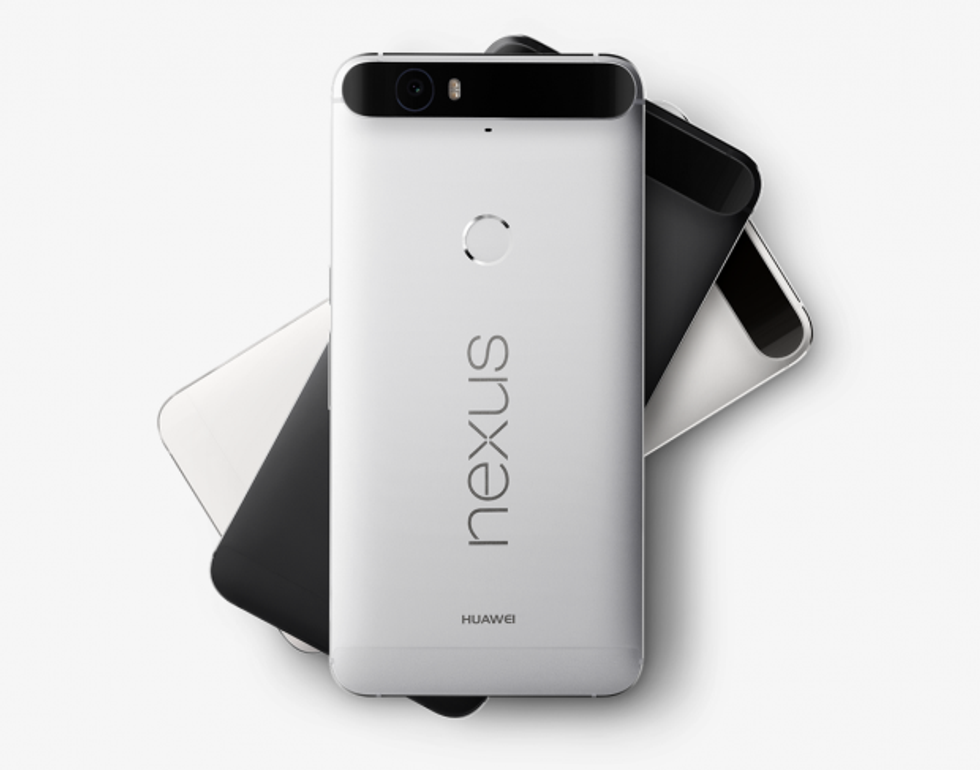
The clear winner here in the Nexus. But the iPhone, being Apple, runs on completely different software and that’s often what keeps Apple users coming back.
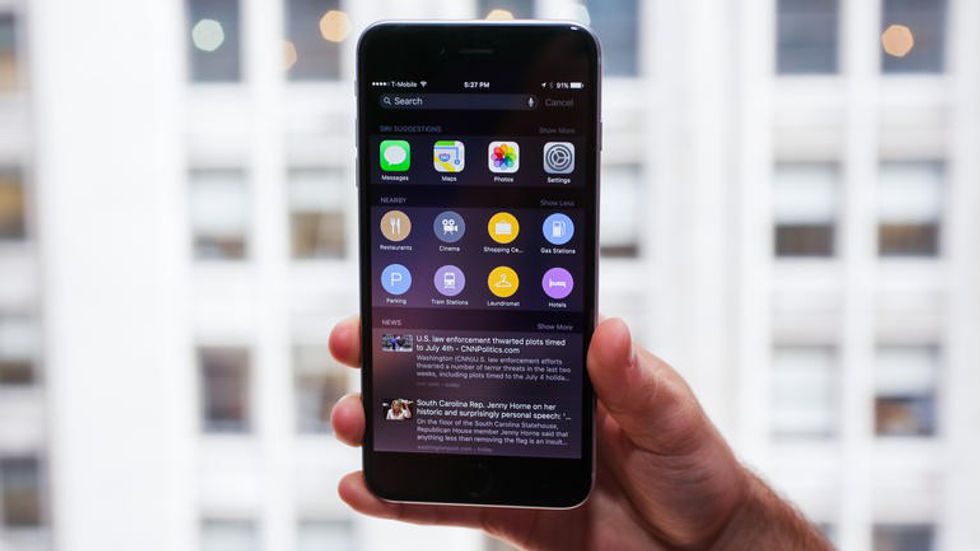 iOS 9 with its new Spotlight feature, which searches across your phone, web, apps, and nearby locations.
It’s interesting though, when looking at them that the iOS doesn’t particularly seem way better than Android (except to fanboys). It may have years ago, but with Android 6.0 and even the 5.0 versions most Androids are still running on, this probably can’t be said as easily anymore. So what keeps getting all these people to go out and buy an iPhone and why is Android just “not as good?”
Well, it’s all the extra stuff beyond just the hardware. With Apple, you get all these extra bonuses that Android lacks such as the…
- Great fingerprint scanner which has been great for a while,
- the app store is better than Android’s,
- they have better designs,
- Apple pay,
- Apple is known for great customer service,
- it’s always had a great camera,
- the software stays up to date unlike on Android,
- the world of Apple works well across all of your devices,
- group chat works great,
- iMessage,
- there aren’t all of those endless pre-installed apps from brands like Samsung or LG,
- there’s a great warranty program,
- they’re worth more when you resell them,
- the lightning cable is way better than micro USB,
- easy control with your Apple earbuds,
- facetime,
- iCloud,
- better control over app permissions,
- better control over notifications,
- Siri is the best personal assistant,
- iTunes and Apple music,
- the overall speed of the device and how it all just “works,”
Does Android Really Lack So Much?
So why on Earth would I argue in favor of the Nexus and Android with that long list?
Well… let’s deconstruct this. The above list is the many reasons that have been given over the years for why Apple and their iPhone’s are so much better than Android phones. However, does all of this still hold up?
Apple’s great fingerprint scanner on their iPhone.
Apple’s fingerprint scanner debuted in 2013 on their iPhone 5S, but the Nexus 6P and 5X has one just as good or better, as previously mentioned. Huawei has had a critically acclaimed fingerprint scanner since their Ascend Mate 7 and has carried it on to the Nexus as well as their other Mate 8 and Mate S phones. In the past you could definitely say no “Android fingerprint scanner can match the iPhone,” but not anymore. This one’s been called “a ridiculously fast and accurate fingerprint reader.”
Full Disclosure: False
The App Store is better.
While many people continue to say that developers create better apps on the App Store and the App Store gets the best apps first, the Google Play Store has actually surpassed the App Store’s number of apps back in 2014 with 1.43 million compared to 1.21 million according to appFigures.
Maybe developers are still going to the App Store, and maybe they aren’t, but there’s more apps on the Play Store and that only means that more developers will keep developing their apps for both or start leaning toward Android. Besides, all the best apps are usually on both anyway.
Full Disclosure: False, but perhaps some developers favor the App Store still.
iPhones have better designs.
It’s true, the iPhone has had some beautiful designs, but take a look at some of the other current Android phones on the market and it’s hard to say it has outright better designs.
The Nexus 6P (and 5X too) have been said to have beautiful designs as well, better than the 6S even. One reviewer said, by comparison, the “iPhone 6S Plus does look a little less current,” and another said the “design has a sense of unity, coherency and almost inevitability.” Many have praised the “bulge” or glass panel on the back saying that it gives it character as well. In short, the design of the Nexus is now up to par and will likely age much better than its predecessors and perhaps even the iPhone 6S.
 The Bulge on the Nexus 6P. The pictures don’t do it too much justice until you see it in person, but it doesn’t mess up the balance of the phone, and is a pretty small lip.
Full Disclosure: False.
They have Apple Pay.
That they do. But Samsung phones have Samsung Pay. And now there’s Android Pay which the Nexus sports. So far Samsung Pay works in more stores than Apple Pay too. Apple was the first to come out with theirs in late 2014, but Samsung released theirs early 2015 and Android Pay came out this past September. In other words, they all developed them around the same time too.
Full Disclosure: False, Samsung and Android Pay.
Apple is known for great customer service.
I was surprised how often this point gets thrown around. I’ve heard a few people complain about them, but they’ve been consistently rated as having great customer service for a while now. But, then… so has Google.
Full Disclosure: False, Google does too.
iPhones have the best camera.
iPhones have great cameras, but Samsung phones have amazing specs on their cameras as well, and the Nexus 6P has an awesome camera too. iPhones may have had the best camera for a smartphone in the past, but not anymore. For more check out the specs and pictures above.
Full Disclosure: False
The software stays up to date unlike on Android.
This has been a major problem with Android and actually continues to be. Many Android’s have run on old versions of the OS because when Google launches an update to Android for it to reach your LG, HTC, Samsung or whatever, it first has to go through those companies, and so the updates take forever.
However, this isn’t the case at all with Nexus phones as they get updates immediately just like you would on an iPhone. Plus, the two new Nexus phones are guaranteed to get updates for 2 years, and likely beyond that too.
Full Disclosure: True, but with the whole Nexus line this is false.
The Apple world works great across all your devices and can’t be matched.
Apple does it great here. If you’ve really dived into the world of Apple with an iPhone, iPad, and a Mac, the way everything syncs for Apple is great. If you just have an iPhone (like a lot of iPhone users) it’s certainly not as good, though.
Apple has iCloud as well and their new Apple Music makes it easy to access all your music across all of your devices. However, Android has Google Drive, which is arguably even better than iCloud syncing. Actually, iCloud is rated at the bottom at the stack compared to OneDrive (Microsoft), Google Drive and DropBox (another popular cross-platform syncing service).
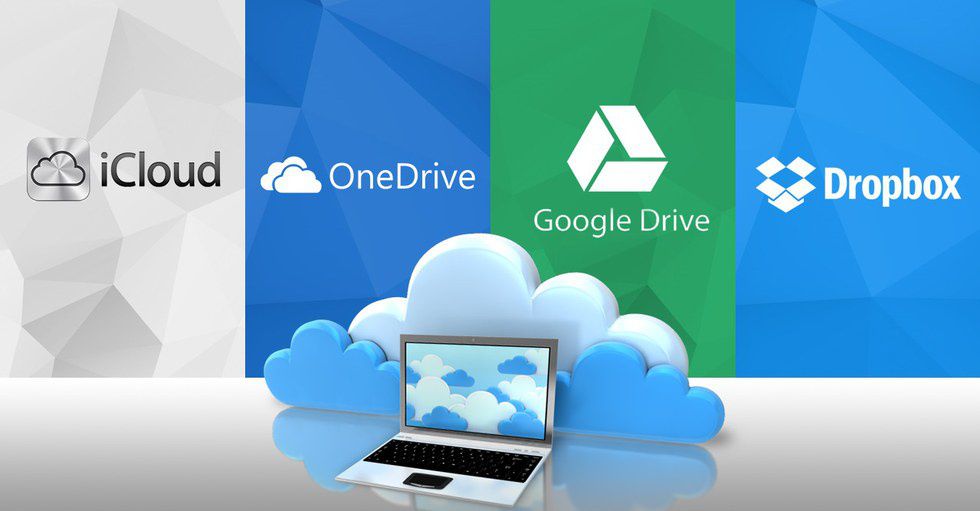
If anything Google Drive will work much better for all of your friends, since it’s so easy to share files no matter who it is or what they own, it works great for businesses, and allows 10GB more of free storage than iCloud does. Plus, it works great with your Nexus or Android device. Unless you have and use most or all of Apple’s products, it’s very hard to say that iCloud is better than the competition.
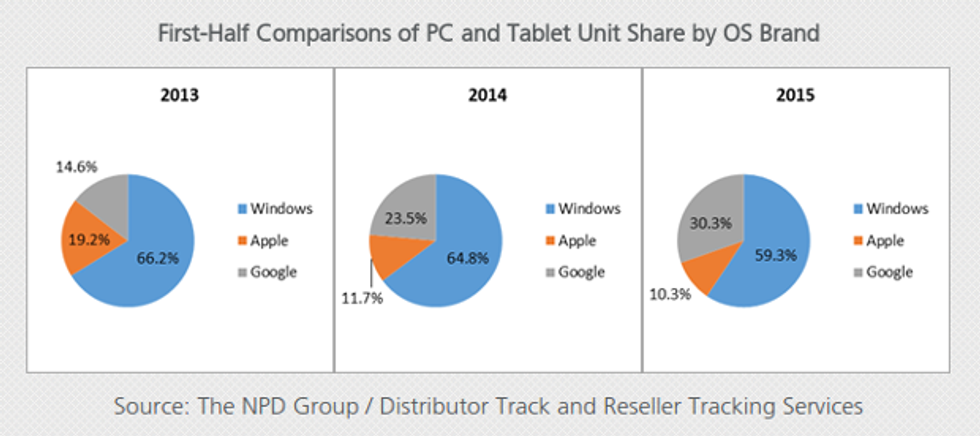 Chromebook Market Share is growing exponentially and reports now say that Android and Chromebooks are now starting to surpass Windows.
Google sports great syncing with Chrome, Drive, your Android, Gmail, and it’s host of other apps too. It’d be even better if you owned a Chromebook (which the market share for is growing exponentially). Most people don’t own Macs anyway, which makes the ability to sync across your devices less valuable.
Full Disclosure: False, on the not being able to be matched front, and false on its cloud capabilities.
Group chat works great and Android still has a problem with it.
Group chat has long been a problem for Android, but was something that Apple figured out much earlier. But now, unless you have an extremely old Android, group chat is no longer an issue. There’s plenty of apps available that make it much easier, like the Facebook Messenger and Groupme, and Google’s now native messaging app for the Nexus called “Messenger,” handles group chat very easily.
Full Disclosure: False
iMessage.
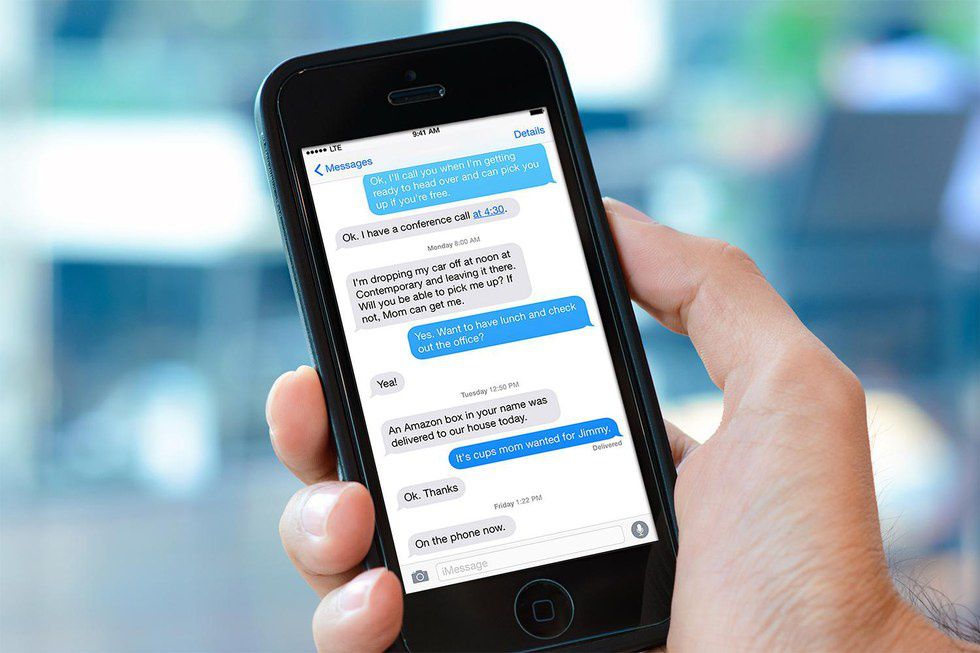
Android still hasn’t been able to match the power of iMessage yet. Google Hangouts works really well with Android to Android and works cross-platform as well (and it works for more than just Android users), but it’s not used as much or as universally as iMessage is. The Messenger app works very well and looks very modern, but doesn’t have the capability that iMessage does. For the time being other apps like Facebook Messenger will have to be used to see the “three dots,” see that your friend read your message, or syncing across your phone, tablet, and computer. Google is reportedly making another new messaging app in 2016, perhaps to bring it all together, so maybe this won’t matter anymore soon either.
Full Disclosure: True
There aren’t all those endless pre-installed apps from brands or carriers.
With the Nexus you get even less than your iPhone. The Nexus has only about 20 pre-installed apps, including very basic things like email, phone, settings or contacts. There’s hardly anything you’ll never use or at least look at.
You get the barebones and only what you need to use your phone. You can’t even get carrier specific apps because you can only buy the Nexus 5X and 6P unlocked.
Full Disclosure: False
There’s a great warranty program.
 The Nexus 5X pictured on the left.
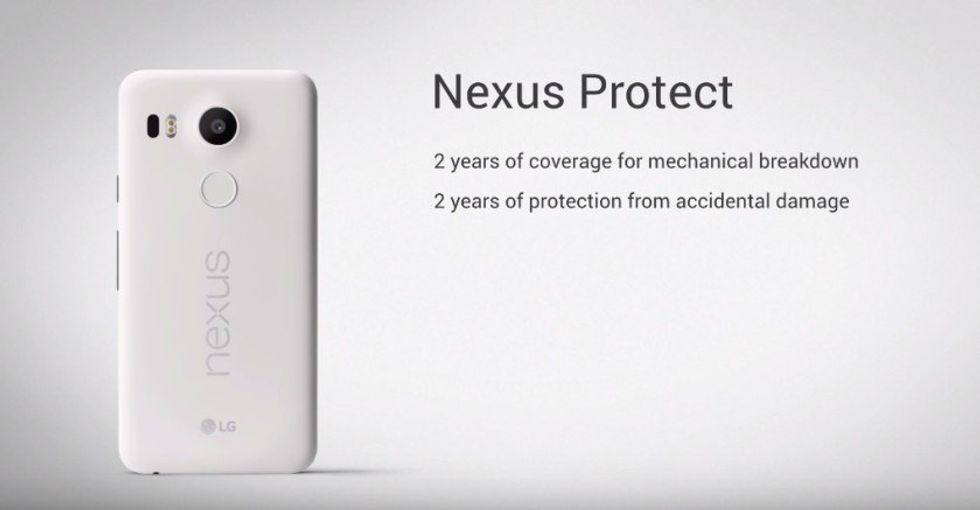
Yup, there is, but the Nexus has a great one too. Each Nexus comes with a one year manufacturer’s warranty, but as it says on the Google Store, “with Nexus Protect, your phone gets an additional year of coverage for mechanical breakdown and 2 years of coverage from accidental damage.” Plus, it’s only $69 for the Nexus 5X and $89 for the Nexus 6P.
Full Disclosure: False
They’re worth more when you resell them.
This may be true, but the Samsung phones are worth quite a bit still and you can sell them for quite a bit too. This is partly true about the iPhone because they start off so expensive anyway. This is alos based on popularity and how well the phone ages and still has current technology. Right now the Nexus 6P looks poised to be able to sell pretty well and last pretty long too.
Full Disclosure: True, but False sometimes too.
The Lightning Cable is way better than the Micro USB.
I could make an argument for this, but I don’t even have to because the Nexus now uses the far superior USB Type-C port, which will fully charge your Nexus from death in a little over 90 minutes.
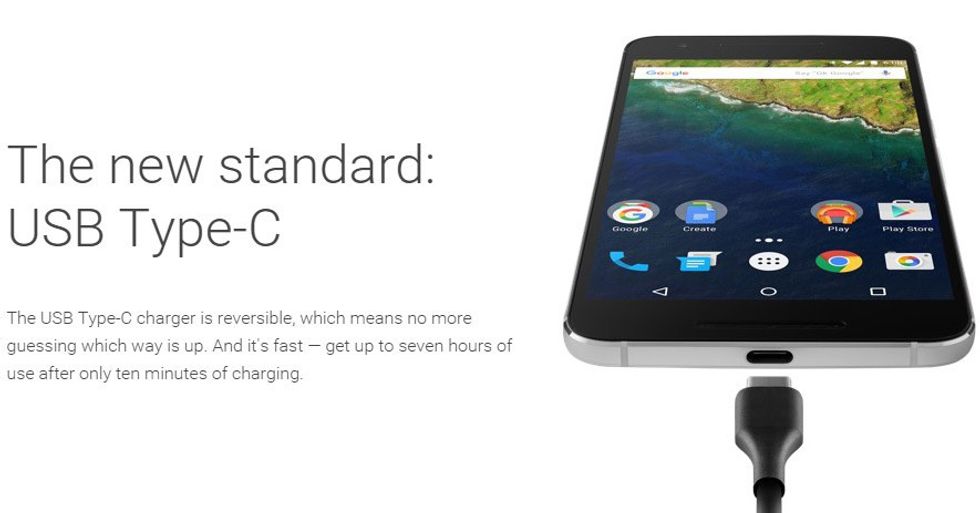
The Lightning Cable isn’t that fast, and while I’m at it, the Samsung Galaxy S6 and Note 5 actually fully charge in about the same time with only a Micro USB, plus there’s wireless charging too. Some of the earliest reports look like the iPhone 7 will keep the lightning cable as well.
Full Disclosure: False
Easy control with your Apple earbuds.
Apple has a history in music, and their earbuds are pretty good, but you can easily find other earbuds nowadays that have volume control and that you can talk into during a phone call. I myself have two. $15 ones from Amazon and some more expensive Bluetooth ones as well.
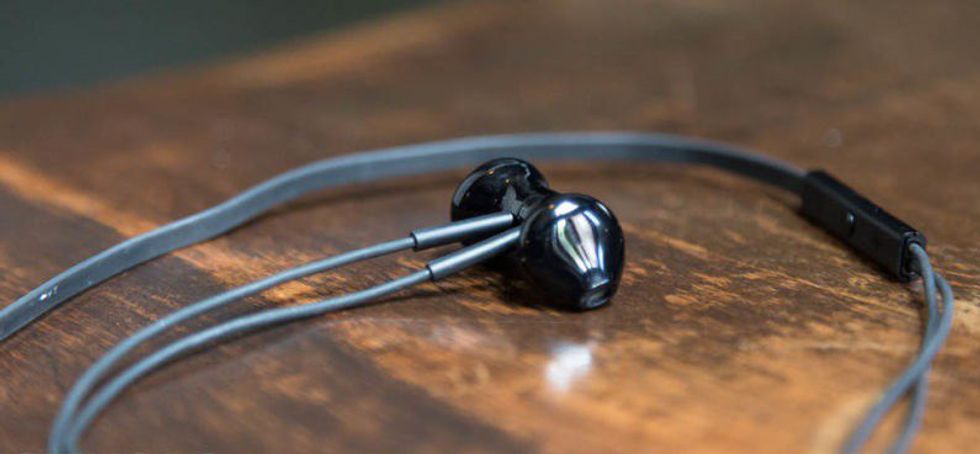 These Amazon earbuds work well with your phone, allow volume control, and use when in a call, as well as pausing music.
Full Disclosure: False
Facetime.
Android still lacks facetime, however, plenty of other apps and programs like Skype are used more frequently anyway. They’re not as engrained into the software as facetime is, but are worthy alternatives.
Full Disclosure: True
iCloud.
Google Drive. ‘Nuff said.
Full Disclosure: False.
Better control over app permissions.
Apple has long had the capability to allow only certain permissions for specific apps and with Android it’s either you allow all of them and download the app, or allow none of them and don’t download the app.
Well with Android 6.0 that has ended. The user now only allows certain permissions for an app when they are needed very much like with iOS.
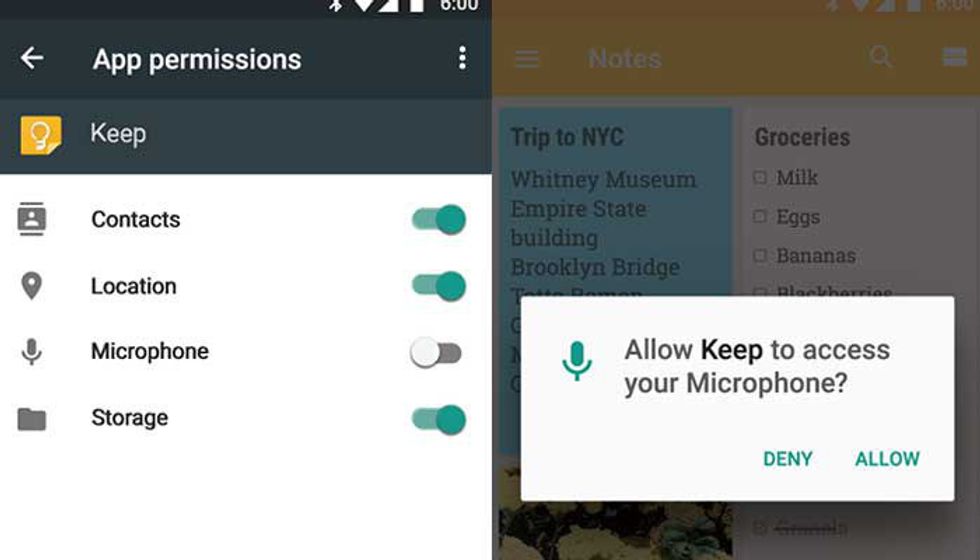
Full Disclosure: False
Better control over notifications.
This is hardly worth noting, but on Android Lollipop, an older version, silencing your phone was a little clunky, but the new Android Marshmallow (6.0) has alleviated this issue.
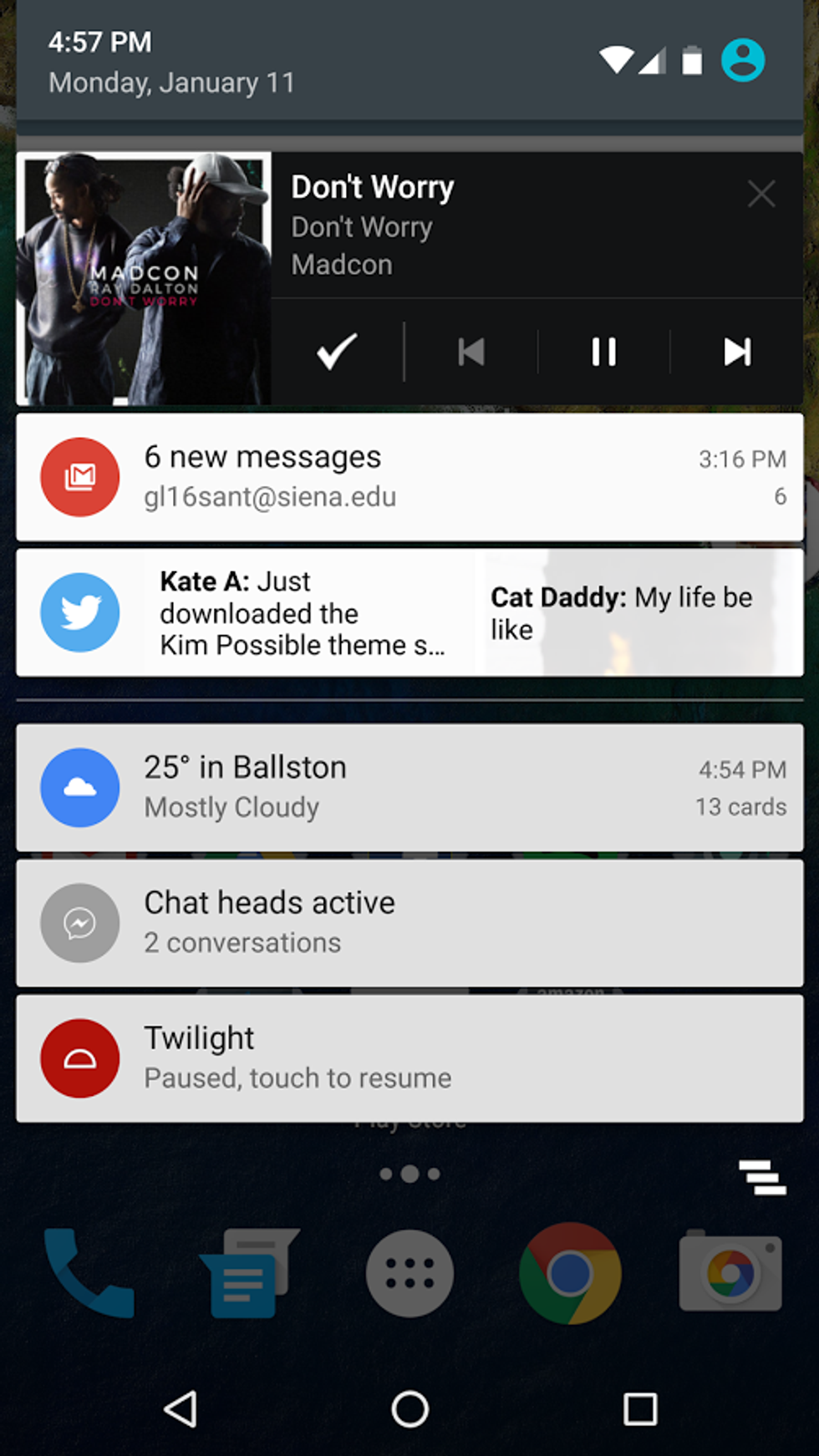 Notifications are organized well, Spotify looks great and the separation from notifications that are always there like Facebook Messenger make the Nexus notifications look great.
Plus, notifications are just more colorful on an Android, usually coming with pictures. Spotify and Play Music look great when you’re playing music on your phone and the Nexus easily separates the apps that always have something running on your status bar (like chat heads for Facebook Messenger) from new notifications.
Full Disclosure: False
Siri is the best personal assistant.
When Siri was released, Google Now followed quickly afterwards, and now Cortana is around too. The debate for which one is the best is heated, each getting updates here and there, one-upping each other until the next comes out on top shortly. For now, Google Now is pretty impressive and Siri is pretty impressive too, but it’s hard to say which one really is the best, plus we all probably use them less than we could to actually know the full capabilities of all of them.
Google Now is now Google Now on Tap which analyzes whatever is on your screen and tells you about a local restaurant a movie you mentioned in your texts or something in Chrome. Siri can finally be “called” and is “always listening” like how you can call Google by saying “Ok, Google.” Siri might be able to retrieve results faster, but they may be less accurate. In the end, it looks like a war of attrition for the two for now.
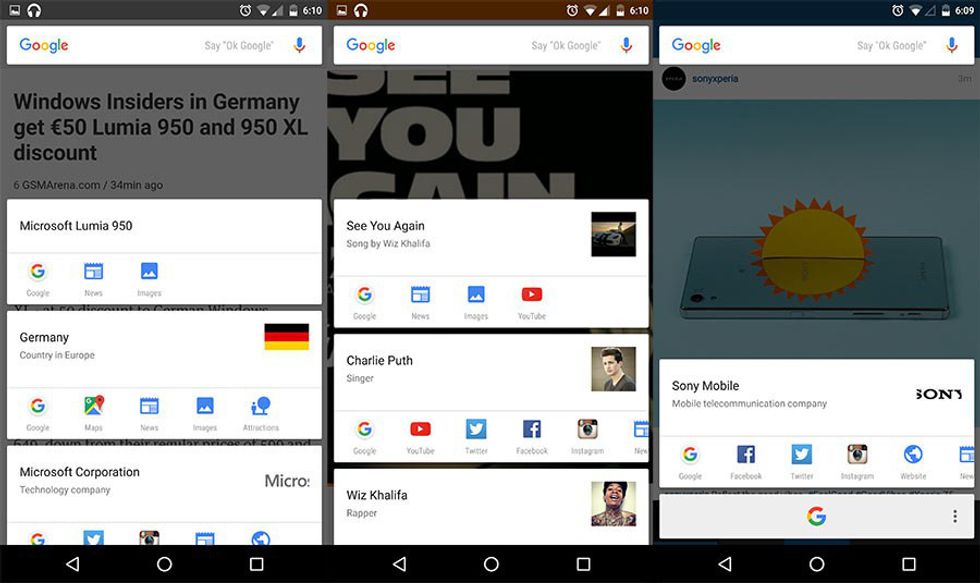 Google Now on Tap in action analyzing what is on your phone to give you information you’re looking for.
Full Disclosure: False
iTunes and Apple Music.
Apple has their newly launched Apple Music which combines together music on your phone and their Apple Music streaming service. In many ways it’s like Spotify, except buggier, with less features, less music, and there’s no free version either, only a 3-month free trial.
Why you would want to switch away from Spotify I have no idea, but it’s there to use. It may make sense to try out if you’re an iPhone user and have a lot of Apple products, but otherwise Spotify is still the king and Apple Music joins the likes of Play Music (which has been around a while for Android) and the new YouTube Red (also Google).
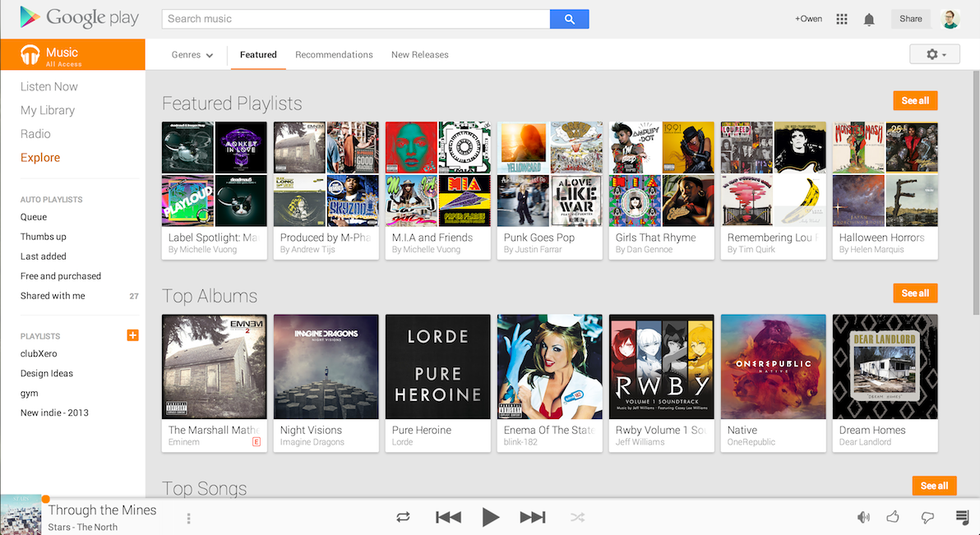 Google Play Music
Full Disclosure: False, Android already has this. And Spotify.
The overall speed of iPhones is better and it all “just works.”
iPhones have long been known to “just work.” There’s less major issues, there’s less lag, and the hardware and software just work together better because the software was designed for the hardware and vice-versa.
Well for the first time, the Nexus brings superior quality, amazing speed, and that “just works” feel to their Nexus 6P to create a fantastic phone that rivals the “just workness” of the iPhone. It’s truly a great product.
Full Disclosure: False
So many of these criteria have once been true, but with the new Nexus 5X and 6P and Android 6.0 most of these “truths” about Apple and iPhones just aren’t true anymore. If you were keeping track, that’s only 4 out of 22 that hold up still. And really it’s only Facetime and iMessage that iPhone has above Android. Android’s come a long way and its momentum is carrying it pretty far.
So What’s Apple Missing?
However, there’s things that Android has that Apple took forever to pick up or still doesn’t have, and there’s some great new features with Android 6.0 and the Nexus that iPhone’s don’t have either. Here’s what Android has that Apple doesn’t
No NFC.
Apple iPhones still lack NFC. It’s not a majorly important feature, but it’s something that Android has had for many years now.
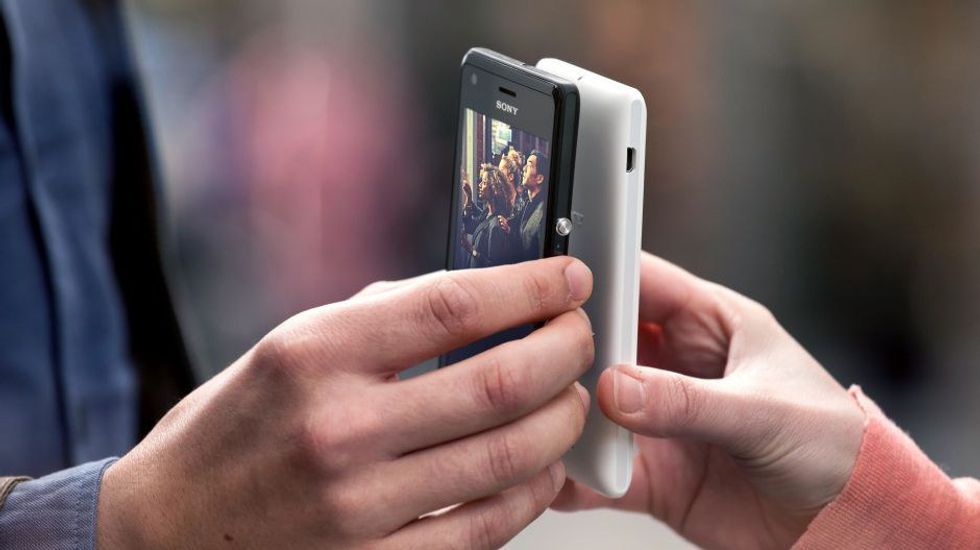 Two phones exchanging a picture simply using NFC by holding the two phones up to each other.
The iPhone 6 and 6S have it only for Apple Pay, but it can’t be used for something else, which means you can’t automatically transfer a file to someone’s phone just by holding your two phones up to each other. A pretty awesome futuristic feature that the iPhone lacks, except for Apple Pay. Someday they might get it.
Swype.
Swype, the easy way of typing by just swiping your finger across the keyboard to type a word, had been with Android for many years before Apple finally got it in 2014 along with predictive word suggestions. Unfortunately, many iPhone users still type with their two thumbs because they haven’t realized its greatness.
The iPhone has never been waterproof.
While some Android phones have experimented with water resistance like Samsung, no iPhone has ever had this. Reports for the iPhone 7 say they may be trying to make the new iPhone waterproof, and Samsung has said they may they bring it back since their Galaxy s5 had it.
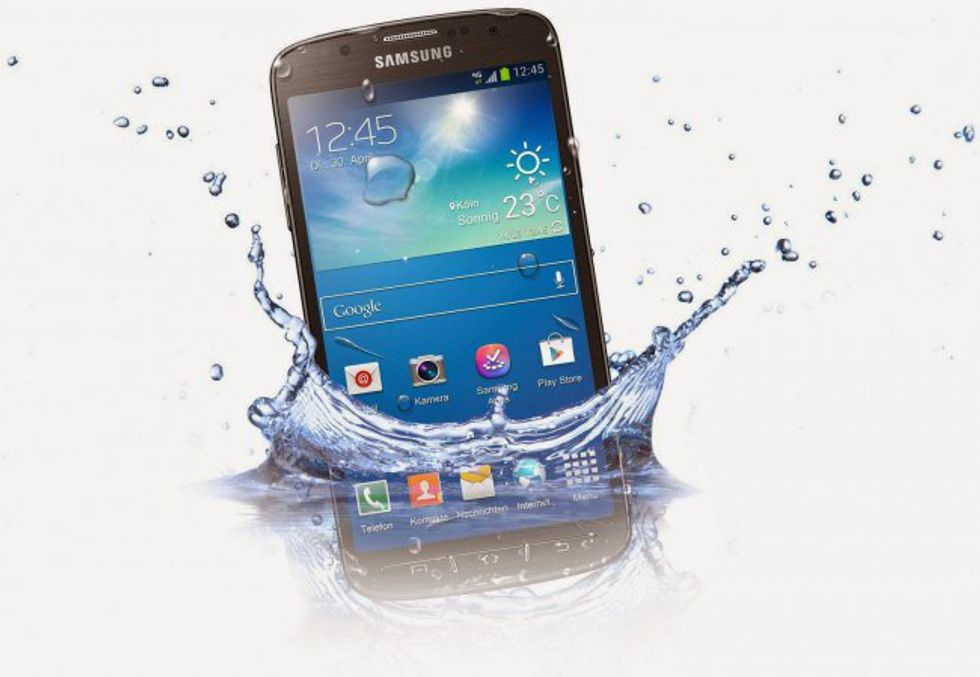 Perhaps most famously, the Samsung Galaxy s5 was waterproof. Check out this whole list of other Android waterproof phones.
Widgets.
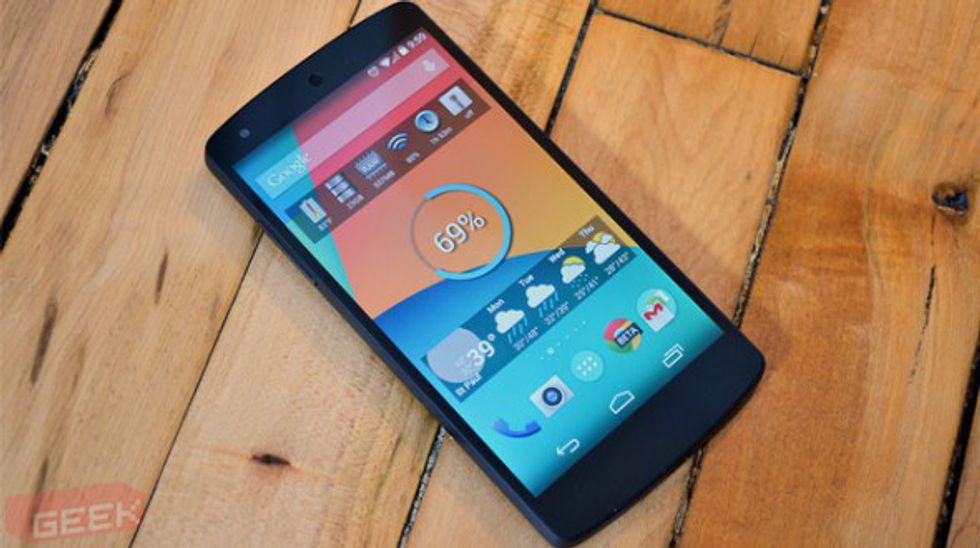 Widgets on the home screen of an older Nexus 5.
The iPhone finally got support for widgets in iOS 8, but they aren’t on your home screens. Widgets have been a long time feature of Android dating back to its very beginnings, and are well built into it, but Apple hasn’t decided to go the way of Android and put them on the home screen to declutter the endless pages of square icons.
App Drawer.
Speaking of all those square icons, iOS still lacks an app drawer like Android has had since the early beginnings.
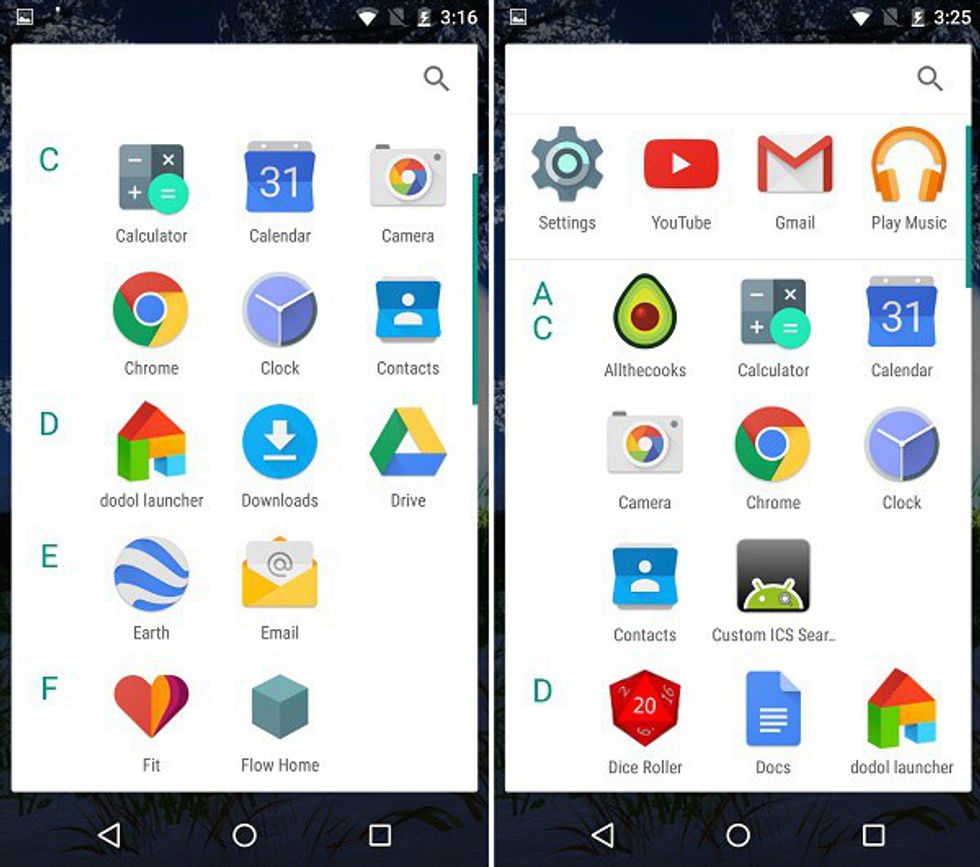 The app drawer on Android 6.0
It’s a style choice for Apple, but it’s still nice to hide those apps that you hardly ever use or the pesky pre-installed ones that you wish you could uninstall in the app drawer so you don’t have to look at them all the time.
The New Smart Lock.
With the new Nexus’ you can set up your phone to be unlocked based on if you’re at your house, sitting at your desk, connected to Bluetooth, or other specific circumstances. This way you don’t have to deal with unlocking your phone all the time when you’re home for example. Nothing like this has ever existed with the iPhone.
The new layout for making calls and for contacts.
The layout on the Nexus is much nicer to make calls and to look at your contacts than on an iPhone 6S. Check it out for yourself.
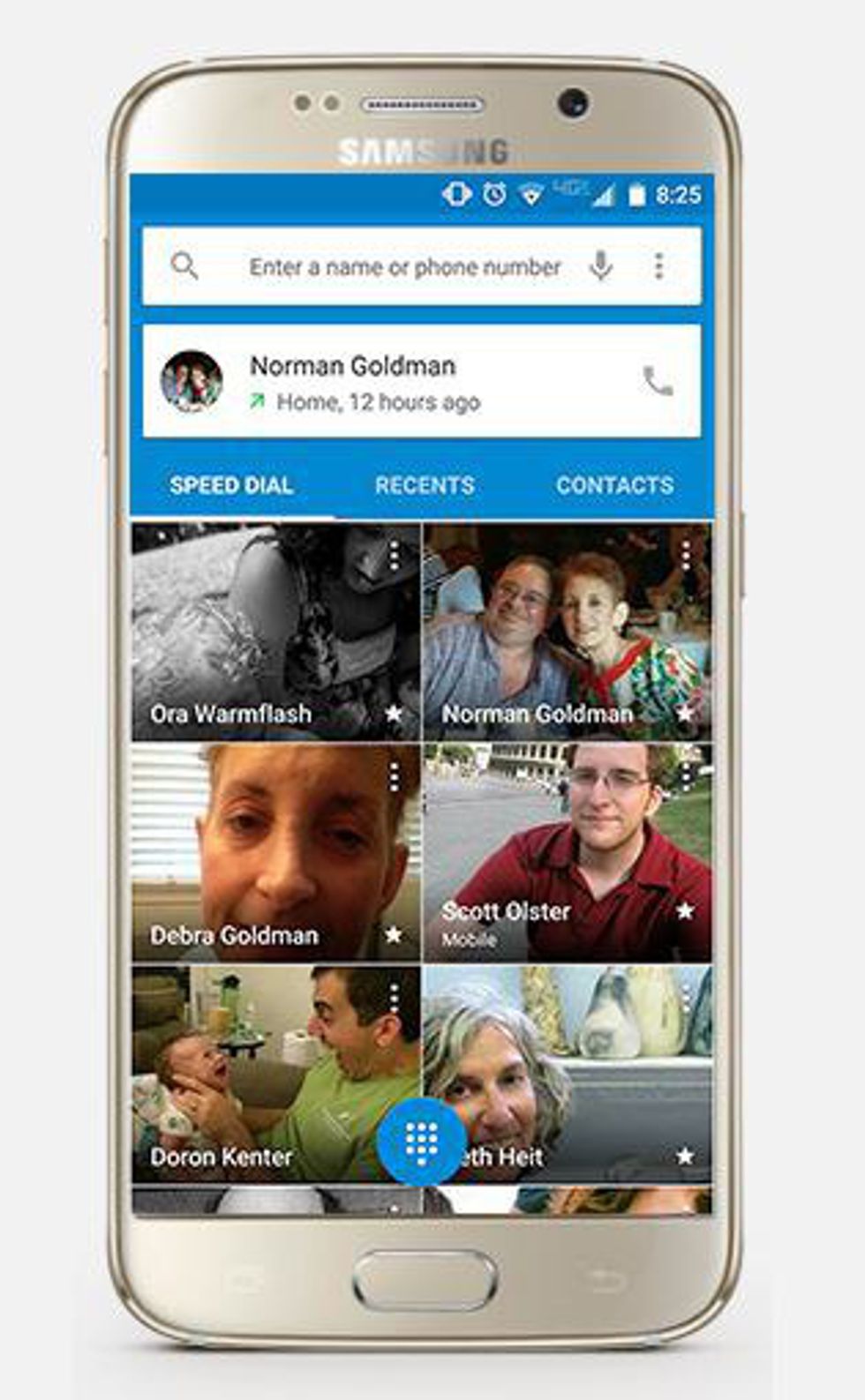 The layout of the Call app on a Samsung.
Ambient Display
Newer versions of Android all have a great feature called ambient display. With Ambient Display you can simply pick up your phone or look at it when the screen is black and locked, and your Android will recognize this, and show you your notifications in greyscale using basically no battery.
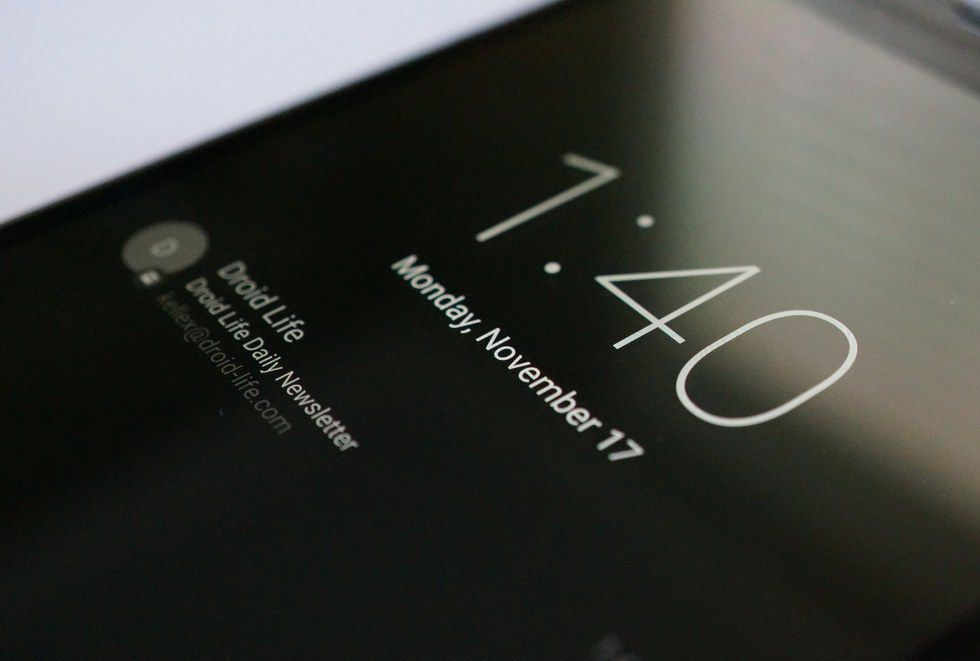 Ambient Display on the new Android 6.0
This way you don’t even need a battery draining notification light. You can also change which notifications will be displayed and how much of the notification if you’re concerned about others reading your notifications.
Easy Gallery and Unlimited Storage.
The gallery on Android 6.0 is a very simple app that organizes all of your pictures easily and backs them all up to Google Drive. You can make “collections” with your pictures that tell stories, or Google can do it for you. You can even search across your wide selection of photos by where you took them, people in them, tags, colors in the pictures, and other great ways rather than scrolling through them all to find the one picture you wanted to show your friend.
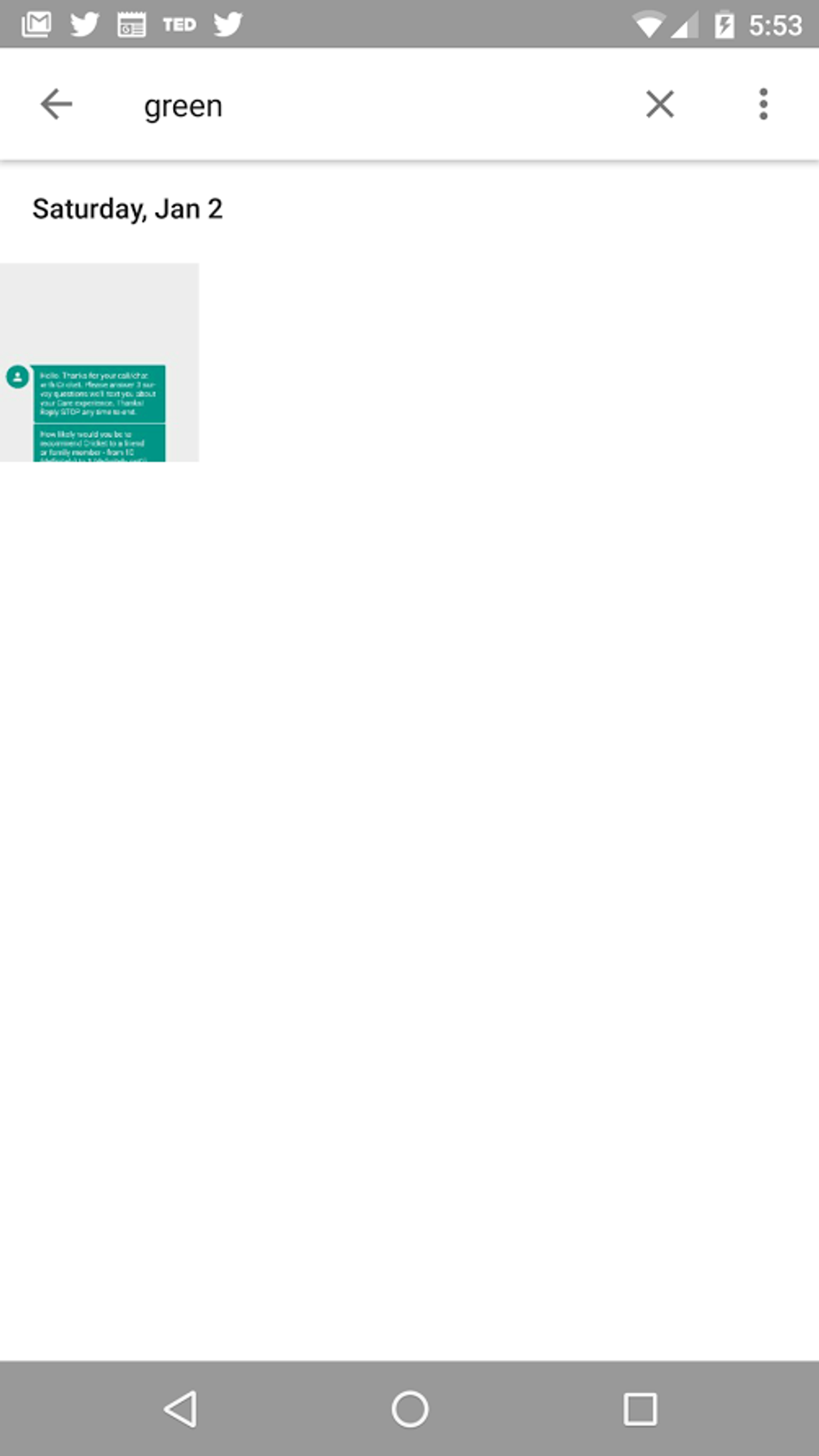
Search for the color green and you’ll get pictures with green in them, for example.
Plus, if you’re an avid picture taker you can save your pictures in lower quality (which is actually still good quality) in your Drive with unlimited storage. Otherwise your storage is your typical 15GB of space that comes with Drive.
Google Drive is great.
As previously discussed the capabilities with Google Drive are fantastic and pretty much everything can be backed up through your Google account, which includes contacts, pictures, music, books, documents, videos, among others, plus it’s incredibly easy to share things and you get notified when someone wants access to something.
With a Nexus phone you’ll be intimately connected with Google Drive, and if you already use or have used Drive before it’s an easy transition with added benefits. Plus, there’s all of Google’s other great apps like Hangouts and Google Keep that sync across devices.
Big Screens.
Android pioneered the big phone movement with phones like the Samsung Note and beginning to increase many different lines of phones to bigger sizes. iPhone had to copy this and was behind the times until recently.
The Fingerprint Scanner.
Believe it or not, the fingerprint scanner was another feature that began with Android. In 2011 Motorola released their Atrix which worked in much the same way that the original iPhone 5s did when it was released in 2013.
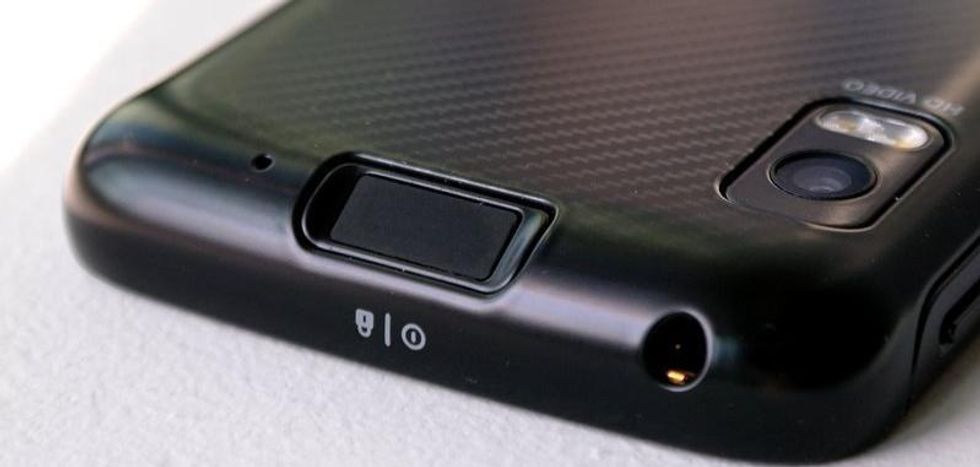 The fingerprint reader on the Motorola Atrix from 2011.
Since then, better fingerprint scanners have been made, and Huawei is known for some fantastic ones as well.
Android has a better keyboard and has for a long time.
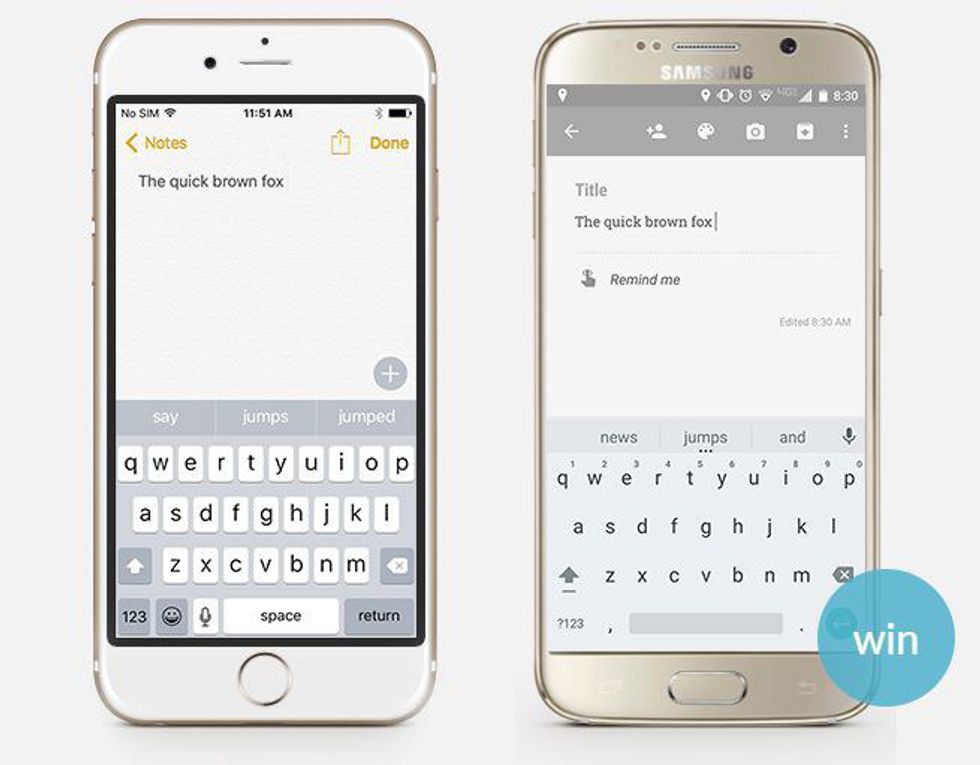 The iPhone compared to Android running on a Samsung.
Beyond Swype, Android has a keyboard that has more features and is very customizable to the user. The Nexus comes with four different keyboard skins and there’s plenty more to download on the Google Play Store. Punctuation is on the same screen as the letters, there’s more symbols and the swipe gestures still work better on Android, where it’s had many more years of experience. By the way, Android has all the emojis that the iPhone users have too.
Gmail looks way better.
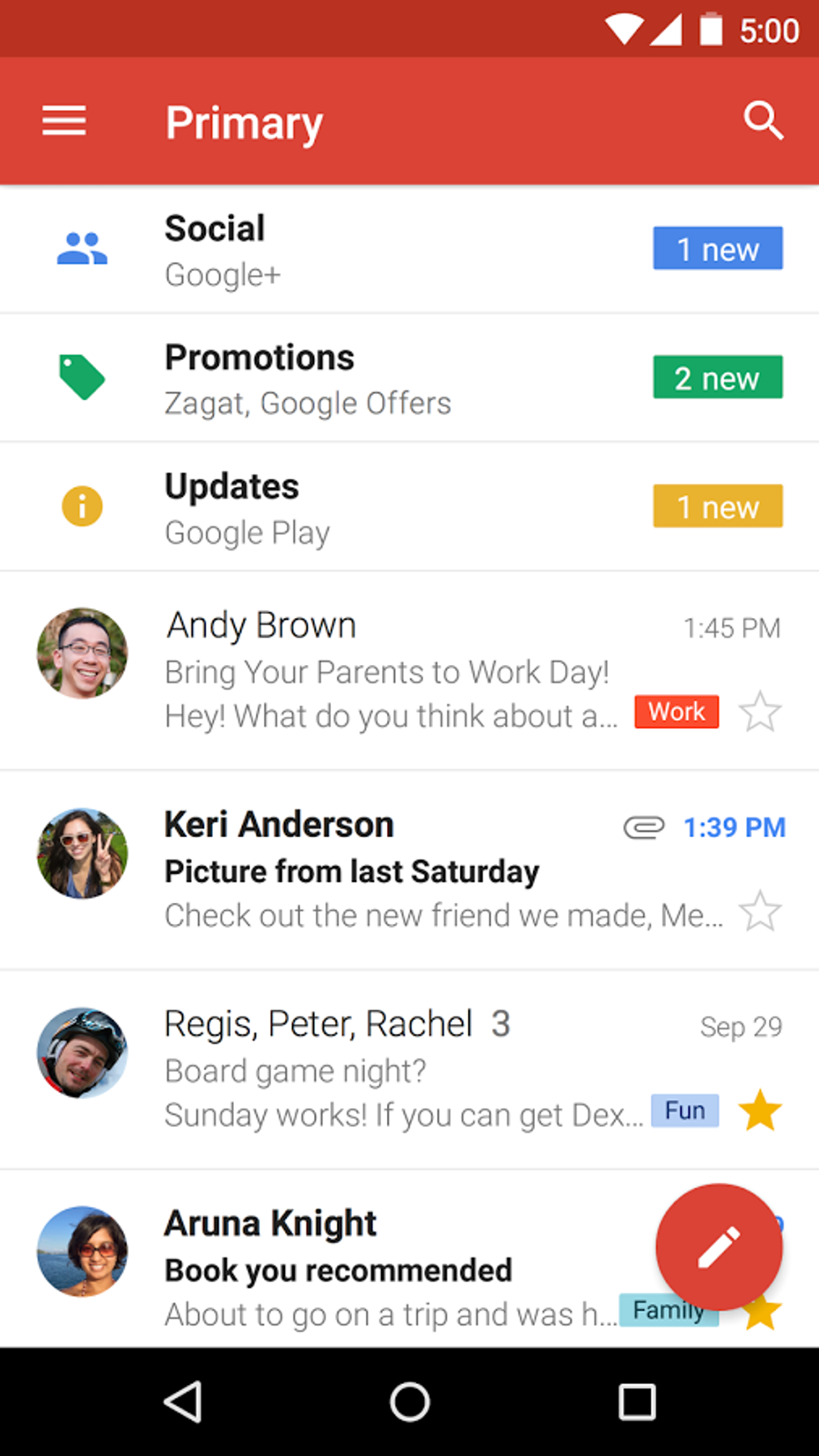 The latest version of Gmail for Android.
Gmail is Android’s default email client, and it looks gorgous and runs very well, but on iPhone it lacks a lot of color and the iPhone’s email client is a little drab. Plus you can easily browse folders or switch accounts with the swipe of a finger to the right.
Google Maps is far superior to the stock Maps on iPhone.
Simply stated, you can do much more with Google Maps and it’s much more accurate than on your iPhone. It’s available for iPhone as well, but it’s natively built into Android and the Nexus so Google Now can use it and any directions or updates on your commute or transit use Google Maps as well.
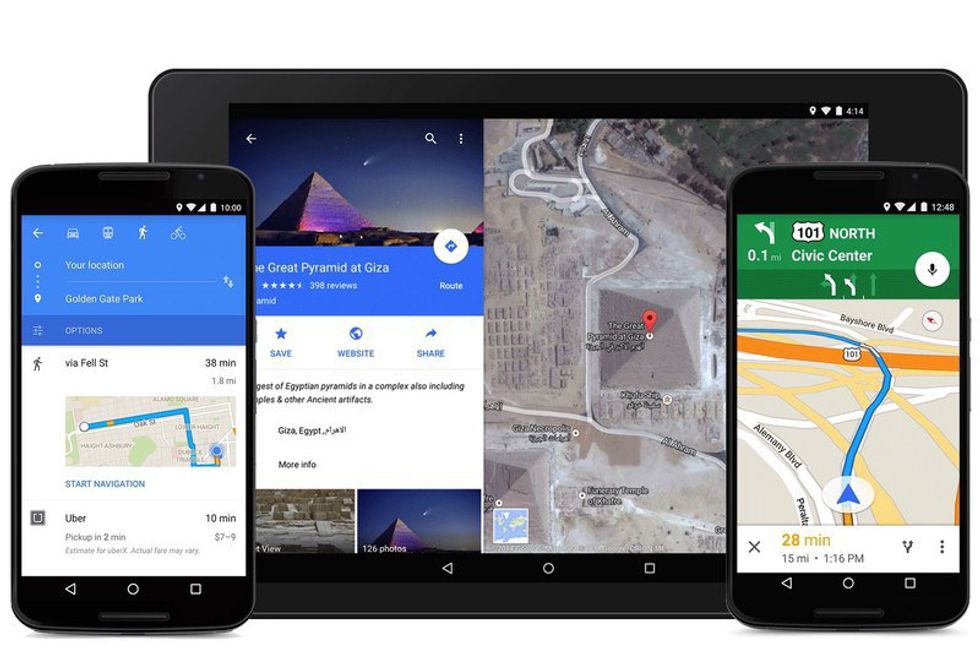
Google definitely has this one nailed down well, so you might even be able to hold off on buying that expensive GPS for your car.
The Nexus 6P is WAY cheaper than the iPhone.
A brand new 32GB Nexus 6P will cost you only $499. The 16GB iPhone 6S costs $649 and the 16GB iPhone 6S Plus costs $749. Lasts years’ model is still more expensive than the Nexus 6P too. The 16GB iPhone 6 Plus costs $649 still. Plus, that’s only 16GB so you’ll probably want to add more which will cost you another $100.
Of course, you can trade in your old ones, but that only works if you have an old one. You can also get iPhones through a carrier, but then you’ll only be paying bigger monthly payments. Alternatively, the lower powered Nexus 5X in 16GB will only cost you $379 brand new.
Save some money and buy yourself a Nexus.
Android is more open source and much more free to change to your liking.
With the iPhone what you get on the iOS is basically what you get, but on Android you can practically customize anything. With the endless amount of apps on the Play Store you have endless customization opportunities, and Android can become what you want it to be, you’re free to tinker with it. With Apple, what you get is what you get.
The Design of the iPhone is nearly the same as it originally was.
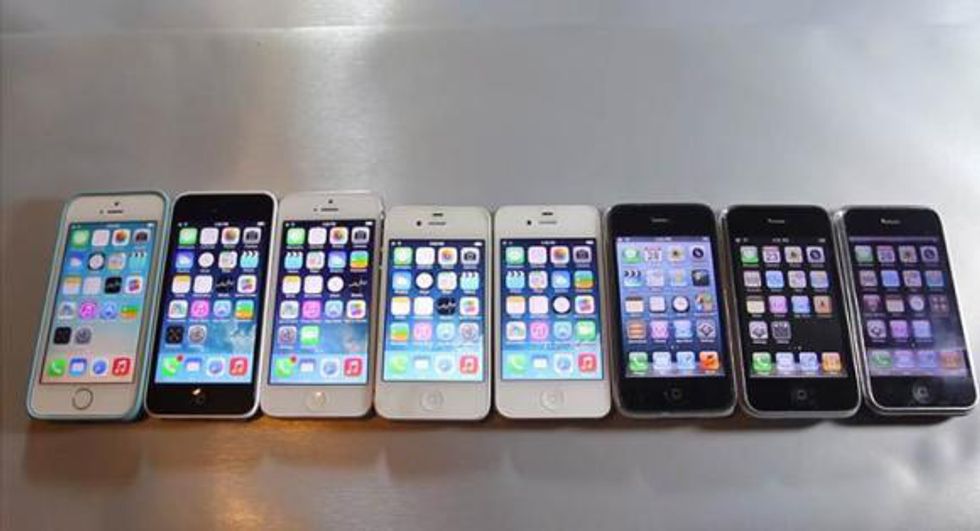 Not much has changed over the years.
Android has changed a lot, but the iPhone 6S doesn’t look too drastically different from the first iPhone. Sometimes it’s better keep things the same, but not this long. It’s still the same endless pages of the square icons. And it feels outdated.
Apple’s new iPhones do come with the impressive feature of “3D touch,” which is the new pressure sensitive feature that allows you to do different actions depending on how hard you press down on the screen. It’s an impressive feature, and the iPhone 6s Plus is an impressive phone, however, there are alternatives. And if you’re willing to give up the UI of the iPhone for something new, you might find Android 6.0 and the Nexus 6P is your best alternative, and perhaps even a better smartphone experience.
The game has changed. Android is moving ahead faster and their new features are piling on, and in the coming years Android may become as influential and superior as Windows once was. Their growing market share numbers would certainly suggest that. For now, though, if you want the best smartphone in existence right now, the Nexus 6P is your only choice.
This infographic gives a brief history of Android.