
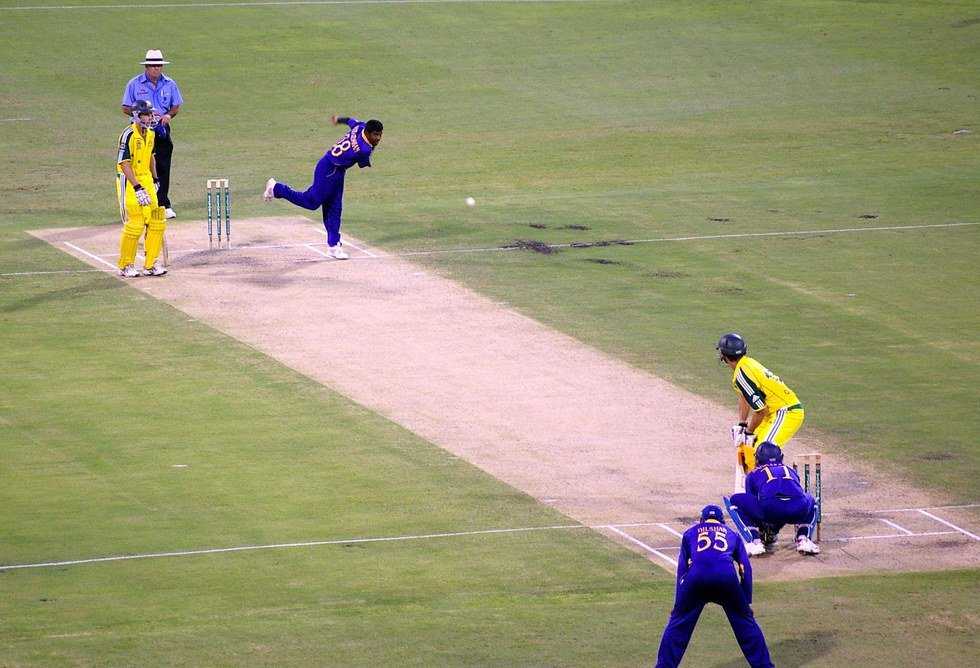
There mightn’t be a topic as intriguing in the entirety of United States sports than that of the growth of cricket in the country. It’s a sport that has a reputation stateside of being complicated and boring, with people also referring to it as “bad baseball” and confusing it with the similarly named croquet. However, despite all odds, cricket has begun to show signs of resurgence since it was last loved by its citizens in the 1800s. Meanwhile on the world stage, billions of fans around the globe have become enthralled with a new, explosive format of the age-old game. Cricket is a sport that can now appeal to average Americans through the athleticism and strategic mind it requires. Perhaps it is time for Americans to take a second glance at the gentleman’s game and maybe fall in love all over again with their forgotten original pastime.
A rather common phrase said stateside about cricket is that the sport is too complicated to understand. In reality, at the core of the sport, it is played with a batsman hitting a ball and running to the other side of a 22-yard rectangular pitch. Where it differs from other sports is the “complicated” part and one of the reasons billions of fans adore it so much. Aside from athletic ability, cricket is a game of immense strategy. On the field, this strategic “game of chess” is being played not between two teams, but between two captains. In cricket the captain not only provides a morale boost and leadership for the players, he decides who bowls (bowls means “pitches”), who bats where (in the lineup), and how fielders are positioned.
Field placement is perhaps the most difficult of all the skipper’s duties. In a match, there are only 11 players per side. When fielding, only nine players are allowed to be moved by the captain at any time in the match. The bowler (which is allowed to be switched out with a fielder) and the keeper (catcher) are positions that must be played at all times. Restricting the captain even more, limits on the amount of players that can be in the outfield prevent him from putting all his men on the boundary line of the ground. Forcing him to guess where the batsman is most likely to hit the ball and work accordingly.
It isn’t enough for the captain to place fielders around the ground. These fielders need to do their part in reducing the amount of runs scored by a team. In order to do so, they must be at peak physical fitness and athleticism to catch or chase down a cricket ball racing by at high speeds. Batted balls in cricket can roll or soar at intense paces, being simply just deflected or redirected fastballs from the batsman. Quick reflexes and pure speed (maybe a dive or two) are required on many occasions. Fielders sometimes have to cover 20 to 25 yards in a matter of seconds in desperate attempts to get their bodies in the way of a speedy ball skimming down the outfield.
Athleticism isn’t limited to fielding in cricket. Even when bowling, a fast-bowler runs up to the pitch and hurls their body at the batsman, releasing the ball at speeds ranging from 80 to 105 mph. During this run up the fast bowler covers (on average) a distance of 25 yards before releasing the ball every time. In the shortest format of the game, a bowler can bowl up to 24 legal balls maximum per match. This totals 600 yards on average being run by a typical fast-bowler and the same player still has another 96 deliveries to see out on the field. Even so, a bowler still might be required to come on for his team and bat, where he has to run 22 yards over and over again while wearing bulky protective gear. This includes leg pads, a thigh guard, a helmet, an arm guard, gloves, a cup, and the bat itself. When the match is done and dusted a fast bowler may cover over 1,000 yards worth of ground before he is able to retire back to the pavilion for the day.