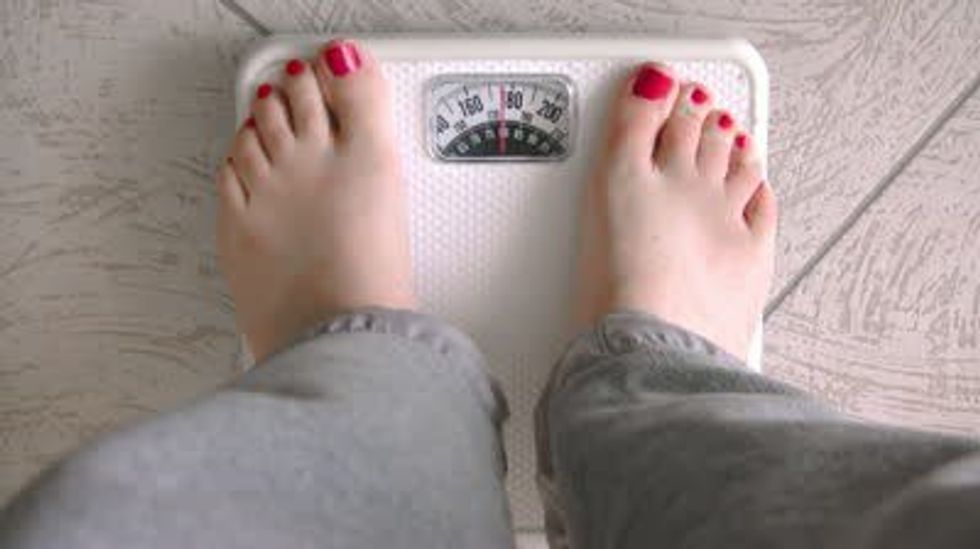
The truth is, I’d never thought about skinny-shaming or even knew it existed until I starting living it. Last fall, I went to a friend’s homecoming party and was greeted thus: “Sherby, I missed you. Bring your little Holocaust body over here.” My friend then wrapped me in her arms and said she wanted to force-feed my emaciated body. I’m not one to turn down free food, but this seemed a bit rude, even with the generous offer of a home-cooked meal.
So what is skinny-shaming exactly? Let’s talk about it. Body-shaming as a whole is understood as unsolicited and harmful comments and perspectives in regard to another’s appearance, particularly weight and/or size. The term is then broken down into two categories to accommodate the most common forms, fat- and skinny-shaming.
Skinny-shaming is a relatively new term used to describe the drawing of attention to someone who is considered smaller than the cultural norm. The phrase is associated with slender body types (think cocaine chic) and the unhealthy habits sometimes associated with reaching such standards. If I had a nickel for every time I was accused of an eating disorder...well, you know the drill.
So, what is the cultural norm? It’s sort of like a standard of size. For women, the norm is commonly considered a size six. For those who may not know, a six generally fits a woman with a bust of 36 inches, waist of 28 1/2 inches, and a hip measurement of 38 inches (think Jennifer Lopez). That leaves huge range for potential body types. Try to imagine “skinny” on one end of a spectrum with “fat” on the other. Got it? Now put the ideal size, J-Lo, in the middle.
Perhaps the better known of the two, fat-shaming is the action of drawing attention to someone who is considered larger than the cultural norm. As Americans, we see examples of fat-shaming everywhere, from magazines and television to your own grandmother’s observations in the grocery store. I mean, we’ve all heard the comments: “she should not be wearing that,” or “he is really unhealthy.”
Both terms can, and often do, result in a number of harmful outcomes, the least of which are hurt feelings and lowered self esteem. In my case, I must admit that despite how comfortable I am with my body and how I appear, I felt pretty bad about the whole experience. An experience I later learned has a title: skinny-shaming. Let’s look at it again. My friend said she missed me over the summer. Good, I missed her too! Then she compared me to a Jewish person liberated from Auschwitz post World War II. Maybe not so good.
Objectively, it may be hard to take body-shaming seriously, I mean, it doesn’t seem like a big deal, right? But what if someone claims that you are not a “real woman” unless you are a size six? I’ve heard this expression so many times that it’s practically a cliché. What people often fail to realize is that a six has sizes above and below it.