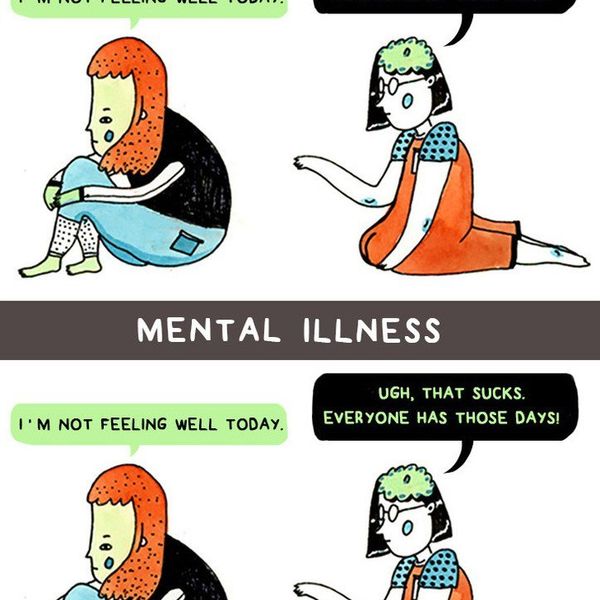
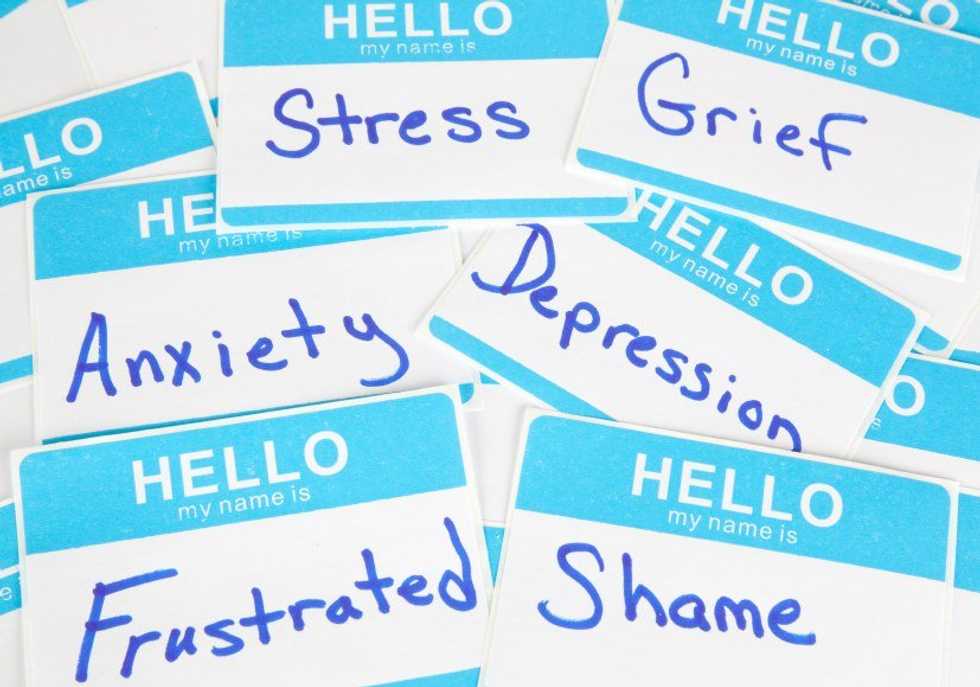
Statistics show that one in five adult’s in the United States are diagnosed with one or more mental disorders in a given year, which is approximately 43.8 million people.
In my book, however, the amount of people who actually acknowledge these individuals who have mental disorders or attempt to understand what they’re going through is slim to none.
I know several people, who are very close to me in fact, that have a mental disorder. I, however, would prefer to call them psychiatric survivors.
The survivors in my life, they have been diagnosed with anxiety and depression just to name a few. Due to them having these disorders, life isn't always easy for them and people in society fail to realize that having a mental disorder can really take a toll on someone's life. I have seen this firsthand.
I have seen the panic attacks, the struggling to breathe, the sadness that doesn’t go away, the desire to do nothing but lay in bed, the look that says, “I am so lost” displayed on one’s face.
People need to realize that life is not simple for those who have mental health issues. They also need to realize however that just because a person does deal with mental and emotional challenges, this shouldn't outline how you see them and it doesn't affect the person they are.
Actually, often times people will never even realize if their friend or family member deals with mental health issues until said person chooses to tell them. So don’t change your opinion on someone if they have been diagnosed. Instead, just be there for them when they need it and let them open up to you at their own discretion.
It can be hard to open up about what one is going through because most people in America aren’t educated about mental disorders. Therefore, they just consider the term “mental disorder” something horrid and unspeakable. The term then comes to be the elephant in the room.
Mental disorders shouldn’t be stigmatized this way, though, for they are so much more common than people think and they deserve to be discussed to help those who have been psychiatrically diagnosed and are seeking to find ways to cope with this. Simply put, mental disorders deserve the right to be acknowledged and not ignored.
According to Archives of General Psychiatry , Ronald Kessler states that almost half of all Americans will reach the criteria for some type of mental disorder sometime in their life. In most cases this starts usually around the time of childhood or adolescence.
However, people are not aware of this fact that Kessler refers to. Also, often times it is hard for one to discover if they have mental health issues, especially if it is a mild case because one might just think the little things they overreact or get sad about are normal. They might think everyone thinks or experiences things in much the same way they do. This then leads the person struggling to just deal with cards they were dealt, thinking nothing of what they're going through when in reality they might actually have a mental disorder.
Yet how would they know? How can a person know if they have a mental disorder when the majority of society neglects to talk about the topic. How can they know that if they sought out help, even just counseling, that the problems they often deal with could be coped with in a much healthier way?
I'll tell you what, they can't. Society's multiple misconceptions about mental disorders lend to people not being aware of psychiatric disability’s, and this need to come to an end. People need to start seeking to understand psychological diagnoses as a whole. While I have recently noticed certain strides of people trying to do so, more needs to be done.
Acceptance needs to happen. Acceptance in that not everyone is wired the same and that’s okay. Acceptance in that certain things are passed down to us from our parents or grandparents in which we inherit these disorders and that too is okay.
What is not okay is for people to be oblivious to mental disorders and how big of a problem it is. It is not okay that people don't talk about mental disorders.
While I don’t want to attack people who aren’t as familiar with this as I am, this article, in a way, serves as a first lesson.
Mental disorders are real, they are common and people of all ages suffer from them. Whether they choose to disclose this information or not, a person may seem so put together on the outside but inside they’re falling apart.
So just pay close attention and be there for someone if you do discover that he or she has a mental disorder. Also, become educated on the issue. It is time that mental disorders are acknowledged and recognized.