
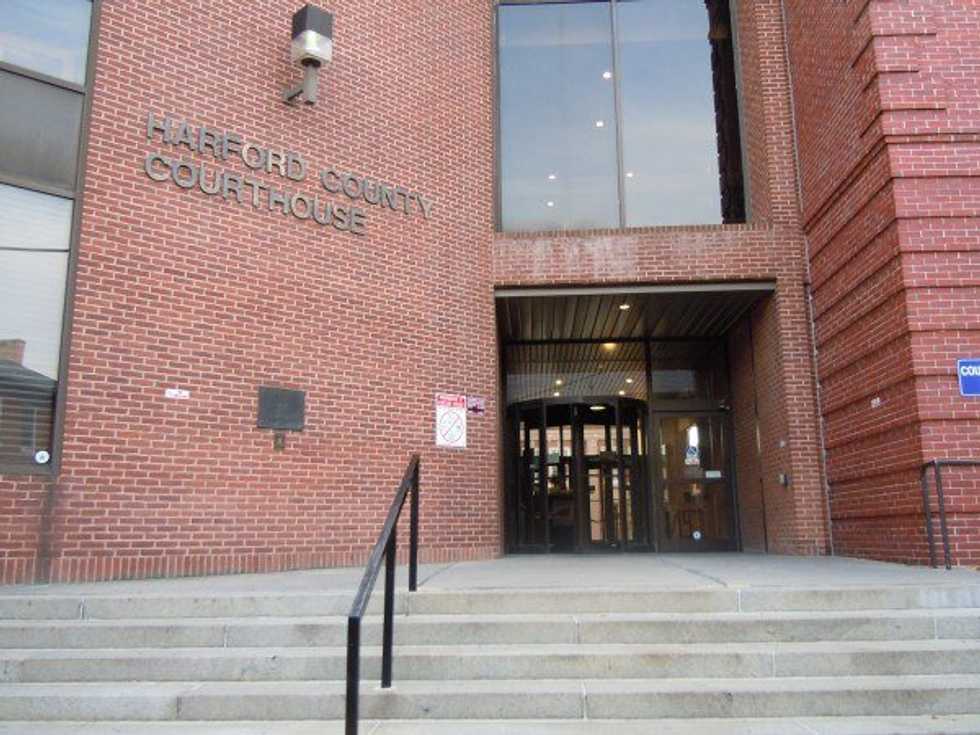
I spent the majority of my youth in a small town in Harford County, Maryland called Bel Air. It's a town where everybody knows each other, lives very close to one another, and seems relatively safe. Bel Air has a dark secret though: we're plagued with rape culture.
When I was still at the high school, I shared a guitar class with a boy named Alex Lori. He seemed like a hip, talented, friendly sixteen-year-old, until he wound up at the detention center. A girl had visited the emergency room after complaining of abdominal pain, only to admit to her parents Lori had attacked her at night. She recounts him threatening her with a knife and a lighter, saying he would burn her face off. She was bitten and struck in the head.
The legal response seemed alright. He was charged with first, second, third, and fourth degree sex offenses. He was originally denied bail, a wise move, but later a bail of $25,000 was set, and he was released with drug and alcohol supervision because he continued to party after he raped the girl.
People from my school staged protests and made "FREE ALEX LORI" t-shirts. I distinctly remember them proudly proclaiming their solidarity with a rapist on Facebook and people calling the girl a "hoe." All I could say was, "Why are you siding with the accused if your reasoning is we don't know what happened?"
But we did know what happened. There was evidence people didn't want to believe. Lori's sister, Patricia, said, "her brother wanted to change the world and would have been the first to help the girl he is accused of assaulting, not hurt her."
The truth is, it doesn't matter what kind of people we think rapists and abusers are. A rapist can seem like a perfectly sane individual to the outside world, but still commit a horrible, violating act. We cannot let our concern for our loved ones blind us from the truth. At the end of the day, no matter who it is, those people were against someone who went through the painful process of taking it to court.
More recently in August of 2015, a victim called the police after being raped by two men in a parking garage. They were brothers. Although she went through a four-hour exam, the courts found the one brother not guilty on all counts, despite the evidence presented. The defense branded her as a sex worker (as though sex workers cannot be raped), saying she asked for $100. They said she was pretending to be emotional for sympathy.
I happen to know a number of other women who have shared with me their own rape stories, committed by people who graduated from our high school. It seems very odd that so many rapists have come from here alone.
We need to come to understand that rapists can be our most trusted family members. We need to understand that no one goes to the hospital in the middle of the night to have tools shoved inside their recently violated genitals and have their bruised body photographed for the heck of it. That's simply not true.
Why is documented evidence not enough? Why does it matter if victims were intoxicated? Why does it matter if they originally consented? Consent is active and on-going, and as soon as it is not present, the act becomes "rape." It's disgusting that in both cases, the legal forces continued to refer to the acts as "sex." It's an epidemic. Something has to be done. Perhaps the action that could be taken is actually putting rapists away.
Maybe, just maybe, when we start changing our mentality around here, we can grasp the justice the victims in our small town have been so desperately reaching for.