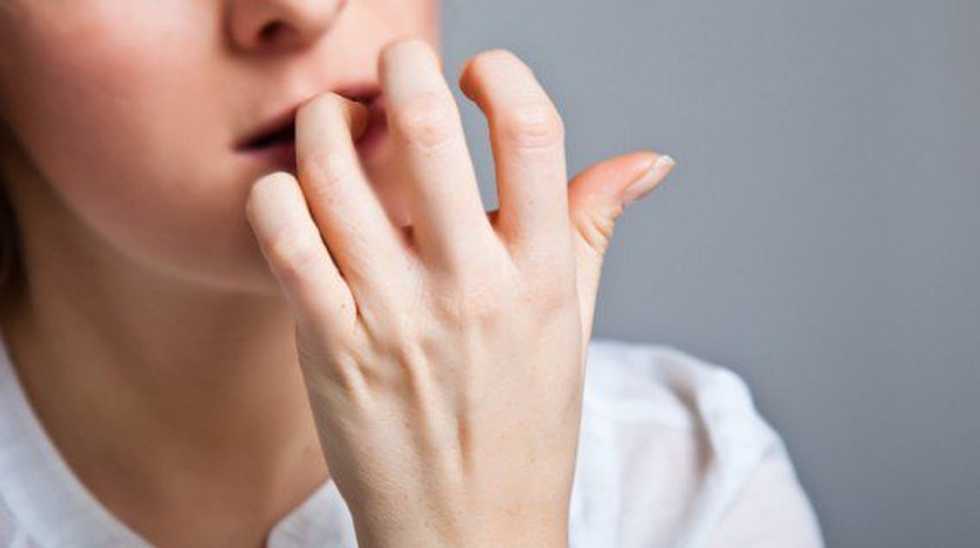
If you're one of the countless individuals who fall victim to the addiction of biting your nails, you've probably been told a million times by relatives, friends or partners that you need to kick your disgusting habit. You've likely researched (and tried) every possible method on the Internet to stop yourself from assaulting your fingernails, from putting cayenne pepper on your fingers to wearing mittens in the middle of summer to prevent yourself from chewing on your nails. It's probable you've put the goal "stop biting my nails" on each New Year's resolution list for the past six years.
If you're a nail-biter, chances are you know you need to break your habit, and you certainly have the desire to do so. People will tell you it's dirty, unhealthy, "unattractive" or even embarrassing. But it's not easy to quit, and the reasons to stop are plentiful and well-known. However, the real reasons you need to quit biting your nails are far more serious than the fact that your hands won't look "cute" or people will think you have no regard for hygiene. You need to stop your nail-biting habit for reasons that are far more serious than your appearance to others, and instead have everything to do with your own individual health.
1. It can seriously ruin your teeth.
Your teeth are resilient little things, but your fingernails are just as strong, and prolonged nail biting can severely weaken your teeth. After years of biting your nails, your teeth will inevitably take some damage and begin to weaken, which makes your teeth more prone to fractures and even tooth chips. Your trips to the dentist will become far less enjoyable if you're spending thousands of dollars to repair the damage your habit has caused. You need your teeth for the rest of your life, so take pity on them, and help them to last as long as they can — they can only take so much.
2. You become vulnerable to infections and disease.
Believe it or not, gnawing at your fingernails and cuticles until they bleed is not actually physically healthy for your body. Your hands and fingers literally touch everything. You wouldn't touch an open wound to a bathroom door, that's obviously unsanitary, and you shouldn't do the same to your nails. Even the little, invisible tears and that your nail-biting causes can be access routes to infectious bacteria. Plus, you're more likely to get sick because your hands are constantly in your mouth (and worse, you're usually not even aware of it). Nail biting isn't just an addictive quirk, it's a habit that actually poses a danger to your physical health.
3. It reinforces unhealthy coping mechanisms.
People bite their nails for all sorts of reasons. It can stem from stress, anxiety or even boredom. But just like eating when you're bored, nail biting is an unhealthy practice to cope with anxiety or boredom and only perpetuates one's tendency to react poorly to emotional stress. You wouldn't let someone else pick at your skin to distract yourself from anxiety, so why would you do it to yourself?
4. It makes you appear and feel less confident.
Confidence is a pretty nifty personality trait to possess! The ability to walk with pride and self-assurance is something a lot of people desire. However, if you bite your nails, you are inevitably aware of the way it makes you look. Nail biting, as mentioned before, has always been stigmatized as a nervous, gross habit. That alone should not be the basis on which you try to stop — you shouldn't worry about how people perceive you. However, it is likely that if you're painfully aware of how others feel about your nail biting, you begin to feel less confident. It becomes a perpetual cycle — you bite because you feel nervous or stressed, and then you feel as if people are judging you based upon your habit. You can then become anxious all over again, and chew at your nails even more to cope. It's an unfortunate pattern, especially because it can take a toll on your ability to feel confident, and can lead to you feeling embarrassed.
All of these consequences of biting your nails can be detrimental to your overall quality and enjoyment of life. But don't just kick the habit to change how others perceive you. Do it for your own individual confidence and physical and emotional health. It's hard, but the results will be worth it.