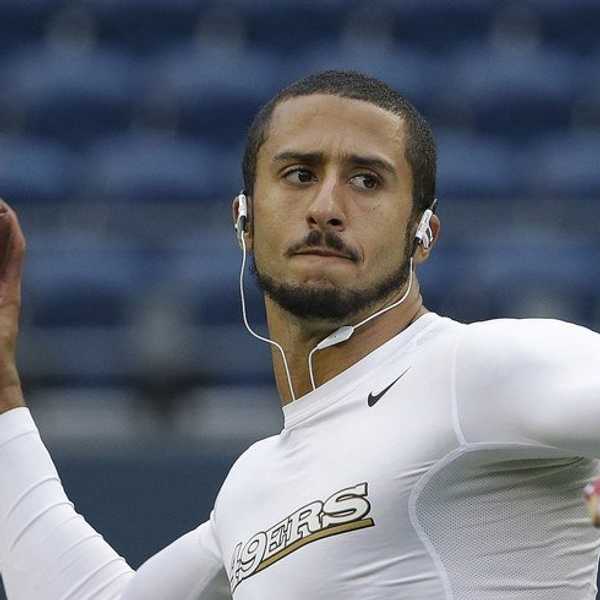
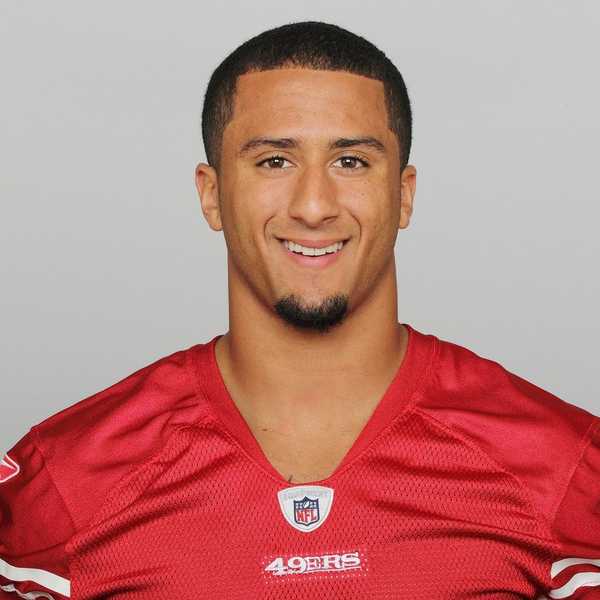
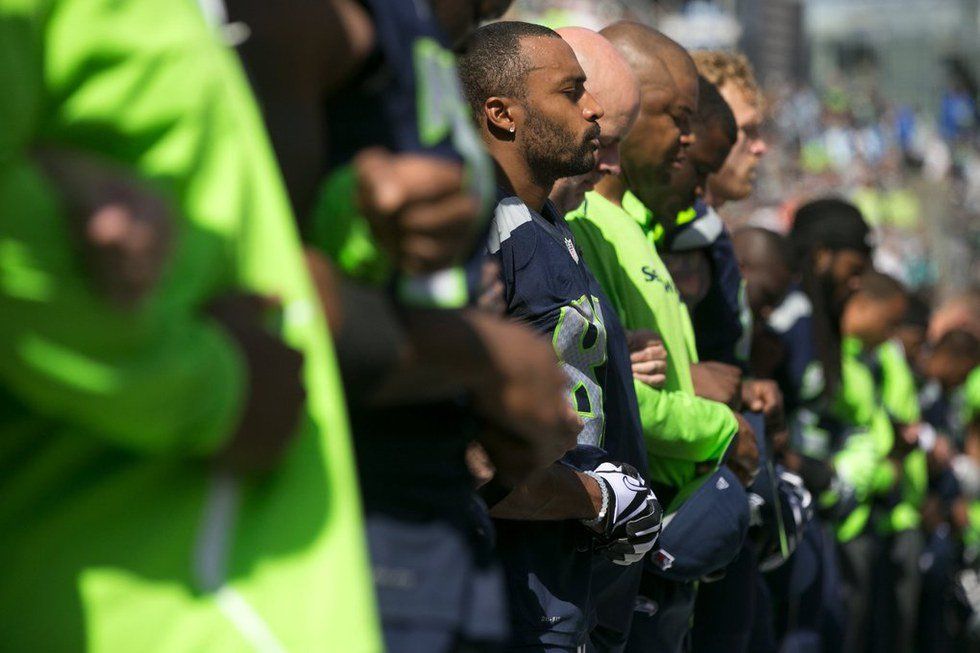
The Seattle Seahawks’ coaching staff and players stood linked arm and arm, Sunday during the pregame national anthem ceremony to show “unity” in the face of racial oppression. Problem is, Seattle’s “protest” goes against Colin Kaepernick’s original stance.
“We’re trying to build a bridge,” Seattle’s star defensive player, Richard Sherman told reporters after the game. “We’re trying to help people understand that it’s not just a black problem. It’s not just black people or a minority problem. It’s everyone’s problem. Everyone lives in this country and we want to see it as great of a country as it can be.
In theory, this is an appropriate response, but I worry the sports media will misrepresent this “protest” as a way to silence the players taking a stand with Kaepernick who originally said,
"I am not going to stand up to show pride in a flag for a country that oppresses black people and people of color."
Specificity matters, and in this case Kaepernick is instigating a conversation using specific, racial language, while the Seahawks are making their broad stance about “everyone.” But the reality is that this problem isn’t effecting everyone.
According to a study by Harvard University economic professor, Ronald Fryer, Black and Hispanic Americans are at a greater risk of police brutality.
Yes, Sherman is right to say that everyone should be concerned that a larger population of American citizens are being jailed and killed at a higher percentage rate than their white counterparts. But no, this is not “everyone’s” problem, it specifically effects black and brown people.
Much like the "All Lives Matter" movement, the Seattle Seahawks have failed to identify a specific problem. Kaepernick, on the other hand, continues to speak to reporters on the issues in the black community.
"To me, this is bigger than football and it would be selfish on my part to look the other way. There are bodies in the street and people getting paid leave and getting away with murder."
And even before other NFL players joined the social justice movement, the 49ers quarterback stood boldly saying;
"I am not looking for approval,” he told Steve Wyche of NFL.com weeks ago, “I have to stand up for people that are oppressed... If they take football away, my endorsements from me, I know that I stood up for what is right."
The Seahawks, on the other hand, are looking for approval and a way to silence socially conscious players like Kaepernick.
I have no doubt in my mind that the NFL and it major media sponsors will use the Seahawks as an example for political protest. But locking arms is not profound in any way, rather, it takes radical actions to get people talking. Colin Kaepernick took a bold stance, and teams like the Seattle Seahawks gave a weak response.