Violence is a deceiving standard of daily life. It seems that people are hardly ever fazed by the news reports of murders, assaults, rapes, and other horrendous crimes. Generally, we're desensitized, and it takes something close to appalling to force us to step back and realize that violence isn't––shouldn't––be the natural order of the world.
This past Wednesday an image released from Syria of five-year-old Omran Daqneesh has become a trending global image that has encapsulated the horrors of the Syrian Civil War. Daqneesh, covered in dust and bloodied wounds, sits inside an ambulance and stares blankly; his expressionless face is what has captured the attention of people from a global audience, and there is more talk of change on the news and at dinner tables.
Unfortunately, this isn't the first time a child has captured the world's attention and kept it at a standstill.
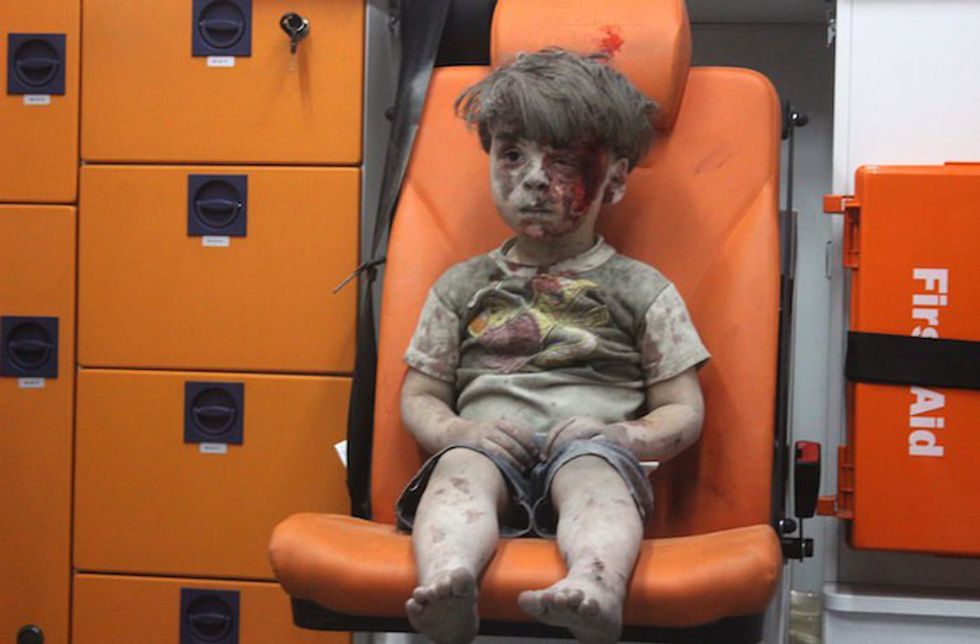
Daqneesh and his family were residing in their apartment when their building was bombarded. Although he and his family were evacuated and taken to a hospital––which cannot be named or located because hospitals are routinely bombed––to recover, it was revealed that his older brother, ten-year-old Ali, died of his injuries.
People everywhere have expressed their outrage and horror at this child and his family's suffering. And how could they not? How could anyone look at this boy's face and think he deserved it for sitting in his apartment with his family on a weekday that perhaps started just like any other? For boys like Omran Daqneesh, violence has been a mainstay of life. Not a distant reality, but an ever present one that unfortunately arrived at his door and irrevocably changed his and his family's lives.
Since the conflict in Syria started in 2011 nearly half of Syria's population has been displaced by violence. As a result, an unprecedented number of Syrian refugees have fled and sought asylum in practically every country, but there have been very few cases in which their arrival hasn't met passionate resistance from nationals who perceive their arrival as an imminent "terrorist" threat.
So I ask, "Is Omran a threat? Was Alan Kurdi a threat?"
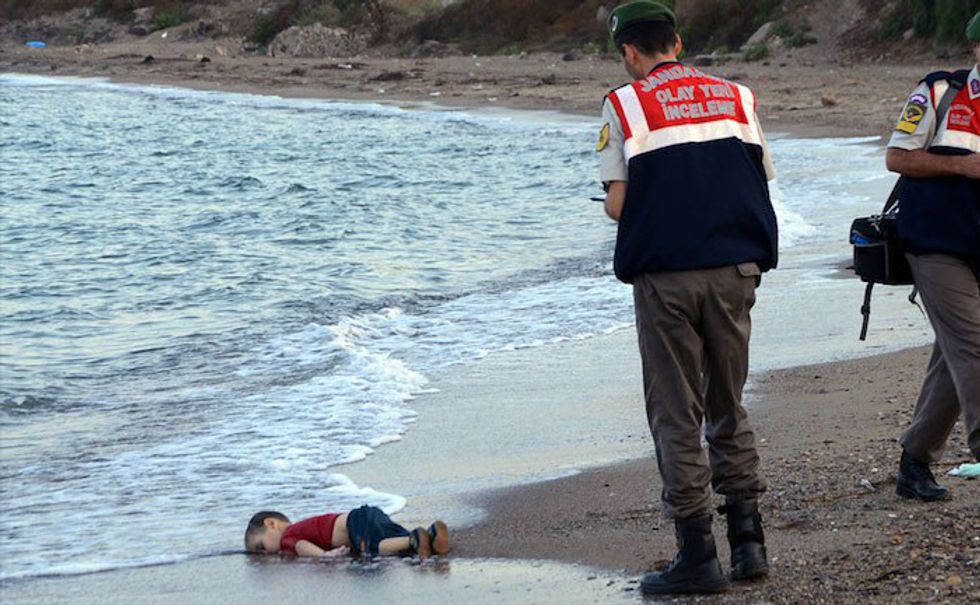
Kurdi was only three-years old when his lifeless body washed up onto Turkey's shore and yanked millions from their denial about the Syrian conflict. Kurdi was running from the violence in Syria with his mother and brother to the Greek island, Kos. They all drowned when the boat capsized soon after they set off, but Kurdi and his family would have been nothing more than numbers civilian casualties if it hadn't been for the Turkish photographer Nilüfer Demir. She captured the image that transcended national borders, and she gave the Syrian conflict a symbol: Alan Kurdi's lifeless body.
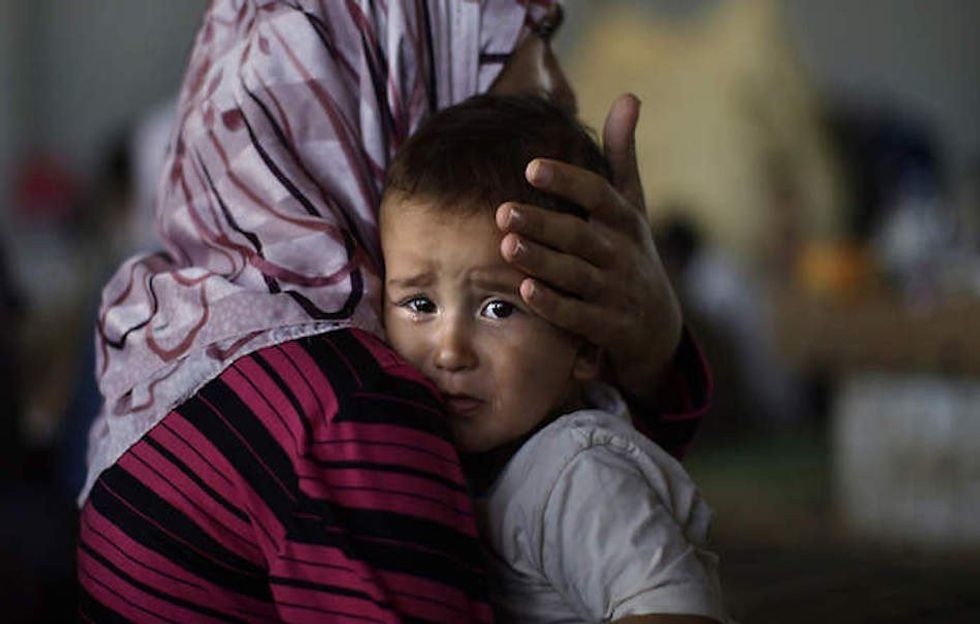
It has taken two innocent children to provoke conversation and discussion about the violence in Syria, because they suddenly became everyone's children. It is hard to remember Daqneesh or Kurdi and not think of a child their age that you know personally, because you wonder what injustice could possibly ever rationalize the violence these children have had to withstand? Whether they stay or flee from Syria, it seems their lives were doomed to suffer through the violence of their nation.
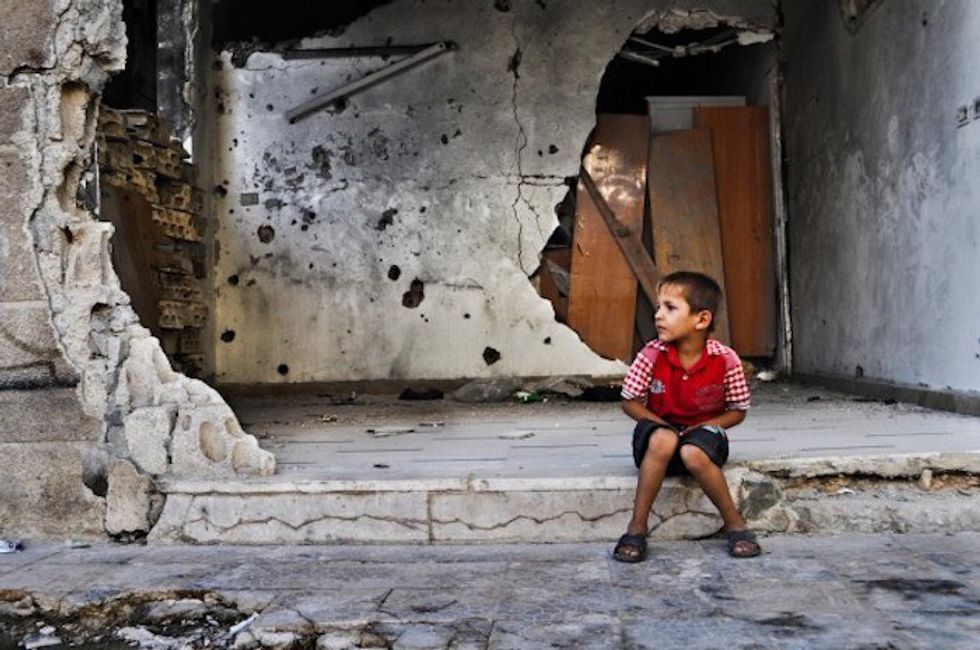
Daqneesh is and Kurdi was, and that past tense should bring people to their senses long enough to ask, "How can we help?" Both of these children were innocent witnesses who became participants against their will in a conflict they didn't begin, but they're two of millions. They stood out among the rest because a photographer's split second decision to capture the moment to share with billions of bystanders like you and me.
And so, I wonder, "How can I help?"