“As you know, there is no racism as strong as Asian-On-Other-Minority racism.” — The Mindy Project
While watching my favorite comedy show, this nugget-sized token of wit leaped out and figuratively struck me. It was one of those funny-because-it's-true moments, the type to induce a guilty, nervous chuckle or two. The character who said it was Indian-American, which I am not, and yet, I found myself identifying with it. What was it about this casually spoken sentence that resonated with me?
Was it remembering the stereotypes about African-Americans and Latinos subtly fed to me by my elders? Was it growing up and constantly hearing jokes about getting disowned if I “date a black guy”? (The TV character who said the above quote was joking about his mother’s annoyance at him dating Hispanic girls.) Casual (and some not-so-casual) prejudices against other nonwhite minority groups are indeed common among us Asian-Americans, sending the very clear message that we, as a nonwhite minority group, don’t seem to identify with other minorities and wish to separate ourselves.
This is problematic, dangerous and needs to stop.
If Asians are indeed racist, is there a cause?
Let’s take a brief look at what may be lurking behind this prejudice. It could partly be the fact that 74 percent of Asian-Americans today are foreign-born, evidence of the post-1965 wave of Asian immigration. For those immigrants unaccustomed to American politics, the issue of race is somewhat a new discussion, and the depth of the emotional baggage carried by slavery and Jim Crow can be difficult to convey.
In her book “The New Jim Crow,” Michelle Alexander talks in-depth about the media’s success in portraying African-Americans and Latino-Americans as criminals, drug dealers and gangbangers; TV and Hollywood images repeatedly link drug abuse and violence with the black and brown community. Though perhaps not through any fault of their own, Asians must have joined the rest of America in feeding into these media images.
There is no doubt that the issue of race becomes complicated for Asian immigrants who find themselves unsuspectedly caught in the middle of America’s “black-and-white” racial narrative. Navigating this is difficult. The conversation isn’t about us; therefore, we don’t have to participate in it, right? But, when we do, it seems we’ve deluded ourselves into thinking there is a neutral, non-confrontational ground we can settle upon. There isn’t, and that’s where a failure to identify with other minority groups becomes a problem.
And then, of course, there’s the irresistible idea of the “model minority.”
Let’s unpack the ‘model minority’ myth
“By stereotyping Asian Americans as apolitical and high-achieving, the model minority myth maintains white supremacy, flattens the diversity of Asian-American identities, and undermines solidarity among marginalized groups.” — Kelvin Ng, “Asian America, address anti-Blackness”
We all get good grades. We’re skilled musicians, mathematicians, athletes. We’re high-earning engineers, doctors and nurses. All these stereotypes you’ve heard in grade school and beyond — they all make up the “model minority” stereotype. It basically says that even though Asians are a minority, through hard work and perseverance, we were still able to achieve the American dream.
Don’t believe it for one second.
The model minority myth — because that’s what it is, pure myth — has been one of the most successful tools of racial divisiveness to date. Pundits like Bill O’Reilly use it over and over to claim that white privilege doesn’t exist. The myth is used to rub our achievements in the faces of other disadvantaged minority groups with one clear message: They could do it; why can’t you?
Wedging this tool of divisiveness between us and other minorities is a danger to our way of thinking, so let’s unpack this myth right here and now.
First of all, Asian-Americans have not attained the American dream as much as we’d like to think. Asians are high achievers in top high schools, yet top universities, especially the Ivy Leagues, are more reluctant to admit Asian applicants than white applicants in a phenomenon that has been termed “the bamboo ceiling.” Asians are also underrepresented in top, high-earning jobs, leadership positions and Hollywood.
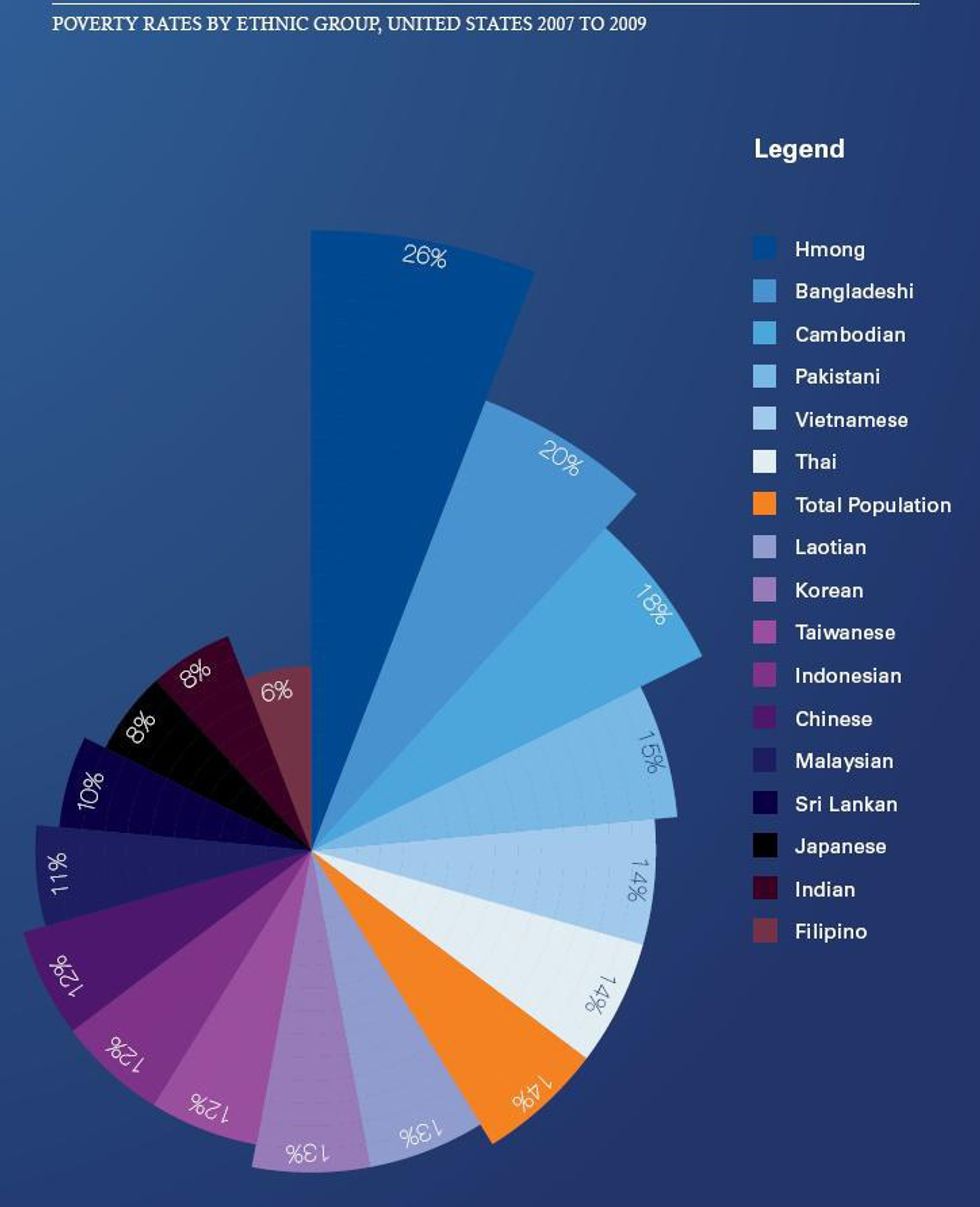
Second of all, the model minority myth ignores the diversity of Asian-Americans, and therefore, masks the sufferings of individual Asian-American groups. In some places, Asian-Americans are still victims of hate crimes, and Southeast Asian (Hmong, Cambodian, Vietnamese) and South Asian (Indian, Pakistani, Bangladeshi) groups in particular are targeted. It is also among these groups where we find the highest poverty rates.
In 2015, the New York Times revealed the exhausting work conditions of underpaid and exploited New York City manicurists — an industry where (non-Korean) Asian and Latina women face almost equal amounts of discrimination.
And let’s not forget that Asian-Americans have had their fair share of being screwed over by a racist criminal justice system. Fong Lee, Kuanchung Kao and Cau Bich Tran are some examples of innocent Asian-Americans who were fatally shot by police in recent years — police who were never indicted.
Does that sound familiar? Is this not enough to remind us that our story and the stories of other minorities in this country are inextricably linked?
Remembering a history of solidarity
Asian-Americans do have a history of discrimination in this country, and we do have a history of revolt and protest against this discrimination. We’ve even benefitted from many accomplishments of the civil rights movement. And yet today, with highly-publicized police brutality incidents creating a racial environment that resembles the American1950s more than ever, where do Asian-Americans stand?
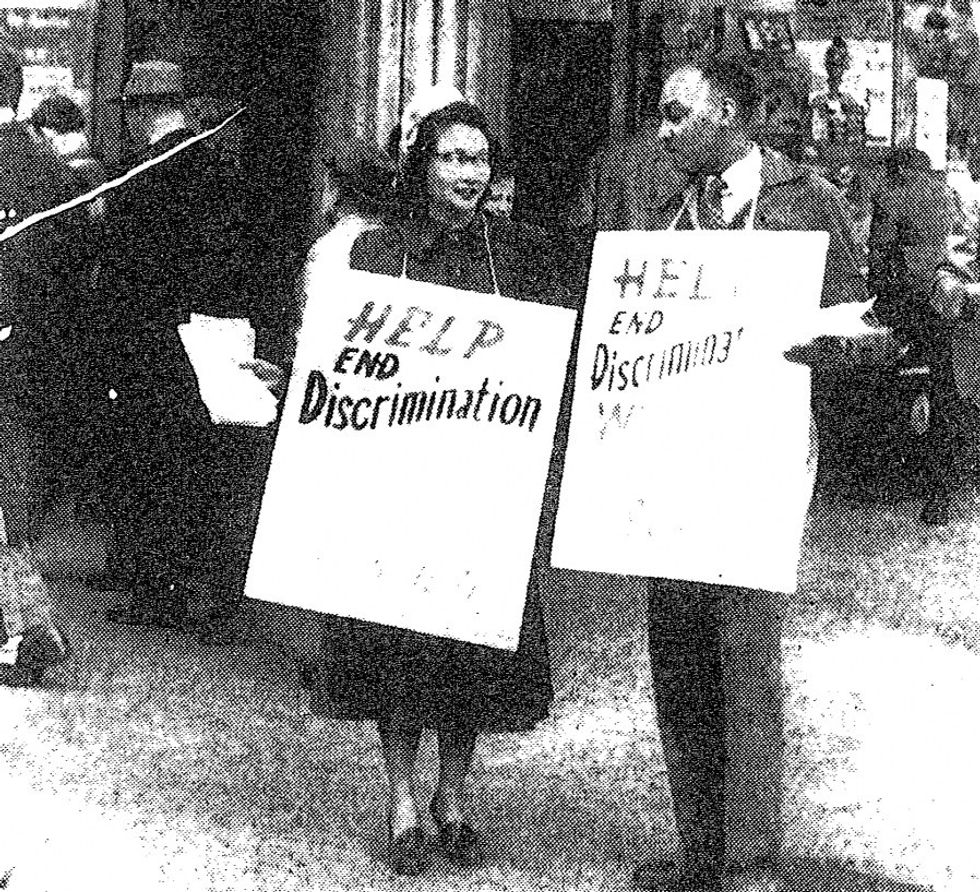
Ina Sugihara, a Japanese-American activist, knew where she stood when she helped found the Congress of Racial Equality in 1943 and advocated for multiracial coalitions in her work.
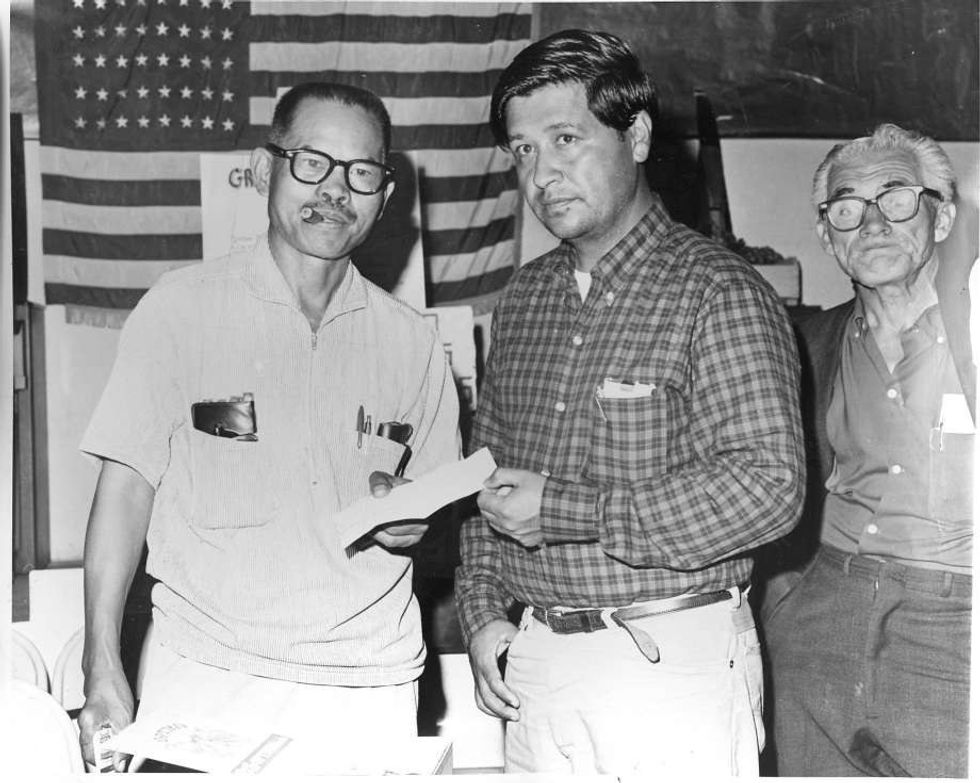
Filipino farmworkers knew where they stood in Delano on Sept. 8, 1965, when they first marched off the grape fields and later collaborated with Latinos to form the United Farm Workers.
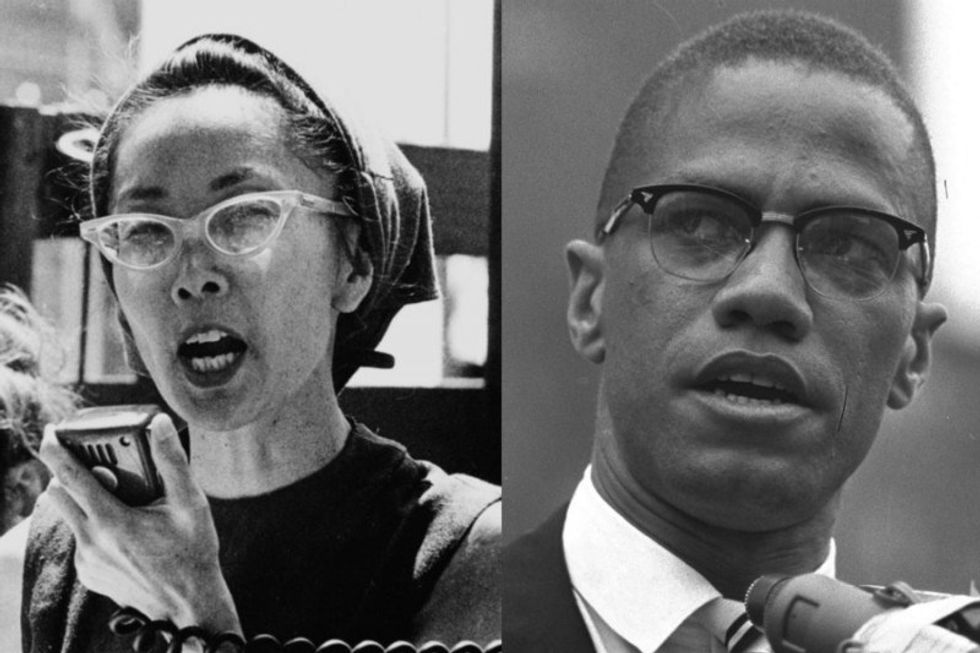
Grace Lee Boggs, a Chinese-American, and Yuri Kochiyama, a Japanese-American, knew where they stood in their tireless activist work for the civil rights and Black Power movements.
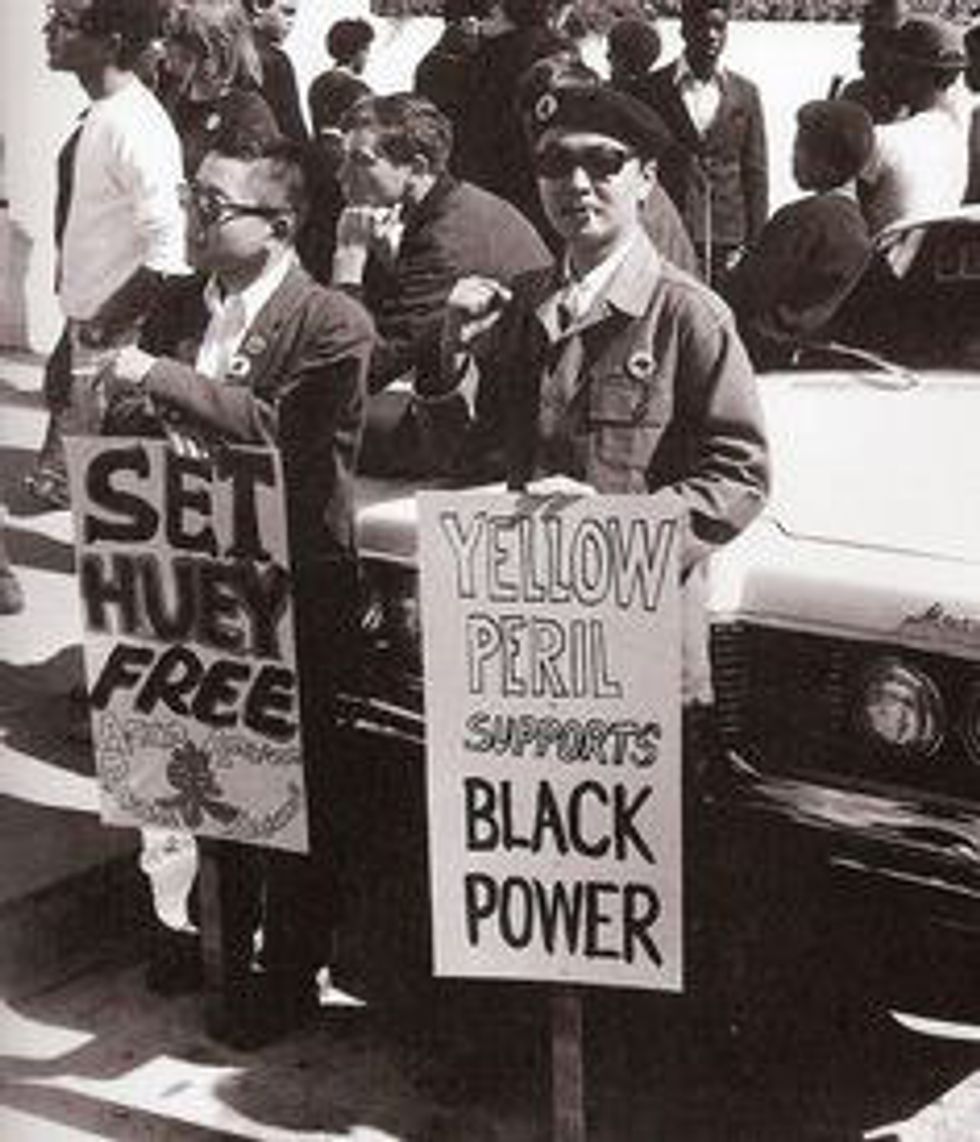
Asian men proudly reclaiming the label “yellow peril” knew where they stood when they protested the arrest of Black Panther Huey P. Newton in 1967.
And in the wake of the shooting of Michael Brown in Ferguson, Missouri, the Asian-Americans of the California bay area knew where they stood when they started the social media movement #Asians4BlackLives.
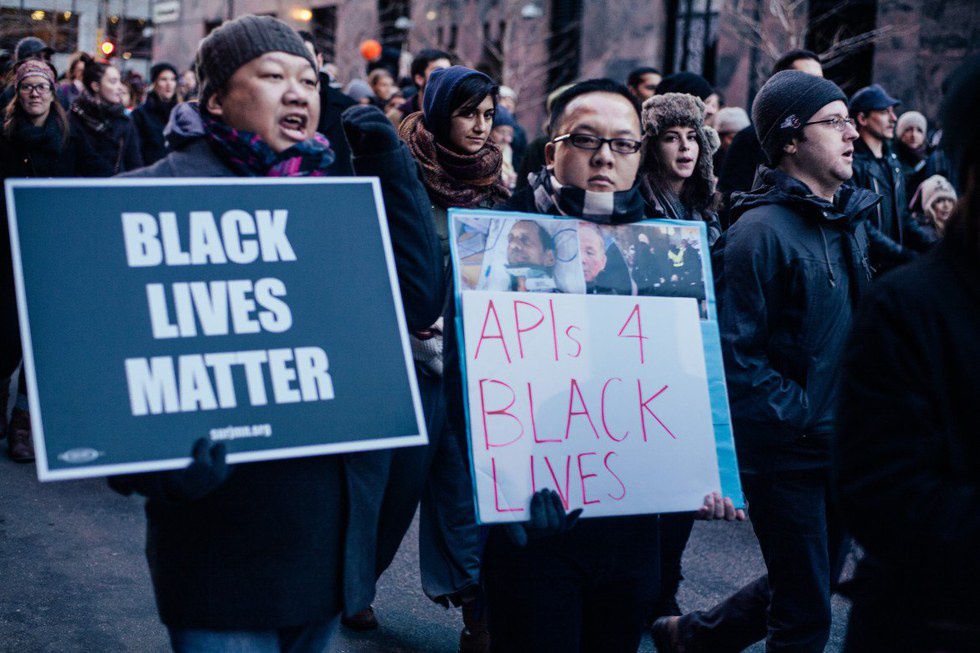
That there is a forgotten history here is clearest during times of racial conflict, when Asian-Americans, for whatever reason, identify with the oppressor (and it has been said that remaining neutral is the same thing), rather than with the oppressed. Ignoring our history of solidarity with other minorities is a failure to honor a vital part of the Asian-American narrative in this country. It is a failure to honor our Asian-American culture.
Many Asian voices before me have addressed this perceived failure (everything I’ve linked to in this article, for example), but as the Asian-American community grows and the racial divide in this country becomes more explosive, it is something we need to keep reminding ourselves, lest our important history remains forgotten.
So, to my fellow Asian-Americans, whatever your story may be: Think twice before taking a “neutral” stance on a black-and-white race issue. Think twice before believing it's OK to make negative assumptions about other minority groups. Think twice before letting such divisive tools as the model minority myth cloud your judgment.
We are all part of the same story.